

La Paz | Death Road by Bike
DESCRIPTION
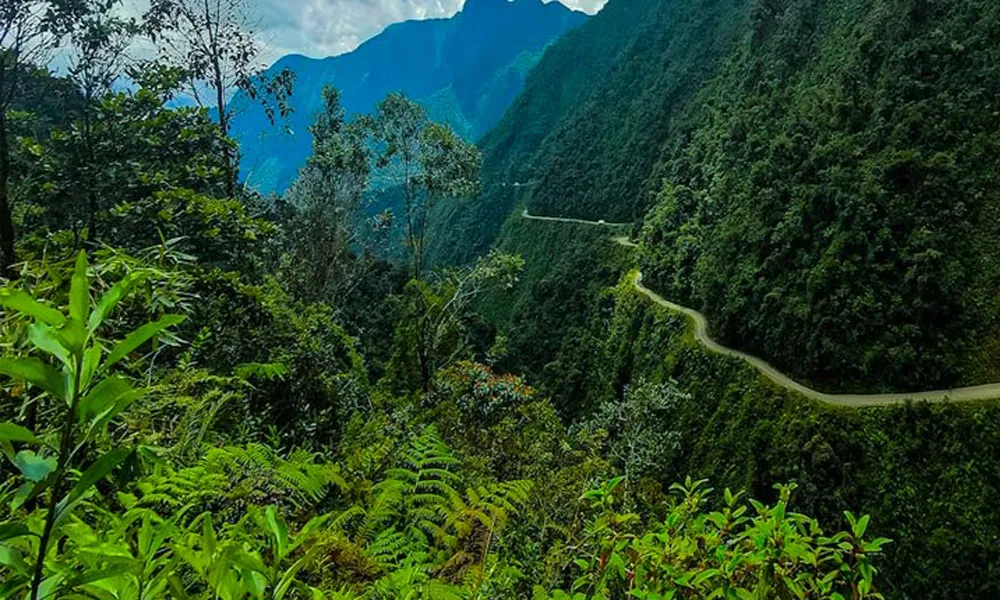
The Death Road by bike from La Paz is an experience that goes far beyond adrenaline. It represents a radical change of scenery in just a few hours: from the cold air of the high mountains to the warm climate of the Yungas, traversing landscapes that showcase Bolivia’s geographical diversity. The route invites you to experience the surroundings with all your senses, from the sound of the wind on the peaks to the lush vegetation that envelops the road as you descend.
This tour is ideal for travelers seeking an authentic adventure and a personal challenge, without needing to be professional cyclists. More than a test of speed, it’s an exercise in control, concentration, and enjoying the scenery, always accompanied by expert guides. The experience leaves a powerful sense of accomplishment and becomes, for many, one of the most intense and talked-about memories of their time in La Paz and the Bolivian Yungas.
History | Death Road
The infamous Death Road, also known as the Yungas Road, was built in the 1930s by Paraguayan prisoners of war during the Chaco War. Its purpose was to connect the city of La Paz with the tropical Yungas region, facilitating the transport of agricultural products to the highlands.
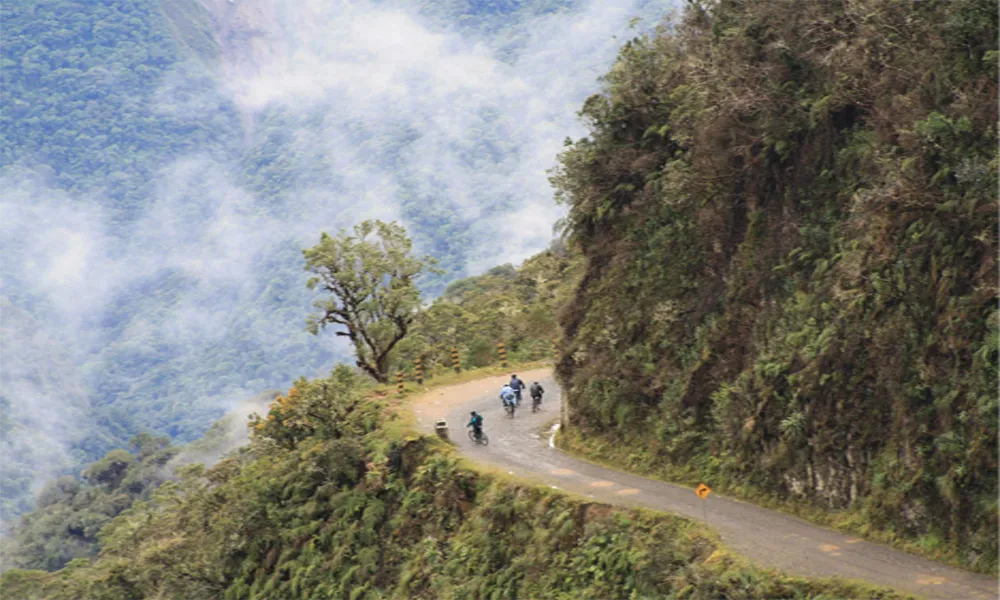
For decades, it was the only available route, and due to its narrowness, lack of guardrails, constant rain, and precipices of up to 800 meters, it became notorious as one of the most dangerous roads in the world, claiming countless lives.
In 1995, the Inter-American Development Bank officially declared it the most dangerous road in the world, and with the construction of a new paved highway, the old road was closed to regular traffic and reborn as one of South America’s most thrilling adventures.
Today, thousands of travelers from all over the world come to La Paz to explore it by bicycle, descending from 4700 meters above sea level in the cold Andes mountains to 1200 meters above sea level in the warm tropical rainforest, on an exciting journey of climatic, natural and cultural contrasts.
ITINERARY
Detailed Itinerary – Death Road Bike Ride
6:30 – 7:00 AM | Hotel Pickup (La Paz)
Pick-up from your accommodation in La Paz. Transfer in private transportation to the La Cumbre area, the starting point of the descent. During the journey, the guide will explain safety rules, weather conditions, and details of the route.
Arrival at La Cumbre (4,650 m a.s.l.)
Here the adventure begins. Bike adjustments, putting on safety equipment (full-face helmet, knee pads, elbow pads), and a short practice ride to familiarize yourself with the bike. From this point, you can appreciate high mountain landscapes and open views of the Cordillera Real.
Start of the bike descent – Andean section
The first section is cold and paved, with wide curves and breathtaking views. This section allows you to gain confidence and control your speed as you gradually descend one of the most famous roads in the world.
Transition to the Yungas Trail (Historical Section)
Enter the ancient Death Road, a narrow path carved into the mountain. The landscape changes: precipices, natural waterfalls, and dense vegetation appear. Frequent stops for rest, hydration, and photos.
Jungle Section and Waterfalls
The route continues through subtropical rainforest, with a warmer and more humid climate. Cross small waterfalls and natural viewpoints. This is one of the most enjoyable sections due to the combination of excitement and scenery.
Arrival in Yolosa / Coroico (Lower Area)
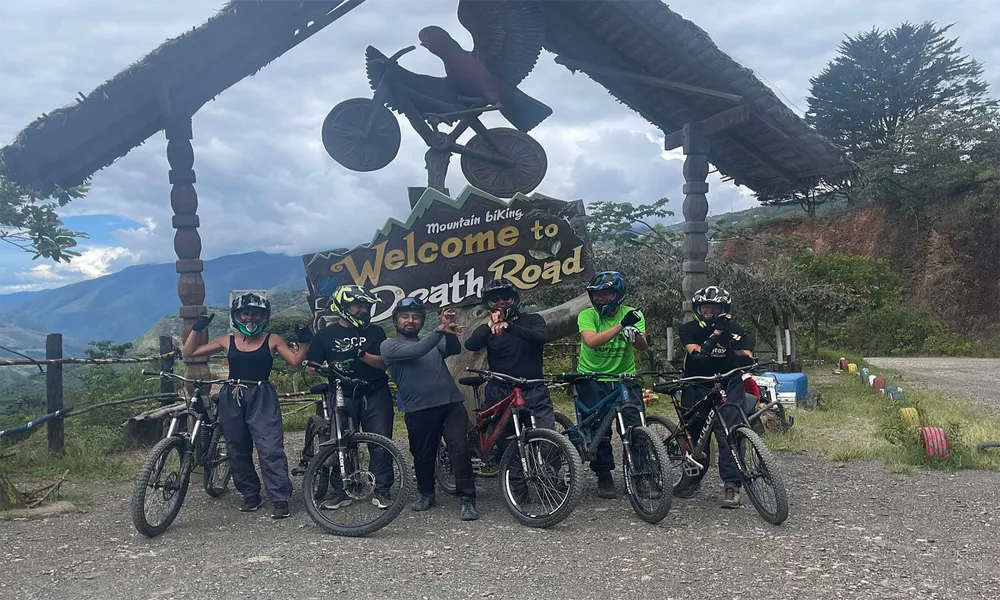
End of the bike tour after more than 60 km of downhill riding. Celebrate your achievement with group photos and time to relax after the experience.
Lunch and Rest
Lunch included at a local restaurant. Time to share your experience, review photos, and rest.
Return to La Paz
Return transfer by tourist vehicle. Approximate arrival in La Paz in the evening.
INCLUDES
What does the tour include?
- Pick-up from your hotel or a central location in La Paz
Punctual service in tourist transportation, valid for hotels located in the historic center or surrounding areas.
- Round-trip tourist transportation
Comfortable, safe, and authorized transportation for rural and high-altitude routes, with panoramic windows and adequate space for groups.
- Professional bilingual tour guide (Spanish/English)
Specialized cycling and first aid guides accompanying you throughout the tour.
- Professional mountain bike and equipment
Full-suspension mountain bike with hydraulic disc brakes, adjusted to the participant’s height, a full-face helmet, and protective gloves
- Ongoing assistance throughout the tour
Support from the team of guides and drivers in case of any need during the trip.
DOES NOT INCLUDE
What is not included?
- Travel or personal insurance
Medical assistance insurance is not included. It is recommended to purchase your own travel insurance.
- Voluntary tips for guides or the community
Tips are not mandatory, but they are a very welcome gesture of appreciation from the local team and host families.
- Personal items (raincoat, sunscreen, hat, etc.)
The tour does not include personal items, and it is suggested that you bring a backpack with everything you need for the day.
- Photography equipment or personal cameras
Multimedia equipment is not provided.
- Lunch
Lunch is not included in the tour, but there are typical lunch options available, and most restaurants offer vegetarian or vegan options, which can be requested in advance.
RECOMMENDATIONS
Recommendations
- Sun and eye protection
Bring sunscreen, sunglasses, and a hat. Solar radiation at high altitudes can be strong, even on cloudy days.
- Hydration and personal snacks
Although the tour includes breakfast and lunch, it is recommended to bring a water bottle, nuts, or energy bars for the trail.
- Camera with sufficient battery and memory
This tour offers numerous photo opportunities, from Andean landscapes to cultural portraits by the bridge.
FAQs
Frequently Asked Questions
- Is the service a group or private tour?
This itinerary is a group tour, but it can also be arranged privately with prior coordination.
- Is prior mountain biking experience necessary?
It is not mandatory, but basic bike handling skills are recommended. The guides give a safety briefing before starting, and the group pace is controlled.
- Is the route dangerous?
Despite the name “Death Road,” the tour follows the old route downhill only, with constant guide accompaniment and a support vehicle. Following safety instructions, it is a safe and controlled activity.
- What should I wear?
- Comfortable athletic wear (long pants or fitted shorts)
- Windproof or waterproof jacket
- Swimsuit or swimsuit for the end at the hotel
- Change of dry clothes for after the tour
- Sunscreen and sunglasses
- What is the minimum age or physical condition required?
The suggested minimum age is 14 years old, always with parental authorization. The tour is mostly downhill, so it doesn’t require great physical effort, but it does require stamina and concentration.