

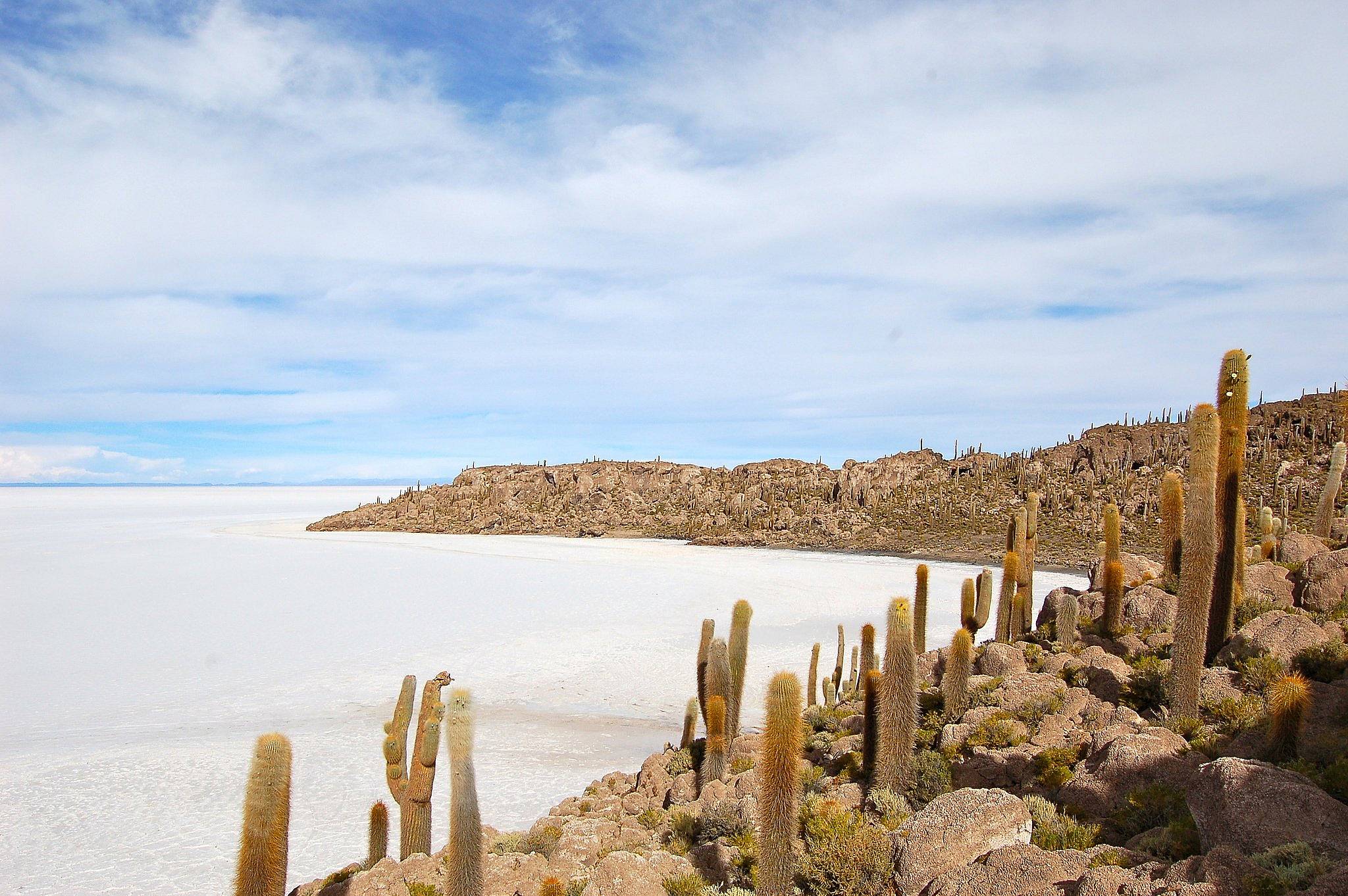
Incahuasi Island
The Heart of Giant Cacti in the Salar de Uyuni
Incahuasi Island is one of the most impressive, symbolic, and photographed places in the Salar de Uyuni, Bolivia. In the middle of the world’s largest salt flat, this rocky island emerges, covered in giant cacti, creating a surreal contrast that seems otherworldly. Visiting Incahuasi is to experience one of the most extraordinary landscapes in South America, where nature, history, and absolute silence combine in an unforgettable experience.
More than just a tourist stop, Incahuasi Island represents the geographical and symbolic heart of the salt flat, a point that allows one to understand its origin, its immensity, and its cultural importance.
📍 Location: an island in the middle of the white desert
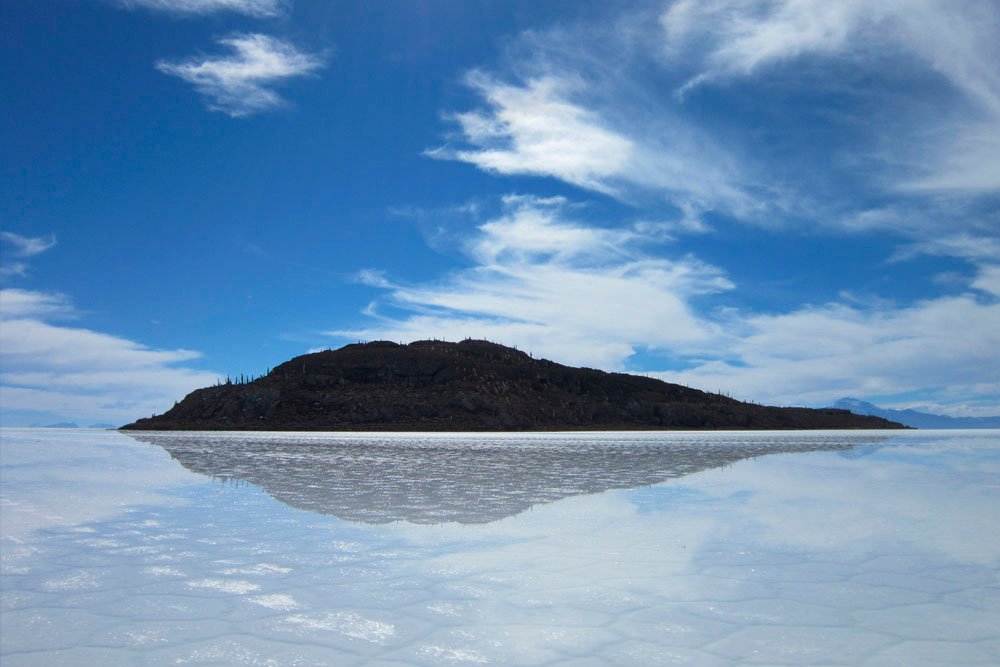
Incahuasi Island is located in the center of the Salar de Uyuni, about 100 km from the city of Uyuni. During the dry season, access is via kilometers of solidified salt; During the rainy season, the island appears to float on a perfect natural mirror.
Key Location Facts:
- Approximate Altitude: 3,656 m (12,000 ft) above sea level
- Central location within the Salar de Uyuni
- Exclusive access via 4×4 tours
Its isolated position reinforces the feeling of being in a remote and unique place in the world.
🕰️ Origin of the Name and Ancestral Meaning
The name “Incahuasi” comes from Quechua and means “House of the Inca” (Inca = ruler, huasi = house). This name reflects the symbolic importance the island held in pre-Hispanic times, when it was used as a strategic and ceremonial point by Andean cultures.
It is also known as Fish Island, due to its shape when viewed from afar, although the name Incahuasi is the most common and widely recognized.
🌍 Geological Origin: Remnants of a Prehistoric Sea
Incahuasi Island is an outcrop of volcanic rock exposed after the evaporation of ancient prehistoric lakes, such as Lake Minchín and Lake Tauca, which covered much of the Altiplano thousands of years ago.
What makes Incahuasi unique:
- It is not made of salt, but of volcanic rock.
- It is one of the oldest points on the salt flat.
- It preserves marine fossils in its surroundings.
This explains why the island juts out abruptly from the salt flat, like a vestige of the Altiplano’s geological past.
🌵 Giant Cacti: Guardians of the Salt Flat
The most iconic feature of Incahuasi Island is its giant cacti, primarily of the Echinopsis atacamensis species. Some specimens exceed 10 meters in height and are over 1,000 years old.
Amazing Facts:
- They grow approximately 1 cm per year
- They have adapted to extreme conditions of altitude and drought
- They are a symbol of resilience and life in the desert
Walking among these cacti is a unique experience that reinforces the feeling of being in a completely different ecosystem.
🥾 Island Tour: Trails and Viewpoints
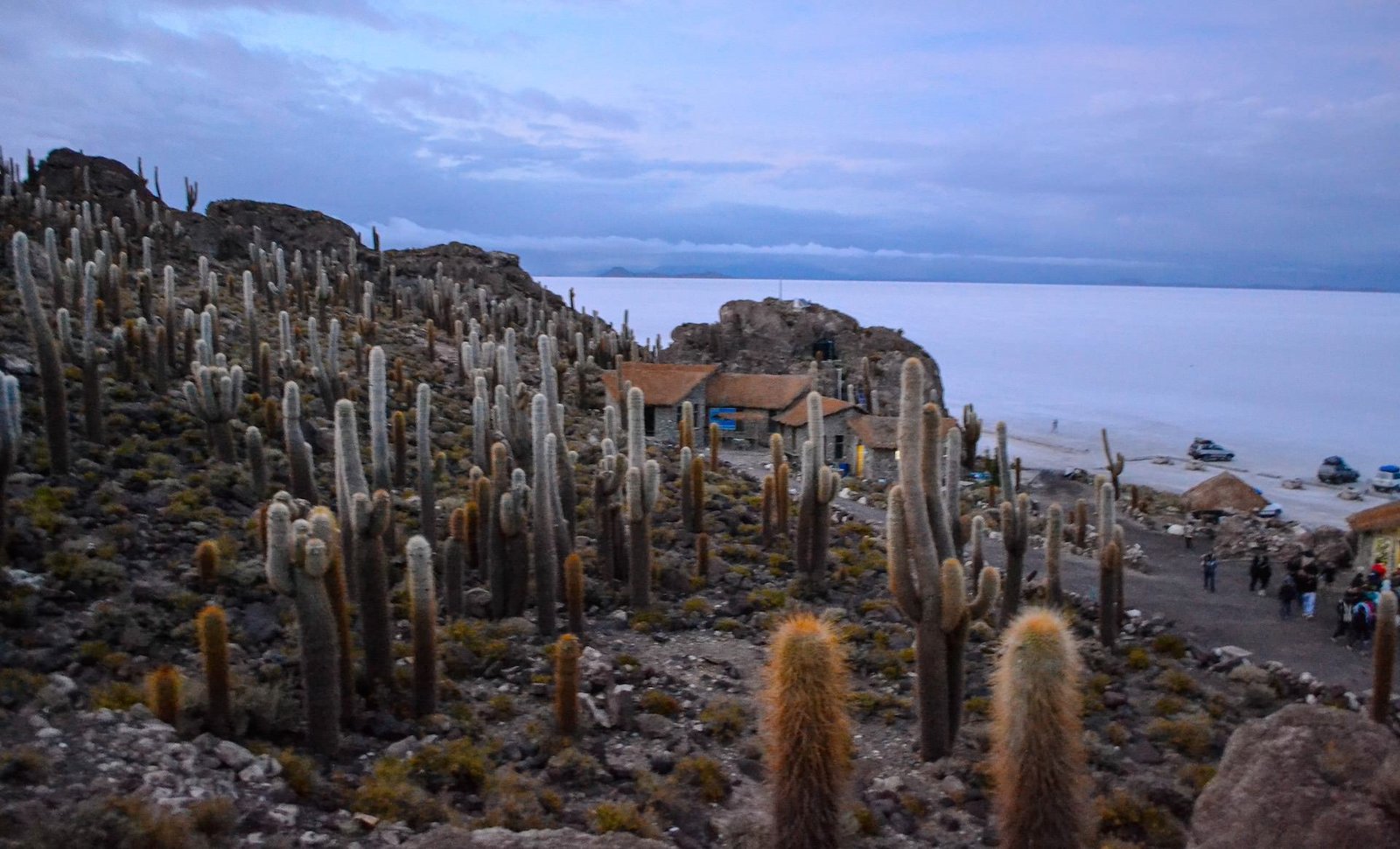
Incahuasi Island has marked trails that allow you to explore it safely and in an organized way. The hike is short but intense due to the altitude.
During the tour you can:
- Walk among centuries-old cacti
- Climb to natural viewpoints
- Observe the salt flats in all directions
- Take breathtaking panoramic photos
From the top, the view of the Salar de Uyuni is simply awe-inspiring: a white ocean that stretches as far as the eye can see.
🌅 Incahuasi in the Dry and Rainy Seasons
Dry Season (April to November)
- The salt flats transform into an immense white expanse
- Easy access to the island
- Ideal for hiking and high-contrast photography
Rainy Season (January to March)
- The famous mirror effect is created
- The island appears to float on the water
- Limited and controlled access
- Unique, surreal photographs
Both seasons offer completely different, yet equally breathtaking, experiences.
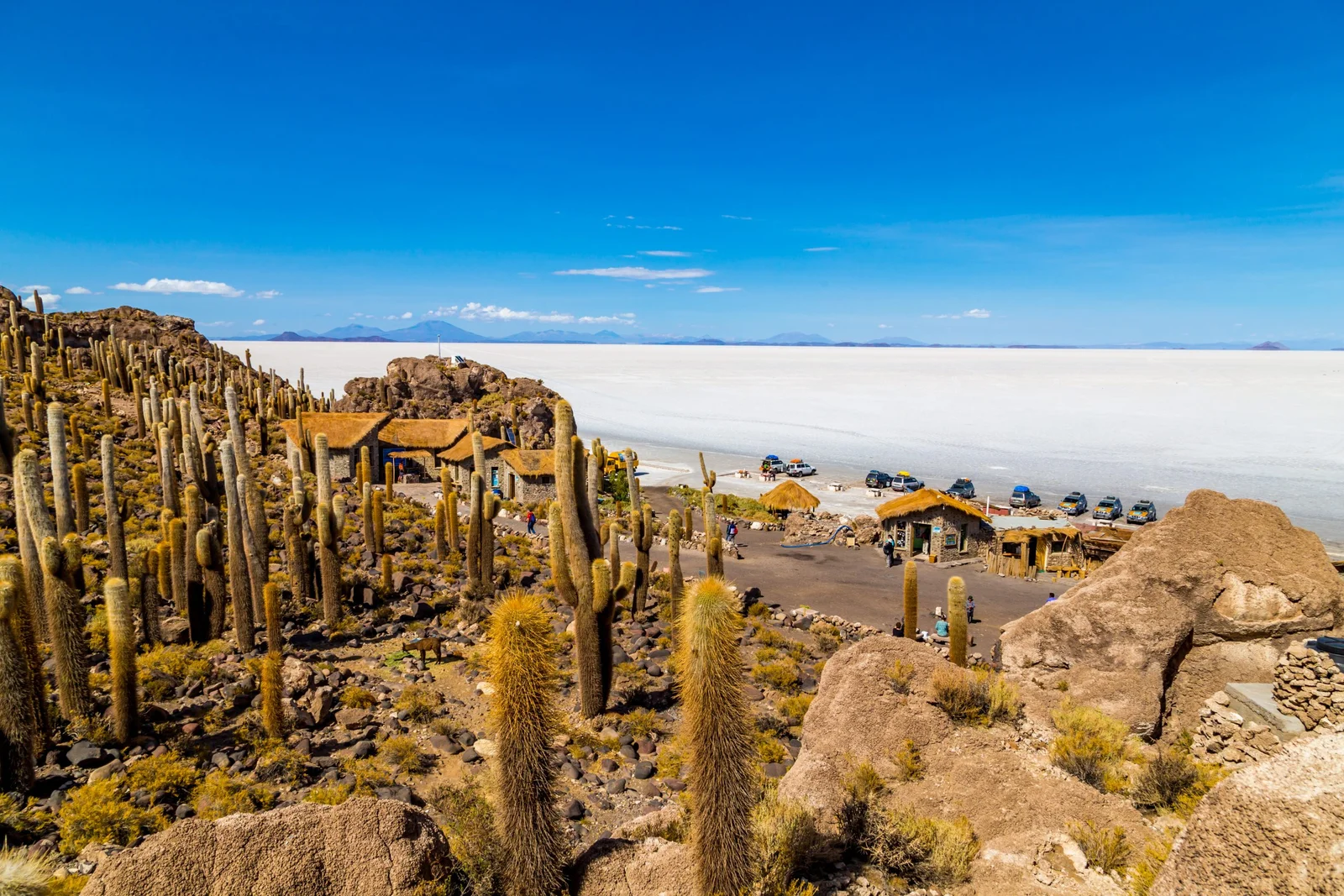
📸 A Paradise for Photography
Incahuasi Island is one of the best spots in the Salar de Uyuni for photography:
- 360° panoramas
- Giant cacti in the foreground
- Mirror effect during the rainy season
- Photos with creative perspectives
It is one of the most iconic locations for capturing the essence of the salt flats.
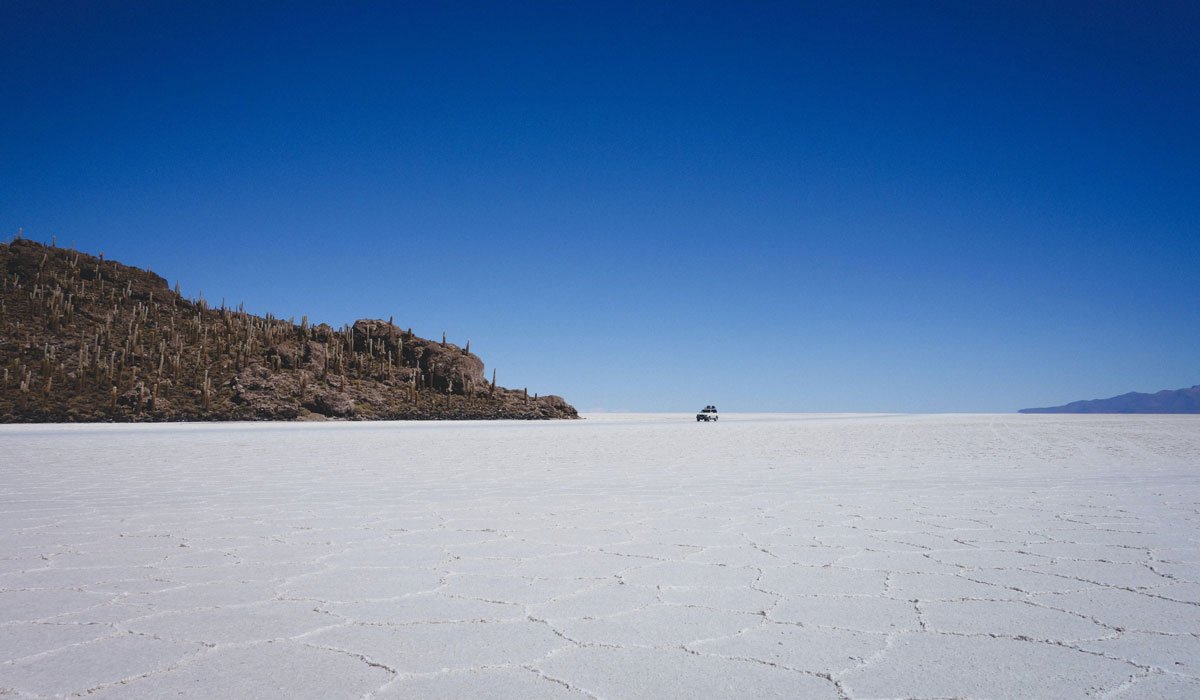
🧭 Cultural and Symbolic Importance
For Andean cultures, Incahuasi was a special place. Its isolation and altitude made it a space for observation, rest, and possibly rituals. Today, it remains a point of spiritual connection with nature and the Andean landscape.
🕒 Visit Time and Access
- Average visit time: 45 minutes to 1 hour
- Access included in most tours to the Salar de Uyuni
- Significant entrance fee for maintenance
- It is a key stop on 1, 2, and 3-day tours.
✅ Recommendations for Visiting Incahuasi Island
- Walk slowly due to the altitude
- Bring a hat, sunscreen, and sunglasses
- Stay hydrated
- Wear warm clothing (the weather changes quickly)
- Respect the trails and do not touch the cacti
🌟 Why is Incahuasi Island important?
Because it’s the heart of the Salar de Uyuni. Here, you understand its origin, its immensity, and its magic. It’s the point where the white desert comes alive, gaining height and texture.
Incahuasi Island is not just an island in the middle of the salt flats: it’s a symbol of the Bolivian Altiplano, a testament to the planet’s geological history, and one of the most breathtaking landscapes a traveler can experience. Visiting it is like walking among ancient cacti surrounded by the world’s largest salt flat.