

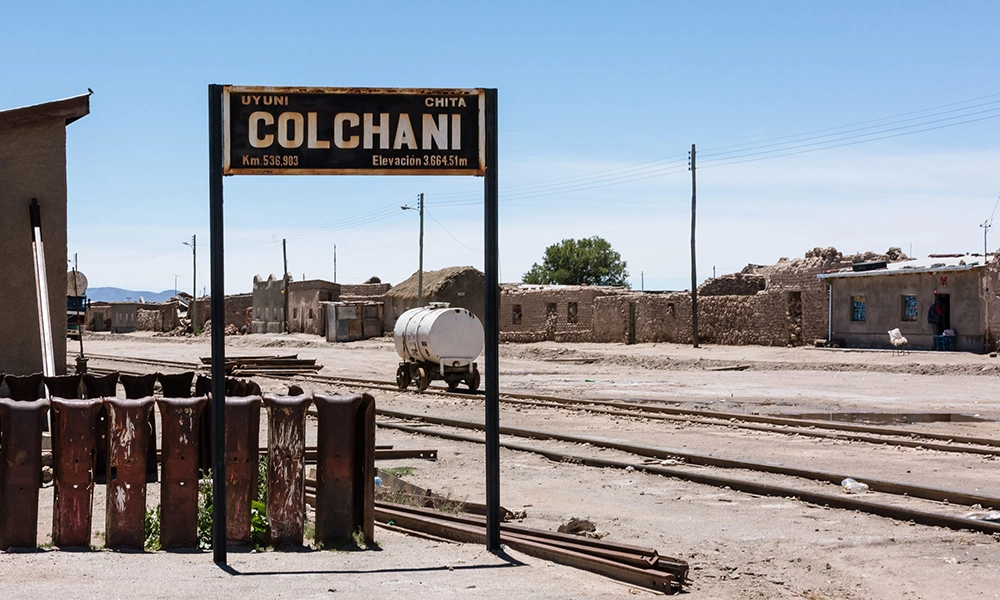
Colchani Community in Uyuni: Salt Crafts, Andean Culture, and Tourism
The community of Colchani is much more than a town near the Salar de Uyuni; it is the cultural and artisanal heart of this Bolivian region. Just 20 km from Uyuni, this small Andean village welcomes thousands of travelers each year who seek to experience the salt tradition, local crafts, and the way of life of its inhabitants. Here, tourism blends with history, offering visitors an authentic experience before venturing into one of the world’s most breathtaking landscapes: the Salar de Uyuni.
📍 Location and how to get to Colchani
Colchani is located on the Bolivian Altiplano, in the department of Potosí, at an altitude of over 3,600 meters above sea level. Its proximity to Uyuni makes it a must-see stop on any itinerary to the Salar.
- 🚐 From Uyuni: By private transport or shared taxi, the journey takes approximately 25 minutes.
- 🚌 On an organized tour: Almost all excursions to the Salar de Uyuni, both day trips and multi-day tours, include a visit to Colchani as the first stop.
- ✈️ From La Paz, Oruro, or Potosí: You must first arrive in Uyuni by bus or plane, and from there continue to Colchani.
Its strategic location has earned it the title of “gateway to the Salar de Uyuni,” guaranteeing a constant flow of national and international visitors.
🌄 History and Culture of Colchani
The history of Colchani is deeply intertwined with salt mining, an activity that has sustained generations. In the past, extraction was done entirely by hand: the locals cut blocks of salt, dried them in the sun, and transported them with llamas and donkeys. Over time, although some processes have modernized, the community has preserved its artisanal methods.
Salt has not only been an economic resource but also a cultural element. In Colchani, Aymara and Quechua knowledge is passed down, such as the respect shown to Pachamama (Mother Earth) at the beginning of each workday. Community festivities also reflect this blend of tradition and spirituality, with dances, music, and rituals that celebrate life in harmony with nature.
Today, thanks to tourism, Colchani is a meeting point between the ancestral and the modern: visitors can learn about these practices while supporting the local community.
🎨 What to see and do in Colchani
-
Salt Workshops
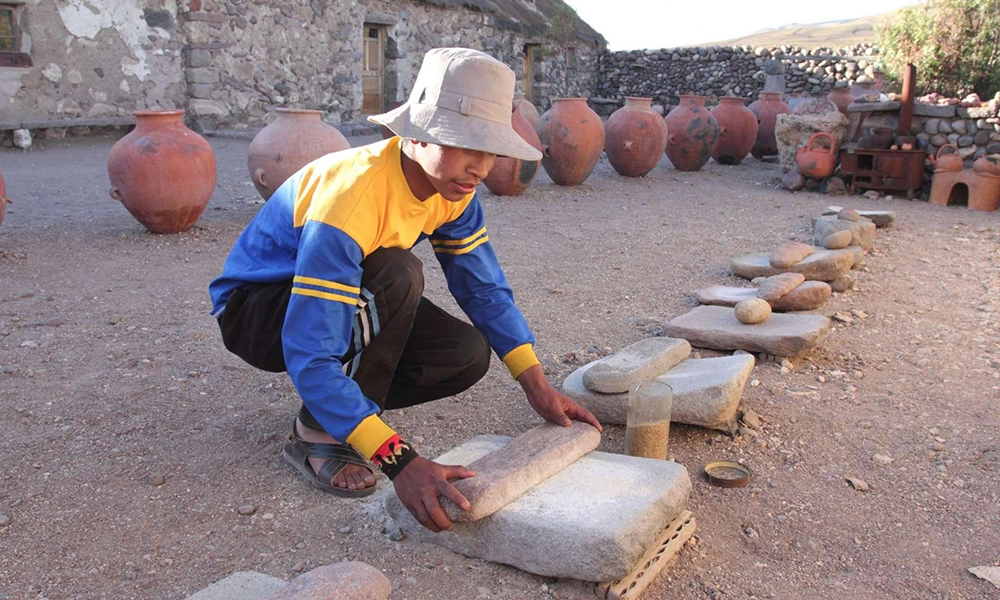
Travelers have the opportunity to observe how the locals transform salt into blocks, sculptures, and utensils.
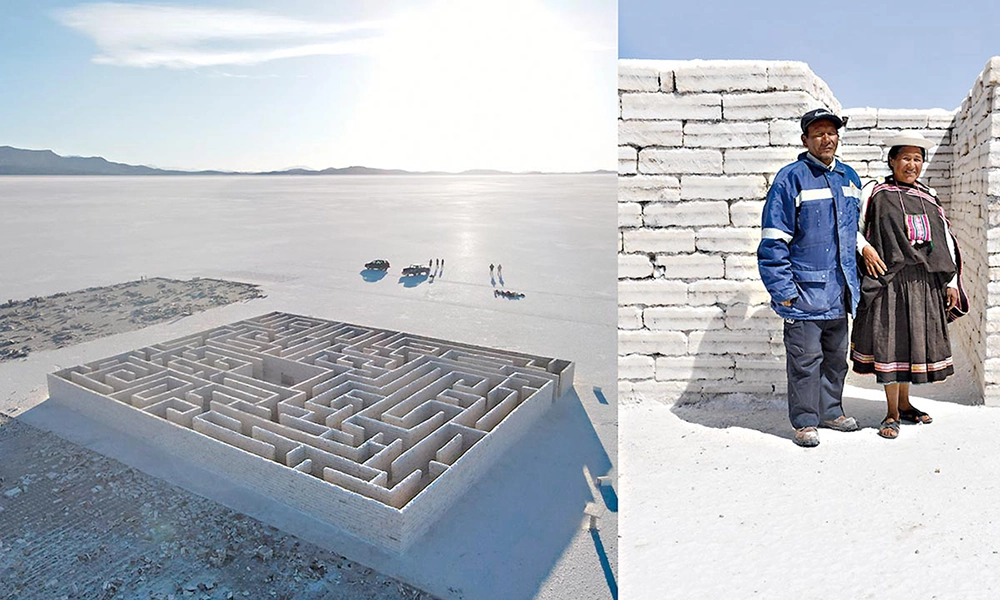
It is common to see figures such as llamas, cacti, and even replicas of buildings made entirely of salt.
Many of these pieces are sold as souvenirs and are handmade by entire families.
-
Artisan Market
Here you’ll find stalls selling alpaca, llama, and sheep textiles, as well as accessories, hats, gloves, and ponchos.
You can also buy salt souvenirs, carved objects, and natural products like quinoa creams and medicinal salts.
The market is an excellent place to support community-based tourism.
-
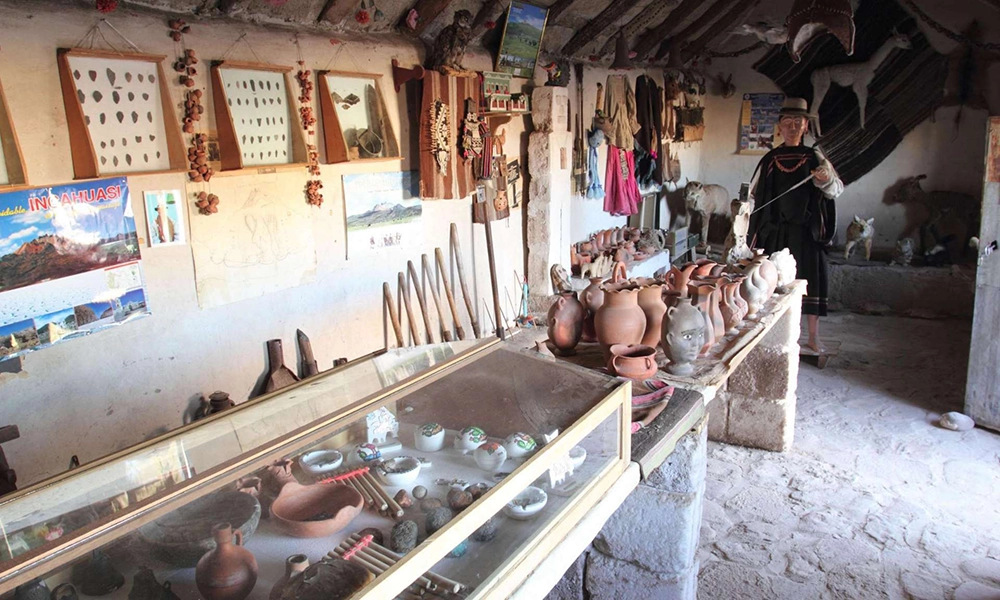
Salt Museum
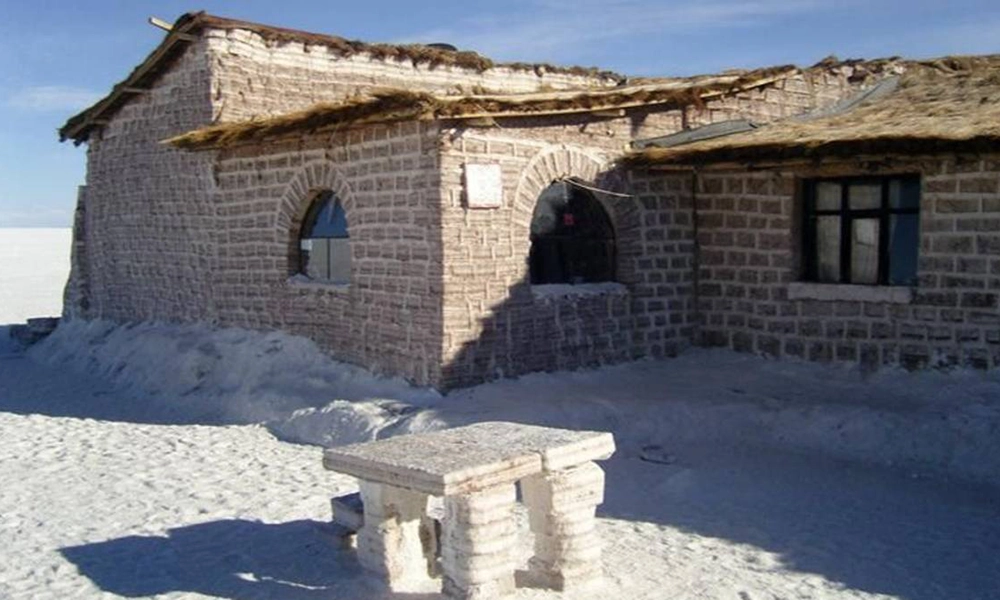
Built from salt blocks, it displays tools, photographs, and stories about salt extraction.
It’s a small space, but ideal for understanding the cultural and economic value of salt in the region.
-
Interacting with the locals
Talking to the artisans is an enriching experience: they share anecdotes about how tourism has changed their way of life, without abandoning their ancestral customs.
Many families offer small demonstrations of how to carve salt or how it’s
-
Landscapes and Cultural Photography
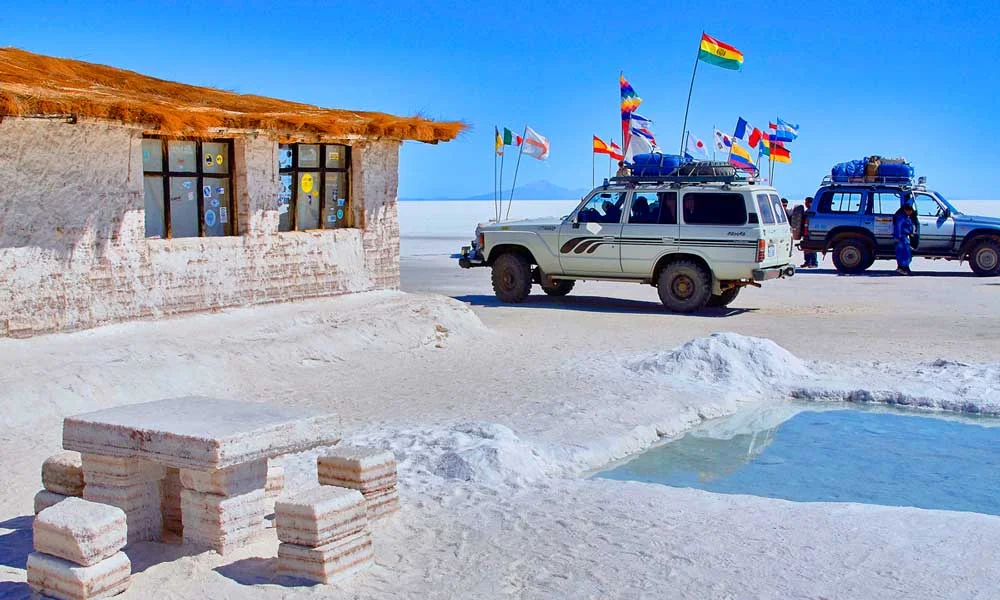
Colchani, though simple, is incredibly photogenic: houses made of salt, picturesque markets, and dusty streets frame the daily life of its inhabitants.
It’s the perfect place to take authentic photos before entering the immense Salar de Uyuni.
🍽 Gastronomy and Culinary Experiences
A visit to Colchani also offers the opportunity to sample typical dishes of the Bolivian highlands. Among the highlights:
- 🥩 Llama meat: prepared grilled or in a stew, it’s a very nutritious ancestral food.
- 🌾 Llama charque: dried meat served with corn and potatoes.
- 🍲 Quinoa soup: nutritious and warming, perfect for the chilly highlands.
- 🍞 Salt bread: made with the same salt extracted from the Salar, accompanied by infusions of local herbs.
In addition, some community kitchens offer experiential tourism, where travelers share a meal with local families, enjoying an authentic and welcoming atmosphere.
🏨 Lodging and Services in Colchani
Although Colchani is a small town, it has several lodging options:
- Family-run hostels: simple and affordable, managed by the community members themselves.
- Salt hotels: a few kilometers away, there are accommodations built entirely from salt blocks, a unique experience that attracts travelers from all over the world.
- Recommended option: stay in Uyuni, where there is more infrastructure, and dedicate half a day to visiting Colchani.
As for services, you’ll find small shops, public restrooms, and a craft market, although they are not as developed as in Uyuni.
💡 Practical Tips for Visiting Colchani
- 💵 Bring cash in Bolivianos, as most artisans do not accept cards or dollars.
- 🧣 Dress warmly: temperatures are usually low, especially between May and August.
- 🧴 Sun protection: the sun’s glare on the Altiplano can be strong, even in winter.
- 🎁 Buy local: purchase handicrafts directly from the producers to support the community economy.
- 📸 Best time to visit: in the morning, when the artisan market is busiest and the sun illuminates the salt houses.
- 🚐 Recommended tour: include Colchani in a package that combines Salar de Uyuni, the Train Cemetery, and other nearby attractions.
🤔 Frequently Asked Questions about the Community of Colchani
1. Where is the Community of Colchani located and how do I get there?
The community of Colchani is located in the department of Potosí, about 20 kilometers from Uyuni. It is considered the “gateway to the Salar de Uyuni.” To get there, you can take a taxi or shared taxi from Uyuni (20–25 minutes), or visit as part of a tour to the Salar, since almost all excursions include this stop.
2. What can you do in Colchani?
In Colchani you can:
- Visit the salt workshops, where sculptures and blocks of salt are made.
- Shop at the artisan market for alpaca textiles, llama wool, and unique souvenirs.
- Visit the Salt Museum.
Taste typical Andean dishes such as llama jerky or quinoa soup. - Spend time with the community, learning about their ancestral customs.
3. What to buy in Colchani?
Colchani is famous for its salt crafts, such as llamas, picture frames, decorative figures, and hand-carved souvenirs. You’ll also find alpaca and llama textiles, ponchos, hats, gloves, and items made from natural fibers. Many visitors take advantage of the opportunity to buy unique and affordable souvenirs directly from the artisans.
4. How much time is needed to visit Colchani?
Most tours and travelers spend between 1 and 2 hours exploring the workshops, the market, and the museum. It’s not a destination for an overnight stay, but it’s a perfect complement to a visit before entering the Salar de Uyuni.
5. Is Colchani worth visiting?
Yes, definitely. Although small, Colchani is the best cultural introduction to the Salar de Uyuni. It allows you to understand how salt is processed, meet local artisans, and take home authentic souvenirs. Plus, your purchases directly support the local economy.
6. When is the best time to visit Colchani?
It’s a great place to visit year-round, as there’s always activity in the market and workshops.
During the day, the morning is ideal because the artisan market is busiest and the light is perfect for photography.
During peak season (June to September and December to January), there’s more tourism, but also a wider variety of products.