

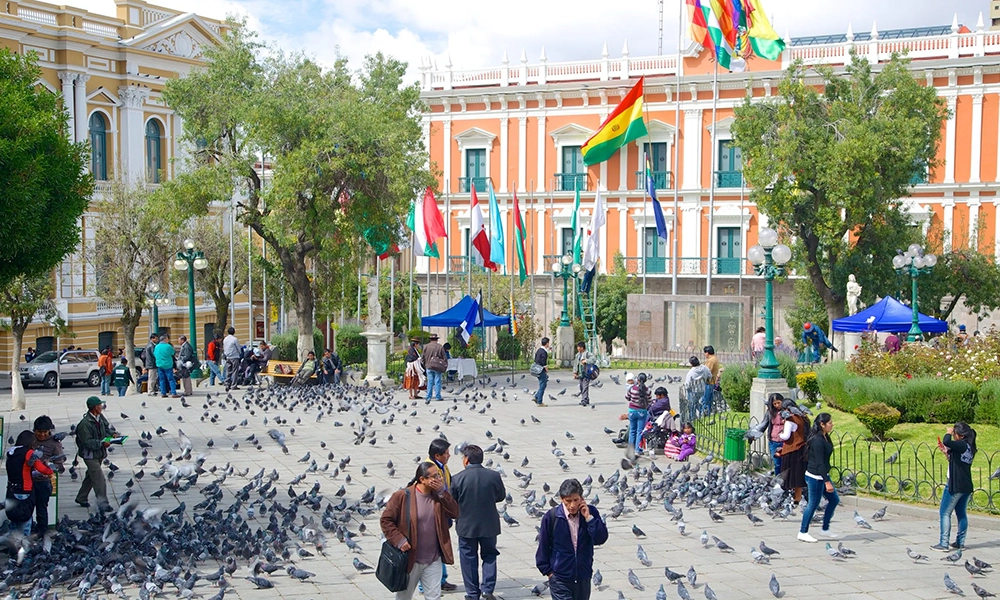
Plaza Pedro Domingo Murillo
Plaza Pedro Domingo Murillo is the most emblematic urban space in La Paz and one of the most symbolically significant places in all of Bolivia. It not only houses the main branches of government, but also historical memory, the struggles for independence, and the political life that has shaped the country’s destiny from colonial times to the present day.
Walking through this plaza is like walking through centuries of history. Every building, every statue, and every corner reflects fundamental episodes in the construction of the Bolivian nation. Therefore, Plaza Murillo is not just a tourist attraction: it is a place for reflection, identity, and historical awareness.
📍 Location: the epicenter of Bolivian power
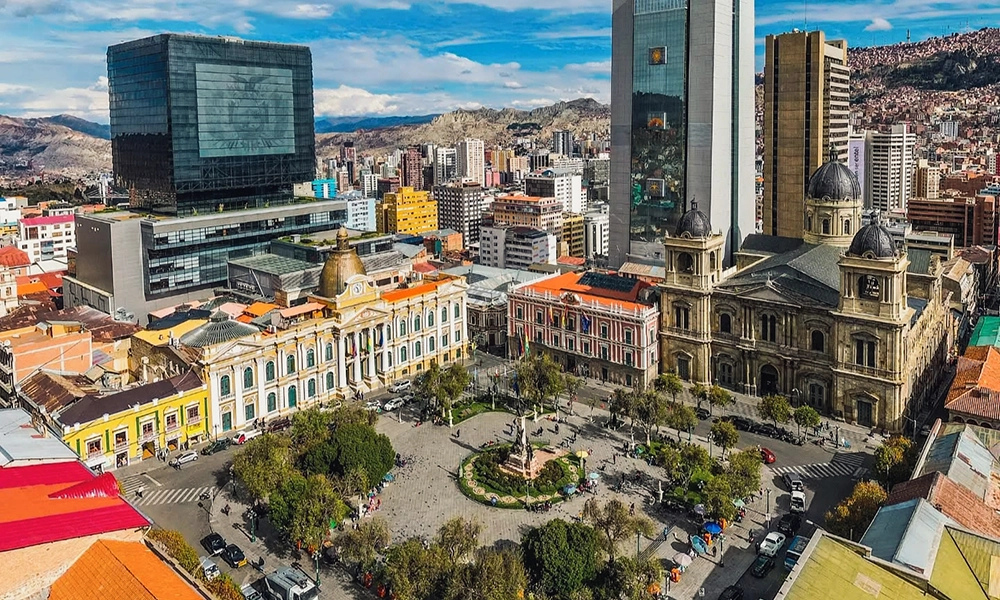
Plaza Pedro Domingo Murillo is located in the historic center of La Paz, more than 3,600 meters above sea level, in an elevated area that symbolically reinforces its role as a center of power.
It is considered:
- Bolivia’s political epicenter
- The seat of the Executive and Legislative branches
- The most closely monitored and representative point in the country
From here, decisions are made that influence the entire national territory, making the plaza a unique space within the South American context.
🕰️ The Plaza in Colonial Times: Plaza Mayor of La Paz
During the colonial period, this space was known as the Plaza Mayor, following the urban plan imposed by the Spanish Crown. The main administrative, religious, and judicial buildings of the city of Nuestra Señora de La Paz were established around it.
The plaza functioned as:
- Colonial administrative center
- Market and public meeting space
- Place for official and religious ceremonies
- Scene of punishments and public executions
From then on, this place was linked to power, authority, and social control.
🔥 The Revolution of July 16, 1809
One of the most significant moments in the plaza’s history occurred in 1809, when La Paz became the scene of one of the first independence uprisings in Latin America.
The Revolution of July 16, 1809, led by Pedro Domingo Murillo, marked the beginning of the emancipation process. After the movement’s failure, Murillo and other leaders were publicly executed in this very spot.
This event transformed the plaza into:
- A place of patriotic martyrdom
- A symbol of resistance
- A space of historical memory
🗿 Pedro Domingo Murillo: The Eternal Symbol
Pedro Domingo Murillo is one of the most important figures in Bolivian history. His execution in the plaza and his famous phrase:
“Compatriots, I die, but the torch I leave lit, no one will be able to extinguish”
made him a symbol of freedom and sacrifice.
In his honor, the plaza officially adopted his name in 1848, solidifying its place as a space dedicated to the memory of independence.
🏛️ The Central Monument
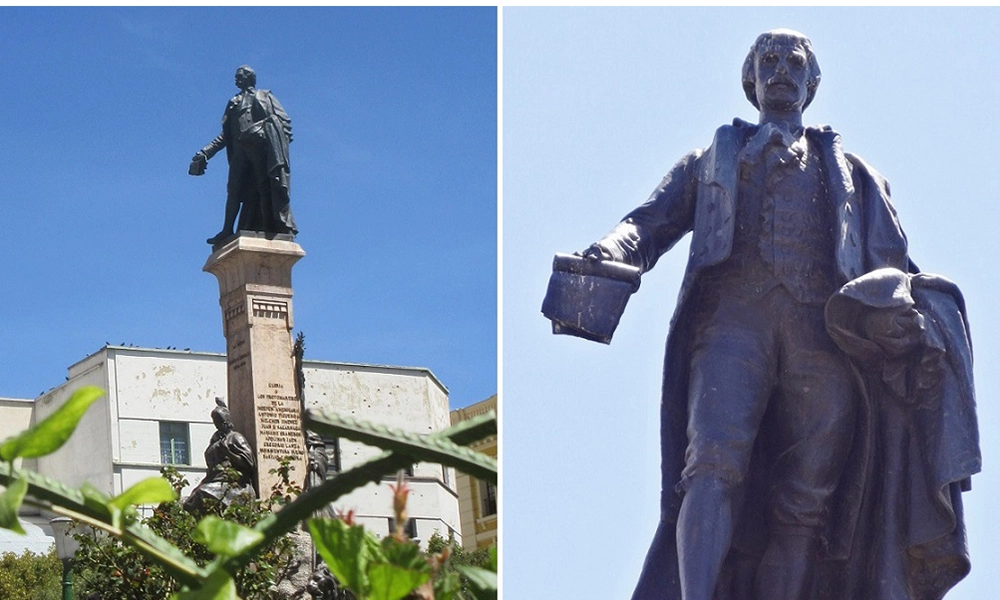
In the center of the plaza stands the monument to Pedro Domingo Murillo, surrounded by a sculptural ensemble representing the struggle for independence. This monument is the visual and symbolic focal point of the plaza.
- Features:
- Statue of Murillo in a firm and solemn pose
- Commemorative plaques
- Ceremonial space on national holidays
- It is one of the most photographed and iconic spots in La Paz.
🏢 Emblematic Buildings Surrounding the Plaza
Plaza Murillo is surrounded by the country’s most important institutions, forming an urban ensemble of great historical and political value.
🏛️ Palacio Quemado (Burnt Palace)
Former seat of the Executive Branch, the site of coups d’état, official ceremonies, and key moments in Bolivian history. Its name comes from a fire that occurred in the 19th century.
🏢 Casa Grande del Pueblo (Great House of the People)
A modern building that currently houses the presidential headquarters, symbolizing contemporary Bolivia and institutional change.
🏛️ Plurinational Legislative Assembly
Seat of legislative power, where the country’s laws are debated and approved.
⛪ Metropolitan Cathedral of Our Lady of Peace
The city’s main church, with its imposing neoclassical architecture and key role in official and religious ceremonies.
⛪ The Metropolitan Cathedral: Faith and State
The Metropolitan Cathedral reinforces the historical relationship between religion and civil power. Its presence in the plaza is a reminder that, for centuries, the Catholic faith was a fundamental part of the political and social order.
The following have been held inside:
- Official Te Deums
- State Funerals
- National Religious Celebrations
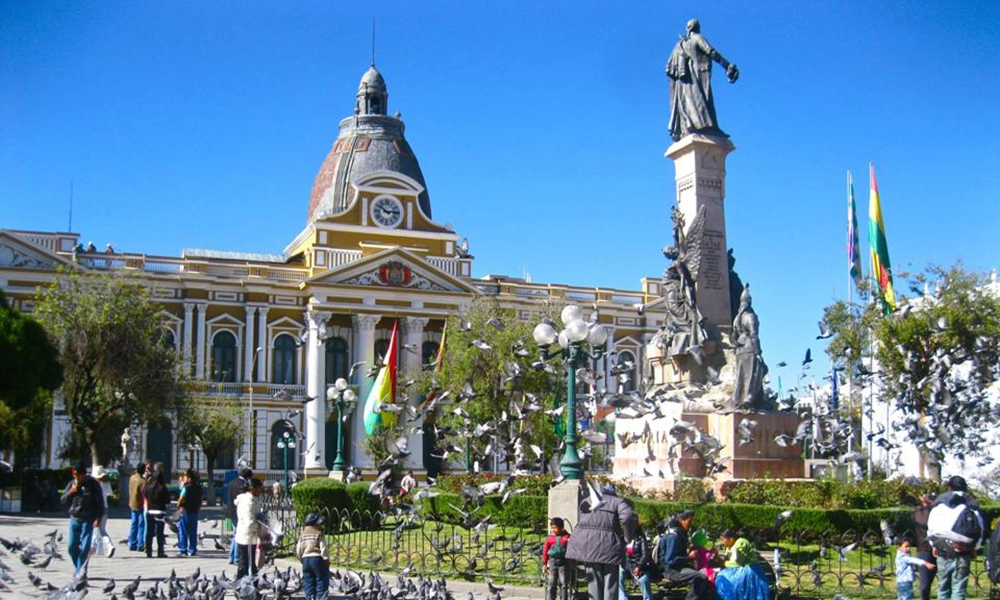
🕊️ Pigeons: An Everyday and Photographic Symbol
The pigeons of Plaza Murillo have become a characteristic element of the place. Although simple, they bring life to the space and are part of La Paz’s visual landscape.
For many visitors, feeding and photographing them is part of the traditional expe
👥 A Living Space: Politics, Society, and Citizen Expression
Plaza Murillo is a space where history continues to be written. It is a frequent setting for:
- Official State events
- Press conferences
- Social demonstrations
- Political protests
- Citizen gatherings
This makes it a barometer of Bolivian political reality.
🌆 The Plaza Throughout the Day
Mornings
An institutional, orderly, and solemn atmosphere. Ideal for architectural photography and guided tours.
Afternoons
A greater presence of citizens and tourists. The space becomes more dynamic.
Evenings
Lighting that highlights the architecture and creates a respectful and contemplative atmosphere.
🧭 A Comprehensive Tourist Experience
For travelers, Plaza Murillo offers a profound and educational experience:
- Free admission
- High historical value
- Ideal for guided tours
- A key point for understanding Bolivia
It’s a place to be explored not hastily, but attentively and with context.
🗺️ What to visit near Plaza Murillo
From here you can walk to:
- Jaén Street
- National Museum of Art
- Museum of Local Customs
- Witches’ Market
- Colonial churches in the city center
✅ Recommendations for visitors
- Bring a jacket due to the altitude
- Respect safety regulations
- Avoid running or making excessive noise
- Ideally combined with a historical guide
✨ Why is Plaza Murillo a must-see?
Because it is the political, historical, and symbolic heart of Bolivia. Here, the struggles, sacrifices, and identity of the country are understood. It is not just a place to see, but to understand.
Pedro Domingo Murillo Square is much more than a plaza: it is a space of national memory, political power, and historical reflection. Visiting it is to delve into Bolivia’s past and present, understand its independence process, and observe how history lives on in the daily life of La Paz.