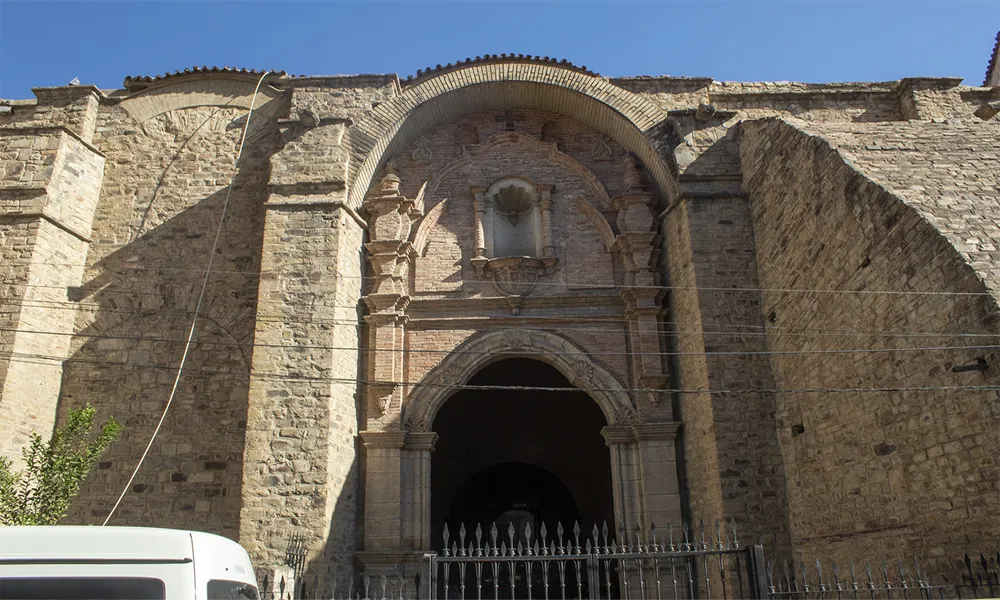

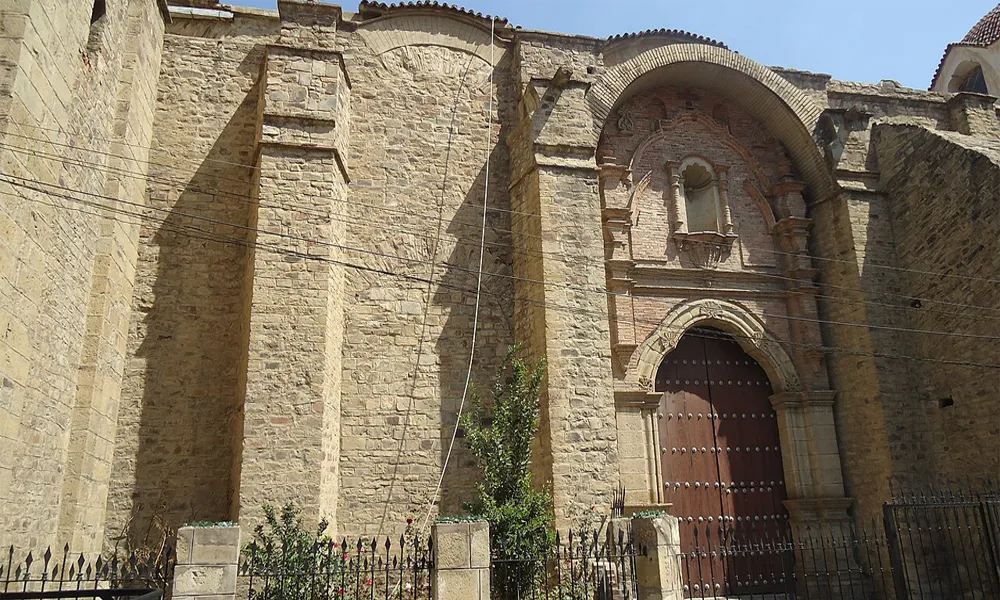
Santo Domingo Convent: Living History in the Heart of Cochabamba
In the very center of Cochabamba stands a place where the past still breathes. The Santo Domingo Convent is much more than a religious building: it is a silent witness to centuries of history, faith, and daily life.
Its walls, courtyards, and corridors hold stories that connect the colonial era with the present, making it one of the city’s most significant heritage sites.
🕰️ A Journey to the Colonial Past
Walking through the Santo Domingo Convent is like stepping back in time. Its colonial architecture reflects the Spanish influence adapted to the local context, with spaces designed for contemplation, silence, and community.
Every corner speaks of a time when the city was beginning to take shape. The walls, marked by the passage of years, retain a sober beauty that invites calm observation.
📌Location and History
The Church and Convent of Santo Domingo are located at the corner of Avenida Ayacucho and Calle Santiváñez, in the heart of Cochabamba, Bolivia.
The parish was founded in 1612, initially as a convent of the Order of Preachers (Dominicans), and the first chapel was built around 1632–1641.
Current structure dates from the period 1778–1794, replacing the older building.
🏗️ Architecture that Inspires Reflection
The convent stands out for its solid and harmonious structure. The internal courtyards, corridors, and architectural details create an atmosphere of tranquility that contrasts with the surrounding urban bustle.
Simplicity of its forms does not detract from its grandeur; on the contrary, it conveys balance and spiritual depth. It is a space that invites you to slow down and listen to the silence.
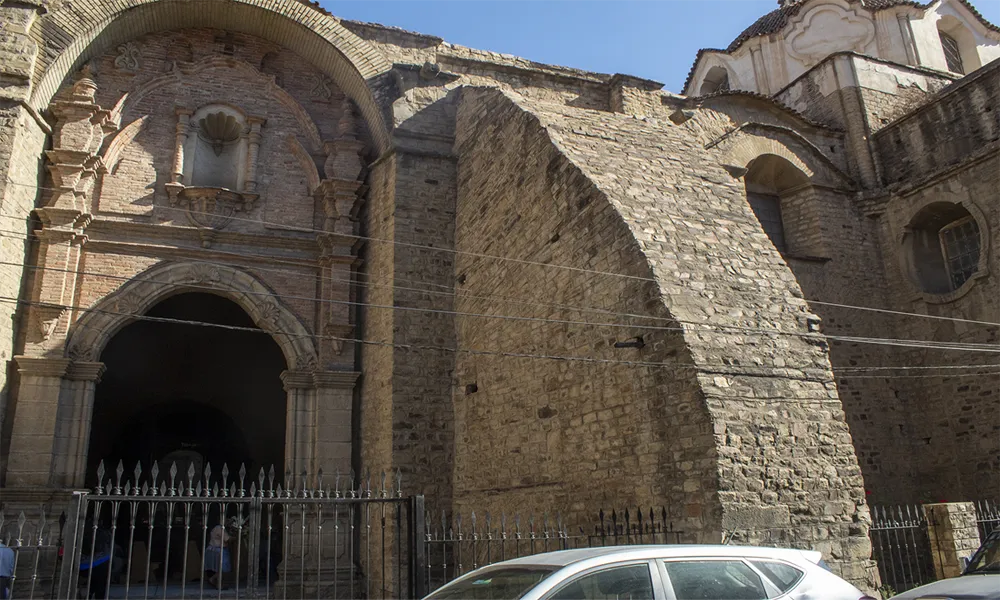
Current State and Heritage Value
Declared a National Monument by Supreme Decree No. 8171 of December 7, 1967.
Although majestic, it shows signs of deterioration, especially on the façade, which requires urgent cleaning to ensure its preservation.
It is considered the oldest religious building in the Cochabamba Valley and a testament to the cultural fusion between indigenous tradition and colonial Baroque.
Tourism and Surroundings
In addition to its religious and historical value, it is a central point on Cochabamba’s tourist routes, surrounded by plazas, cafes, and traditional markets.
It is accessible from Plaza 14 de Septiembre by walking or local transportation, making it easy to visit as part of the city’s cultural tours.
📖 Spirituality, Culture, and Community
Over the years, the Santo Domingo Convent has been a center of religious, educational, and cultural life. It was not only a place of prayer, but also a key point in the formation and organization of Cochabamba society.
Its importance goes beyond the religious: it forms part of the city’s collective memory. Many generations have passed through its spaces, leaving invisible yet ever-present traces.
🧡 Heritage that remains alive
Today, the convent continues to be a symbol of identity and continuity. It is not a relic of the past, but a space that engages with the present and reminds us of the importance of preserving what connects us to our roots.
Caring for and valuing places like this is recognizing history as part of our daily lives.