
Tiwanaku: Ancestral Capital of the Andes
Tiwanaku, also known as Tiahuanaco, is one of the most important archaeological sites in South America and a UNESCO World Heritage Site. Located near the southern shore of Lake Titicaca in Bolivia, this ancient ceremonial city was the center of one of the continent’s most advanced cultures. Its monumental architecture, hydraulic engineering, worldview, and cultural legacy make it a must-see destination for history buffs, archaeologists, and cultural tourists.
📍 Location and Access to Tiwanaku
- Country: Bolivia
- Department: La Paz
- Altitude: 3,850 m (12,000 ft)
- Distance from La Paz: 71 km (45 mi)
- Travel time: Approximately 1 hour and 30 minutes by road.
How to get there from La Paz:
- Organized tour: Daily tours are available with transportation, guide, and entrance fees included.
- By public transport: Minibuses depart from the General Cemetery of La Paz to Tiwanaku (approx. Bs. 20–30).
- By private car: The most direct route is via the La Paz–Desaguadero highway, which is perfectly paved.
🌤️ Climate and Best Time to Visit
Tiwanaku is located in the Andean highlands, so its climate is cold and dry for most of the year.
- Dry season: May to October (recommended for visiting).
- Rainy season: November to March.
- Average temperature: Between 5°C and 18°C.
- Recommendation: Bring sunscreen, a hat, warm clothing, and comfortable shoes.
🏛️ History and Origin of Tiwanaku
The Tiwanaku culture flourished around 1500 BC. and 1200 AD, reaching its peak between 500 and 900 AD. It was one of the main political, religious, and commercial centers of the Andes. Its influence extended across large areas of Bolivia, Peru, Chile, and Argentina, expanding networks of exchange and knowledge.
Main historical milestones:
- 1500 BC: First village settlements.
- 400–800 AD: Period of maximum architectural and political flourishing.
- 1200 AD: Decline of the civilization, possibly due to climate change and internal conflicts.
🗿 Main Attractions of the Archaeological Complex
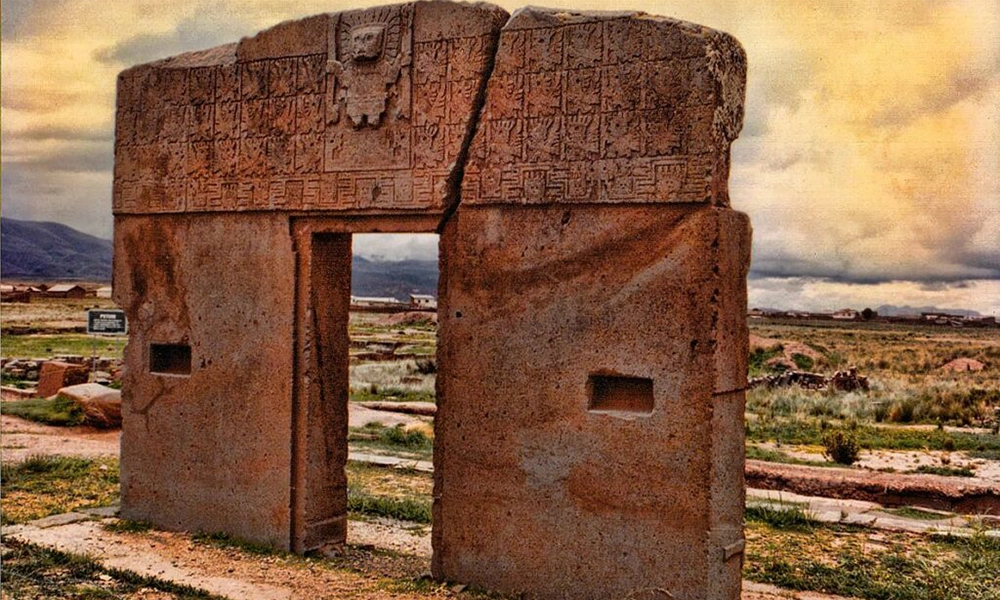
1. Gate of the Sun
An iconic monument of Tiwanaku, carved from a single block of andesite stone. It represents the god Wiracocha, the Andean creator deity. The reliefs depict a solar calendar and symbols related to the pre-Incan worldview.
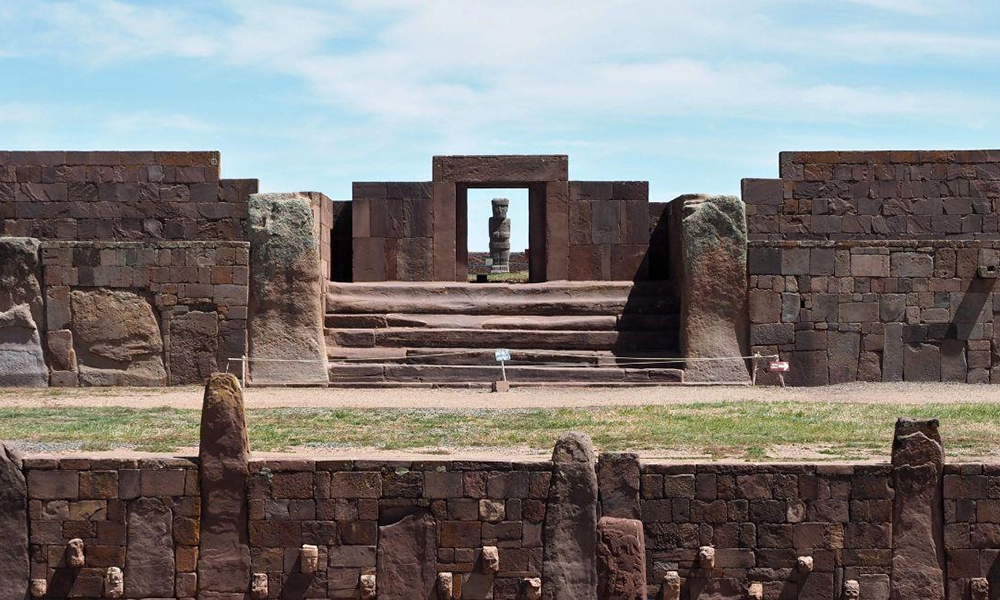
2. Semi-Subterranean Temple
A unique ceremonial enclosure, surrounded by walls decorated with more than 170 stone tenon heads. It is believed that these represented various conquered ethnic groups or protective deities.
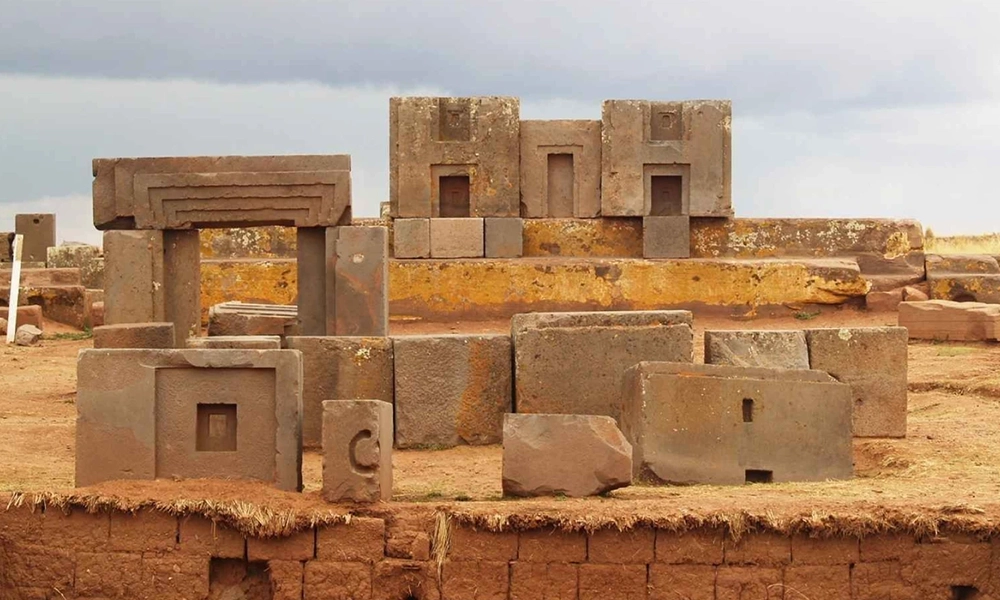
3. Akapana Pyramid
A seven-tiered pyramidal platform that served as a ceremonial and astronomical center. Its underground hydraulic system demonstrates the advanced engineering knowledge of the Tiwanaku culture.
4. Ponce Monolith and Fraile Monolith
Two impressive stone sculptures carved from a single block, representing anthropomorphic figures with ritual symbols and possibly priests or rulers.
5. Kalasasaya Temple
A ceremonial complex astronomically aligned with the solstices and equinoxes. Its main function was to observe the movements of the sun and moon, marking the beginning of the agricultural seasons.
6. Tiwanaku Site Museum
Located within the complex, it exhibits original artifacts, ceramics, tools, textiles, and replicas of the main sculptures.
🎟️ Prices and Admission Hours
- General Admission: Bs. 100 (~15 USD)
- Bolivian Students: Bs. 15
- Children: Free
- Hours: Monday to Sunday, 9:00 a.m. to 4:30 p.m.
- Traveler Tip: Purchase the combined ticket that includes admission to both museums within the complex.
🎯 Recommended Activities in Tiwanaku
- ✅ Guided tours led by archaeologists and local guides.
- ✅ Photography of monuments, reliefs, and landscapes.
- ✅ Participation in Andean rituals and offerings to Pachamama (Mother Earth).
- ✅ Observation of astronomical phenomena during the winter solstice (June 21).
- ✅ Visit to surrounding communities to learn about their traditions and cuisine.
🍲 Gastronomy and Where to Eat
Around the complex, you’ll find restaurants serving typical Andean cuisine:
- Recommended dishes: chairo paceño (a traditional Bolivian soup), sajta de pollo (chicken stew), pique macho (a spicy Bolivian dish), and Titicaca trout.
- Traditional drinks: api morado (a fermented corn beverage), coca tea, and quinoa chicha (a fermented corn beverage).
🏨 Recommended Hotels Near Tiwanaku
Although most visitors choose to stay in La Paz, there are also comfortable options in Tiwanaku:
- Hotel Tiwanaku Lodge ★★★
- Hostal Inti Wara
- Albergue Pumapunku
- Options in La Paz: Hotel Europa, Ritz Apart Hotel, and Casa Grande Suites.
🧭 Practical Tips for Travelers
- Bring cash in Bolivianos.
- Wear sunscreen and a hat due to the strong UV radiation.
- Drink coca tea to help prevent altitude sickness.
- Book your tour in advance, especially during peak season.
- Dedicate at least half a day to exploring the entire complex.
❓ Frequently Asked Questions (FAQ)
1. How much time is needed to visit Tiwanaku?
Between 3 and 5 hours to explore the entire complex.
2. Is it recommended to go with a guide?
Yes, to understand the worldview, history, and symbolism of Tiwanaku.
3. Can it be visited in one day from La Paz?
Yes, a day trip is possible.
4. What is the best month to visit?
June, especially during the Andean-Amazonian New Year celebrations.