
Cathedral Basilica of Our Lady of Guadalupe and Primate of Bolivia
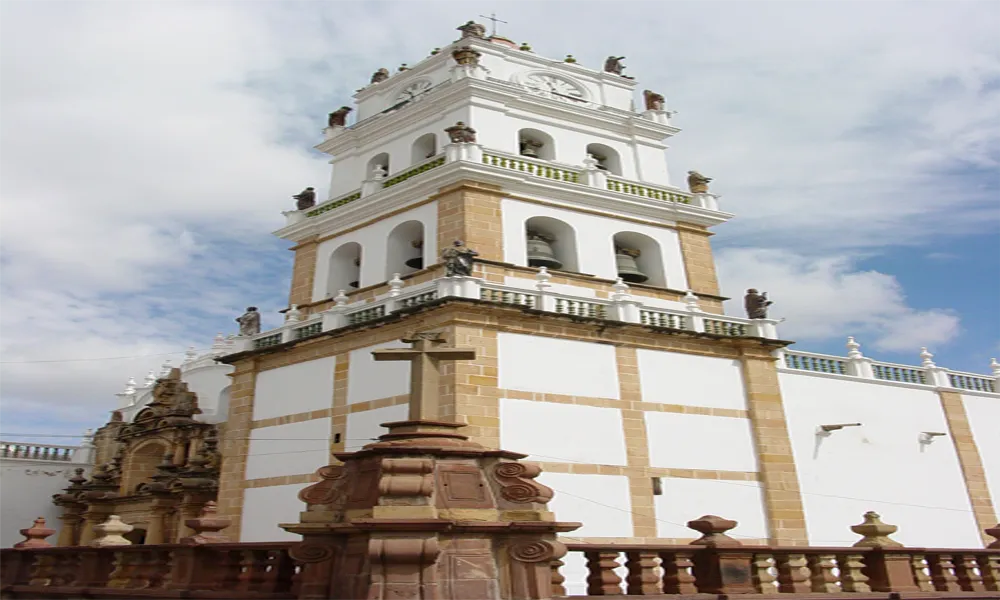
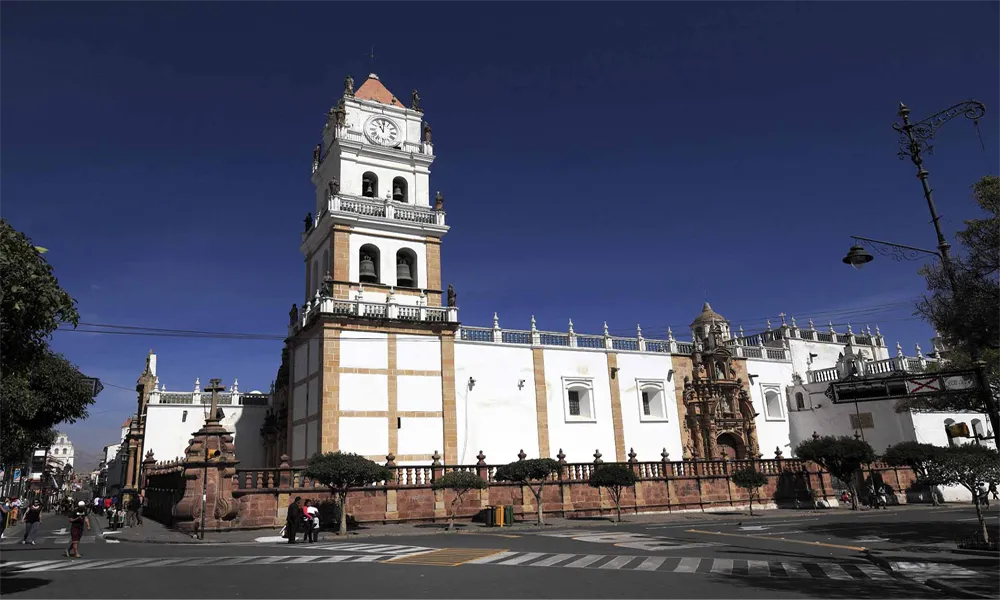
The Cathedral Basilica of Our Lady of Guadalupe and Primate of Bolivia is one of the most important religious, historical, and artistic monuments in the country. Located across from Plaza 25 de Mayo, in the heart of Sucre’s historic center, this cathedral not only represents the highest authority of the Catholic Church in Bolivia, but is also a profound symbol of faith, identity, and colonial heritage.
📍 Location and Visiting Hours
📌 Location
The Cathedral Basilica of Our Lady of Guadalupe and Primate of Bolivia is located across from Plaza 25 de Mayo, in the historic center of Sucre, Bolivia. It is in the heart of the colonial city, next to other important landmarks such as the Casa de la Libertad (House of Liberty) and government buildings, making it a must-see for any visitor.
- Approximate Address: Plaza 25 de Mayo, main corner, Sucre, Chuquisaca, Bolivia.
🕰️ Visiting Hours
Hours may vary depending on religious events, masses, or the tourist season, but in general:
- 🕘 Sightseeing Visit / Cathedral Entrance:
It is usually open to the public Monday through Friday mornings, generally between approximately 9:00 AM and 12:00 PM.
- 🛐 Masses and Religious Services:
It is possible to attend masses on specific days; for example, many visitors note celebrations on Thursday and Sunday mornings around 9:00 AM.
- 🕑 Lunch Break:
The cathedral may close briefly at midday between morning and afternoon.
🔔 Tip: If your goal is to see the interior more peacefully or participate in a mass, the early morning hours are usually the best.
📜 History of the Primate Cathedral of Bolivia
Construction of the cathedral began in 1559, a few years after the founding of the city of La Plata (present-day Sucre), making it one of the oldest churches in Bolivia. Its construction spanned several centuries, resulting in a blend of architectural styles that reflect the city’s historical and artistic evolution.
As the seat of the Archdiocese of Sucre, the cathedral received the title of Primate of Bolivia, making it the country’s principal Catholic church. Important religious decisions were made from this location during the colonial and republican eras.
🏛️ Architecture and Artistic Style
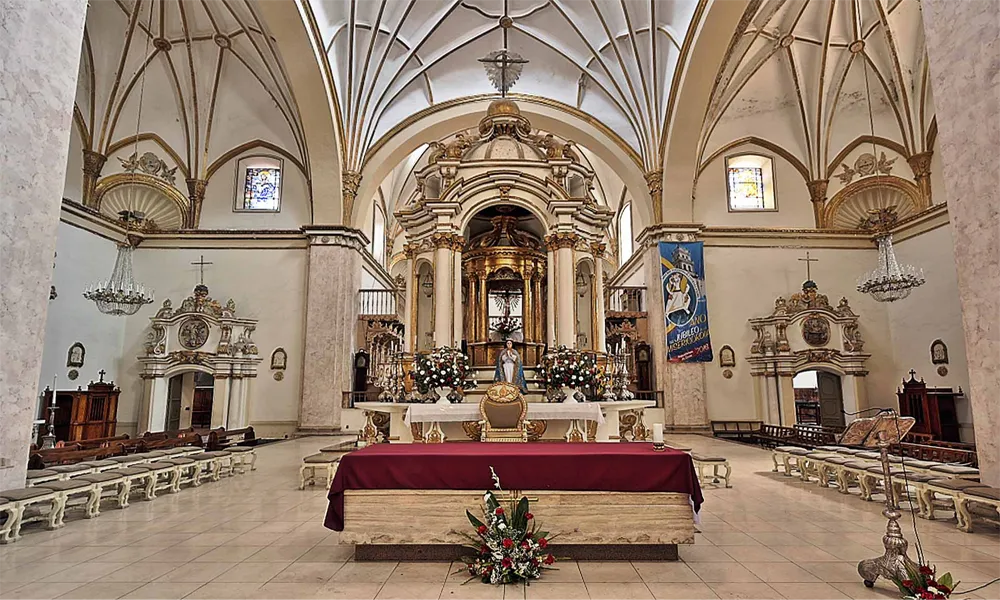
The Cathedral Basilica of Our Lady of Guadalupe stands out for its harmonious blend of Renaissance, Baroque, and Neoclassical styles. Its austere facade contrasts with the artistic richness found inside.
Among the most relevant architectural elements are:
- The spacious and well-proportioned naves, which convey solemnity and balance.
- The main altar, finely decorated and of great artistic value.
- The vaults and columns, which demonstrate European influence adapted to the Andean context.
Every corner of the cathedral reflects the work of local and European artisans who left an indelible mark on the religious heritage of Sucre.
👑 The Virgin of Guadalupe: A Spiritual and Artistic Jewel
The cathedral’s greatest treasure is the image of the Virgin of Guadalupe, patron saint of Sucre. This Marian devotion is one of the most venerated in the country and is distinguished by its extraordinary symbolic and material richness.
The image is adorned with jewels, crowns, and precious stones, donated by the faithful over the centuries. It is considered one of the most valuable Marian representations in South America, both for its religious significance and its artistic value.
Each year, the feast in honor of Our Lady of Guadalupe brings together thousands of devotees, making the cathedral the epicenter of one of Bolivia’s most important religious celebrations.
🕊️ Religious and Cultural Significance
Beyond its liturgical function, the Primatial Cathedral of Bolivia plays a fundamental role as a cultural and historical space. Inside, sacred works of art, colonial paintings, and religious objects are preserved, allowing us to understand the development of Christianity in Bolivian territory.
The cathedral has also been the setting for official ceremonies, solemn acts, and key events in national history, establishing itself as a point of reference both spiritually and civically.
📌 Practical Tips
- Respectful Attire: As this is an active religious temple, appropriate attire is recommended (shoulders covered, no very casual clothing).
- Visit to the Museum/Sacred Art: In some cases, there are adjacent areas (such as an ecclesiastical museum) with their own hours, generally divided into morning and afternoon sessions.
- Note Special Hours: On religious holidays or local festivals, hours may change.
❓ Frequently Asked Questions
- Where is the cathedral located?
It is located in the historic center of Sucre, facing Plaza 25 de Mayo.
- Why is it called the Primate Cathedral of Bolivia?
Because it is the seat of the Archdiocese of Sucre, the highest ecclesiastical authority in the country.
- What are the highlights inside?
The image of Our Lady of Guadalupe, the main altar, and the colonial artwork.
- Is it possible to visit as a tourist?
Yes, it’s open to the public and one of Sucre’s main cultural and religious attractions.
✨ Symbol of faith and national heritage
The Cathedral Basilica of Our Lady of Guadalupe, Primate of Bolivia, is much more than a religious temple: it’s a living testament to the history, faith, and art that shaped Sucre and the country. Visiting it is to delve into centuries of devotion, architecture, and tradition that continue to beat in the heart of Bolivia.