
Laguna Honda: The Silent Jewel
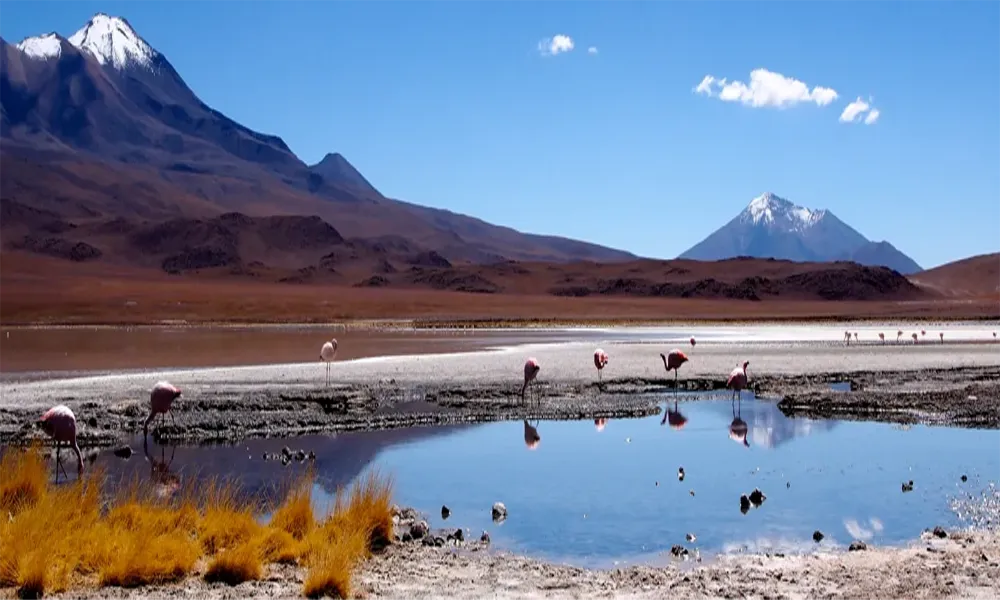
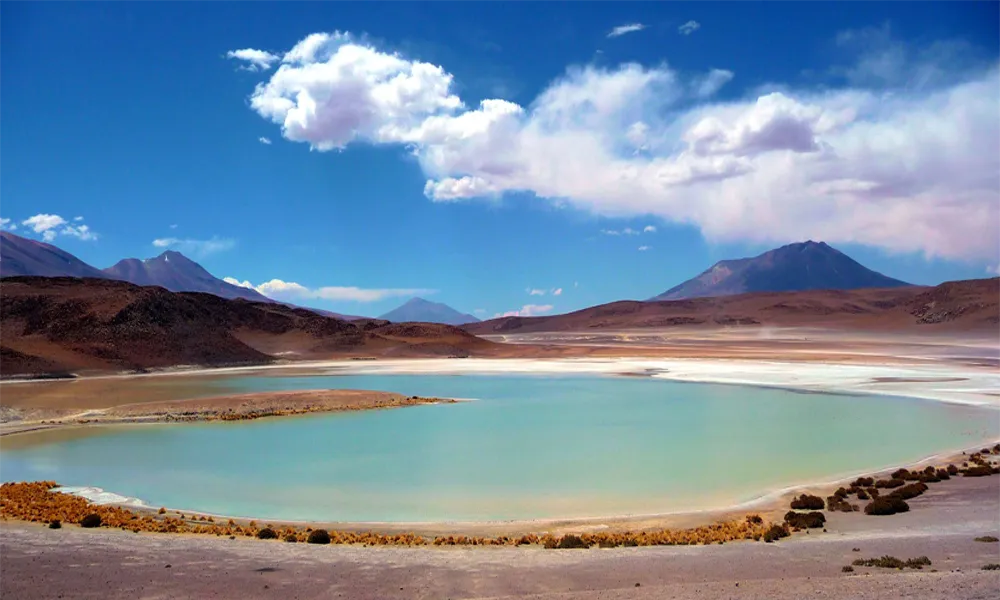
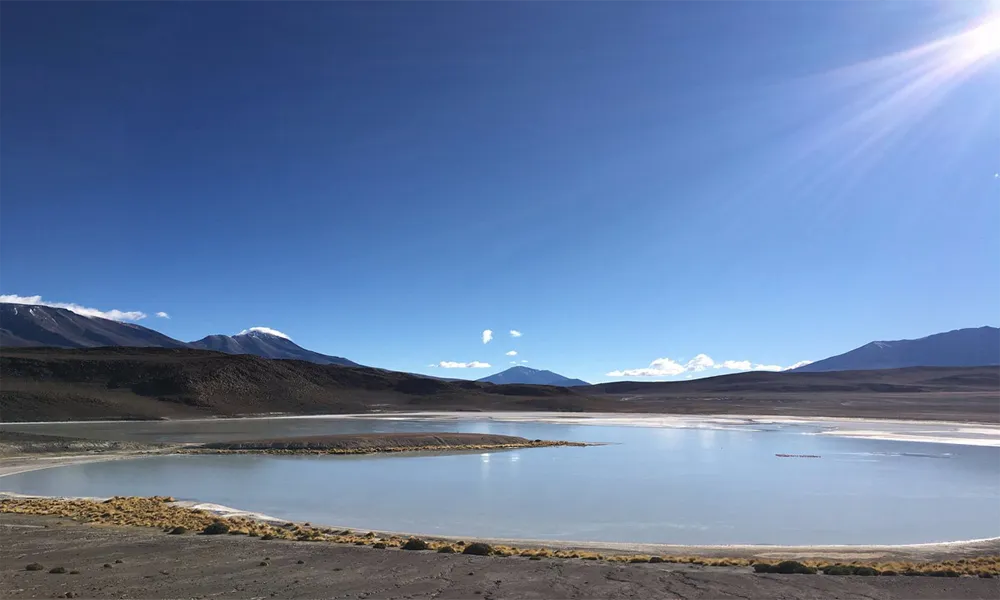
Laguna Honda is one of the most striking and least-known landscapes on the southern circuit of the Salar de Uyuni. Located at over 4,200 meters above sea level, within the Eduardo Avaroa Andean Fauna National Reserve, this lagoon stands out for its intense deep blue color, its white mineral borders, and the imposing volcanic landscape that surrounds it.
Unlike other more visited lagoons, Laguna Honda offers a quieter, more contemplative, and authentic experience, ideal for travelers seeking extreme landscapes, nature photography, and direct contact with the Bolivian highlands.
📍Location and Geographic Context
Laguna Honda is located in southwestern Bolivia, in the department of Potosí, very close to the border with Chile. It is part of the high Andean lagoon circuit visited during tours to Uyuni, along with other unique ecosystems such as:
- Laguna Hedionda
- Laguna Chiar Khota
- Laguna Colorada
- Siloli Desert
This area belongs to one of the driest and highest regions in South America, characterized by volcanic plains, geysers, fumaroles, and mountains of Andean-volcanic origin.
🚙 How to get to Laguna Honda?
Laguna Honda is not accessible independently. Access is only possible through organized tours in 4×4 vehicles due to:
- Unmarked roads
- Volcanic and uneven terrain
- Extreme altitude
- Complete lack of services
- Most common routes
🌈 Main characteristics of Laguna Honda
- 💧 Water color: intense blue that varies between turquoise and dark blue depending on the light
- 🧂 Composition: high concentration of minerals and salts
- 🏔️ Landscape: volcanoes, arid hills, and open plains
- 🌬️ Climate: cold, dry, and with strong winds for much of the year
The contrast between the deep sky, the blue water, and the clear shores creates one of the most photogenic landscapes of the Altiplano, especially at sunrise and sunset.
🦩 Flora and fauna of Laguna Honda
Despite the extreme conditions, Laguna Honda is home to surprising biodiversity, adapted to the altitude and salinity.
🐦Fauna
- 🦩Andean Flamingo
- 🦩Chilean Flamingo
- 🦩James’s Flamingo
- 🐦Andean Avocets
- 🐦High-Andean Gulls
- 🦙Llamas and Vicuñas in the surrounding area
These birds feed on microorganisms present in the water, which explains the constant presence of flamingos for much of the year.
🌱 Flora
- High-Andean tough grasses
- Salt-resistant vegetation
- Plants adapted to extreme temperatures and volcanic soils
📸 Activities
A visit to Laguna Honda is primarily for contemplation, ideal for:
- 📷 Landscape and wildlife photography
- 🚙 Scenic 4×4 tours
- 🌄 Sunrise and sunset viewing
- 🧘 Connecting with nature and visual relaxation
⚠️ Swimming and other water activities are not permitted due to the climate, altitude, and water composition.
🌦️ Climate and Best Time to Visit
✅ Dry Season (April to November)
- Clear skies
- More vibrant colors
- Better road conditions
🌧️ Rainy Season (January to March)
- More humid landscapes
- Possible mirror-like reflections
- More difficult access and varied routes
📌 Nighttime temperatures can drop below 0 °C, especially between May and August.
🧭 Recommendations for travelers
- 🧥 Bring thermal clothing, a windbreaker, and a hat.
- 🕶️ Wear sunglasses and sunscreen (intense radiation).
- 💧 Stay constantly hydrated.
- 😷 Prevent altitude sickness by acclimatizing beforehand.
- 📸 Protect cameras and electronic equipment from the cold and dust.
- 🚫 Do not leave any trash or disturb the natural environment.
❓ Frequently Asked Questions about Laguna Honda
- How long does the visit last?
Between 20 and 40 minutes, depending on the tour itinerary.
- Are there tourist services?
No. There are no restrooms, restaurants, or shops at the lagoon.
- Is the altitude dangerous?
The altitude is high, so it is recommended to visit after acclimatizing in Uyuni or San Pedro de Atacama.
- Can it be visited year-round?
Yes, although the best time is during the dry season.