
Tunupa Volcano: Legend, Landscape and Mystery of the Bolivian Altiplano
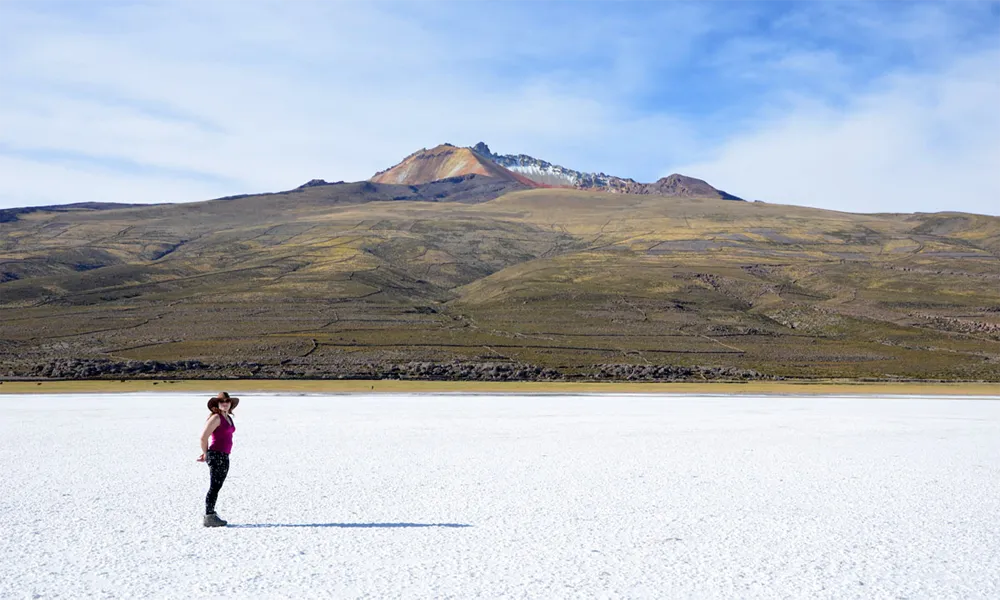
The Tunupa volcano is one of the most enigmatic and spectacular places on the Bolivian Altiplano, located on the northern edge of the Salar de Uyuni salt flats in the department of Potosí. Standing at 5,321 meters above sea level, this dormant volcano is notable not only for its imposing presence and colorful slopes, but also for the stories and legends surrounding it, making it an unmissable attraction for visitors to the region.
Location and Access
The Tunupa volcano is located near the town of Cojasa, in the Daniel Campos province. The most common way to reach it is through tours departing from Uyuni or Colchani, crossing the vast white expanse of the salt flats to reach its base. From there, visitors can take hikes of varying difficulty, depending on the viewpoint or summit they wish to reach.
- From Uyuni: 2 to 3 hours by 4×4 vehicle crossing the salt flats.
- From La Paz: approximately 8 to 10 hours by land, or fly to Uyuni and transfer by road.
Geological History
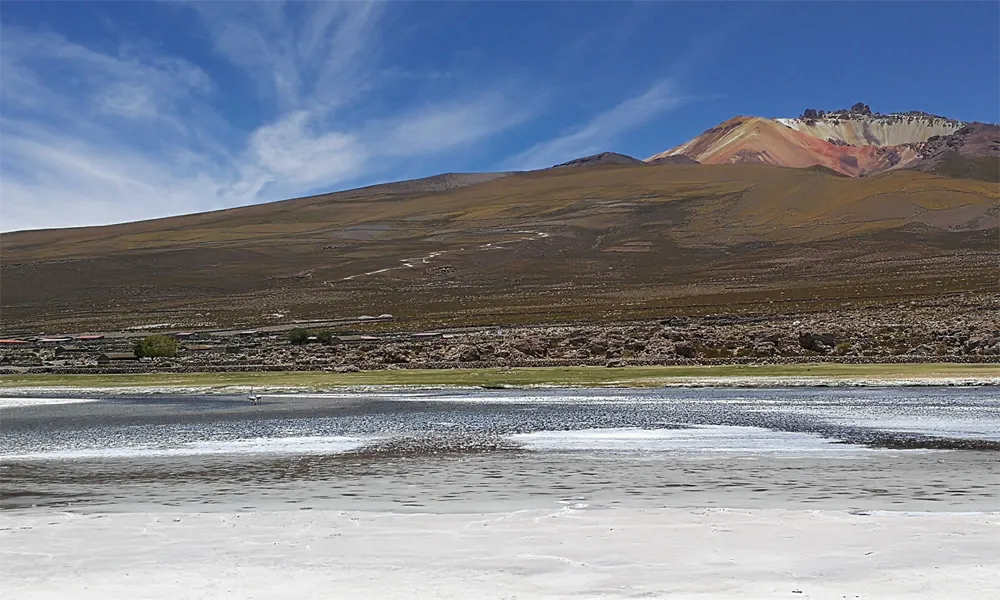
Tunupa is an extinct volcano formed millions of years ago by tectonic and volcanic activity in the Andes Mountains. Its most striking feature is its multicolored slopes, the result of the oxidation of minerals such as iron, sulfur, and copper, which give it red, yellow, ochre, and purple hues visible even from kilometers away.
The Legend of Tunupa
The Aymara culture preserves a moving legend that explains the origin of the Salar de Uyuni. According to the story, the goddess Tunupa fell in love with a young god, but he abandoned her. Amid tears and sorrow, she wept, and her breast milk mingled with her tears, forming the salt flat. Therefore, the volcano bears her name in honor of this story of love and loss.
What to See and Do at Tunupa Volcano
- Volcano Viewpoint
An intermediate-level hike leads to a panoramic viewpoint offering breathtaking views of the vast Salar de Uyuni and the colorful slopes of Tunupa.
- Coquesa Mummy Caves
In the community of Coquesa, you’ll find ancient pre-Columbian mummies, preserved in small caves dating back over 1,000 years, adding an archaeological touch to your visit.
- Partial or Full Ascent
The more adventurous can trek to the summit. While no technical equipment is required, the altitude demands good acclimatization and physical fitness.
- Panoramic Photography
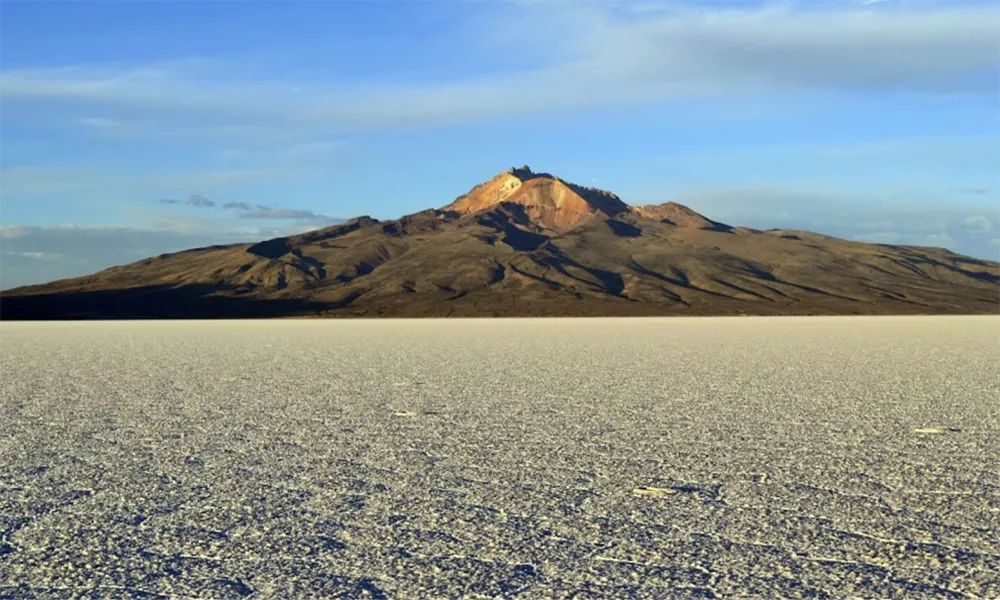
The combination of the salt flats, the volcano, and the clear sky creates one of Bolivia’s most photogenic landscapes, ideal for nature photography.
Climate and Best Time to Visit
The climate is cold and dry for most of the year. The best time to visit Tunupa Volcano is between May and October, when the skies are clear and there is less chance of rain. Between January and March, the salt flats are often flooded, creating the famous mirror effect, but access to certain areas may be limited.
- Average temperature: between 5°C and 15°C during the day, dropping below freezing at night.
- Altitude: 5,321 meters above sea level (bring medication or acclimatize in Uyuni before ascending).
Tips for your visit
- Bring warm clothing in layers, including a hat, gloves, and a windbreaker.
- Use sunscreen and sunglasses (the sun’s reflection on the salt flats is intense).
- Stay hydrated to avoid altitude sickness.
- Hire a local guide to learn about the history, legends, and safest routes.
- Bring a camera or drone to capture unique views.
Nearby Accommodation and Services
In the community of Coquesa, you’ll find rustic accommodations offering simple rooms with views of the salt flats. For greater comfort, Uyuni and Colchani offer hotels, hostels, and salt-based lodgings, ideal for resting before or after your excursion.
📌Frequently Asked Questions about Tunupa Volcano
- Is it possible to climb to the summit of Tunupa?
Yes, but the entire ascent is challenging due to the altitude. Many visitors choose to hike to the intermediate viewpoint.
- How high is Tunupa Volcano?
It has an altitude of 5,321 meters (16,000 feet) above sea level.
- Is it necessary to go with a guide?
Yes, it’s recommended to avoid getting lost and to learn more about the history and culture of the area.
- How long does the excursion from Uyuni last?
A typical tour lasts a full day, although it’s also included in 2- to 3-day itineraries through the Uyuni Salt Flats.