


Train Cemetery in Uyuni: History, Tourism, and a Complete Guide
The Train Cemetery in Uyuni is one of the most unique and photographed attractions in the Bolivian Altiplano. Located on the outskirts of the city of Uyuni, on the way to the majestic Salar de Uyuni, this place combines history, mystery, and visual impact, making it a must-see for travelers looking to explore more than just the natural landscapes.
🌍 Location and Access
The Train Cemetery is located just 3 km southwest of downtown Uyuni. It can be easily reached by taxi, bicycle, or even on foot in about 20 to 30 minutes. Travel agencies generally include a visit as part of tours to the Salar de Uyuni, especially on day trips.
📜 History of the Train Cemetery in Uyuni
- 🛤️ The origins of the railroad in Bolivia
The history of the Train Cemetery in Uyuni begins at the end of the 19th century, when Bolivia sought to modernize its infrastructure to boost its economy. The Bolivian highlands were rich in minerals such as silver, tin, and copper, but the lack of transportation routes made it difficult to reach the ports.
In 1888, the Bolivian government signed agreements with British companies for the construction of railroad lines connecting the mines of the highlands with the Pacific coast, especially with the ports of Antofagasta and Arica. The city of Uyuni, due to its strategic location in southwestern Bolivia, was chosen as the nerve center of the new railroad system.
- 🚂 Uyuni’s Railway Boom
During the first decades of the 20th century, Uyuni experienced a period of splendor. Dozens of steam locomotives and wagons arrived from England and the United States, equipping the region with the most advanced technology of the time.
The trains transported minerals from the mining centers of Potosí, Pulacayo, and Oruro, as well as goods and passengers to Chile and Argentina. Uyuni became an important railway hub, to the point of being called the “capital of the Bolivian railway.”
The railroad not only brought economic development but also a strong British presence in the area. Foreign engineers, mechanics, and technicians worked in the Uyuni workshops, where locomotives and wagons were repaired and maintained.
🖼️ What to see at the Train Cemetery
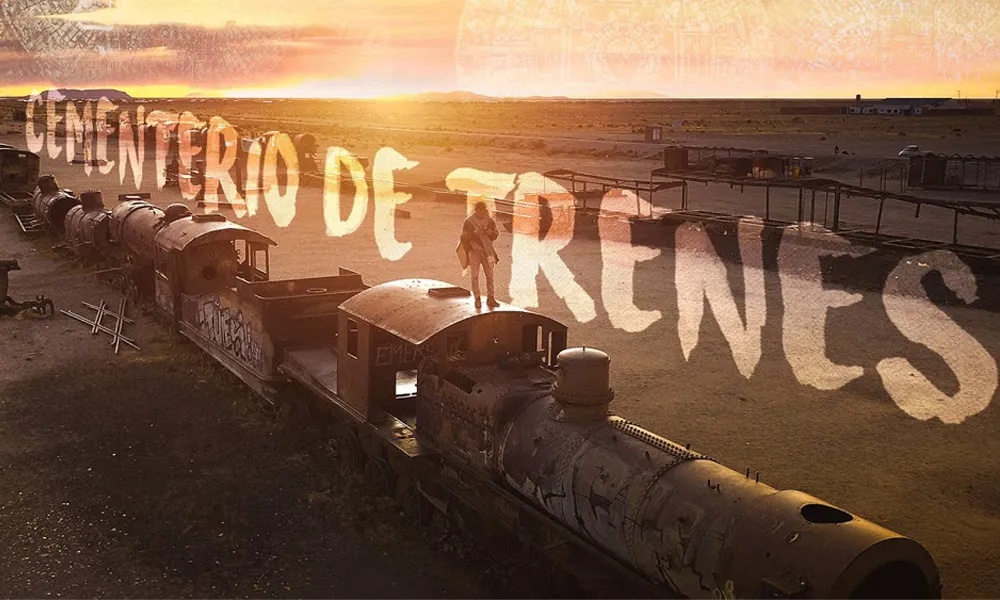
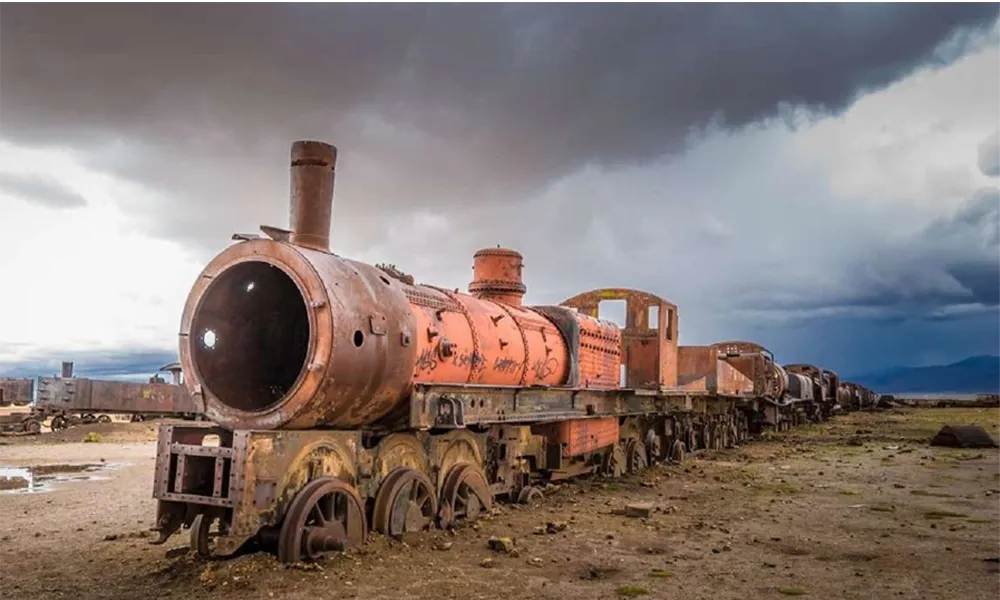
- Rusted locomotives: Iron giants that look like industrial sculptures.
- Wagons and old machinery: Some still retain their original parts, allowing you to imagine how they worked.
- Photography locations: It’s a perfect place for creative photos, as you can climb aboard the locomotives and explore the cars.
- Altiplano sunsets: The golden light at the end of the day creates a mystical atmosphere among the ruins.
☀️ Weather in Uyuni
The Train Cemetery shares the same climate as the Bolivian Altiplano:
- Dry season (May to October): sunny days and cold nights (0°C to -10°C in the early morning).
- Rainy season (November to March): cloudy skies, possibility of rain, less extreme temperatures but more humidity.
💡 Tip: Always bring a coat, sunscreen, sunglasses, and water.
🏨 Nearby Accommodations and Services in Uyuni
Although the Train Cemetery is located on the outskirts, the city of Uyuni (just 3 km away) is home to all the accommodations and services for travelers.
🏨 Accommodation Options
- Experience hotels: such as the Palacio de Sal and the Hotel Luna
- Salada, built with salt blocks, offer a unique atmosphere overlooking the desert.
- Mid-range hotels: Cristales Joyas de Sal and Casa de Sal combine comfort with affordable prices.
- Budget hostels and lodges: these abound in downtown Uyuni, ideal for backpackers and travelers just passing through.
🍽️ Restaurants and Gastronomy
- In downtown Uyuni, you’ll find everything from typical Bolivian cuisine to international options. Highlights include the salteñas, quinoa soup, and restaurants offering tourist menus at affordable prices.
🚐 Tourist Services and Transportation
- Travel Agencies: Almost all offer tours that include the Train Cemetery and the Uyuni Salt Flats.
- Transportation: Taxis and motorcycle taxis are available to get to the cemetery in just a few minutes.
- ATMs and Pharmacies: Downtown Uyuni has banks, pharmacies, and convenience stores, although it’s recommended to bring cash.
🎒 Practical Tips for Your Visit
Visiting the Train Cemetery in Uyuni is a unique experience that blends history, surreal landscapes, and photography. To make the most of your trip, keep these recommendations in mind:
- ⏰ Choose your time wisely: Visit early in the morning or at dusk to avoid crowds and take advantage of the best natural light for your photos.
- 👟 Comfortable Shoes: Although you won’t be walking far, the terrain is sandy and uneven, so closed-toe shoes are recommended.
- 🧥 Appropriate Clothing: The climate in the highlands changes rapidly; Bring layers of clothing and don’t forget a hat and gloves if you go during the dry season.
- ☀️ Sun protection: Sunscreen, sunglasses, and a hat are essential, as UV radiation is very high.
- 📷 Camera ready: This is one of the most photogenic spots in Bolivia; take advantage of the locomotives and wagons to take creative photos.
- 💧 Hydration and snacks: Always bring water and some snacks, as there are no shops near the cemetery.
- 🚐 Combine it with a tour: It’s ideal to visit it as part of a tour of the Salar de Uyuni, so you’ll make the most of your time.
🤔 Frequently Asked Questions about the Train Cemetery in Uyuni
1. 📍 Where is the Train Cemetery located?
It is located about 3 km southwest of the city of Uyuni, in the department of Potosí, Bolivia. It is on the way to the Uyuni Salt Flats, making it a common stop for tours.
2. 💵 How much does admission cost?
Admission to the Train Cemetery is free. However, if you visit as part of an organized tour to the Uyuni Salt Flats, admission is already included in your package.
3. ⏰ How long does the visit last?
On average, visitors stay between 30 and 45 minutes, enough time to explore the site, climb aboard some train cars, and take photographs.
4. 🚐 How do I get to the Train Cemetery?
- On foot: 30 to 40 minutes from downtown Uyuni.
- By taxi: approximately 10 minutes.
- By tour: the most common option, as most agencies include it as the first stop on the route.
5. 📷 Is it possible to board the trains?
Yes, many travelers climb onto the locomotives and cars to take photos. However, it must be done with caution, as the metal is rusty and some structures are unstable.
6. ☀️ What is the best time to visit?
It depends on what you’re looking for:
- May to October (dry season): clear skies, sunny days, and cool nights.
- November to March (rainy season): the Salar transforms into a giant mirror, ideal for combining both experiences.
7. 🧴 What to bring for the visit?
- Sunscreen, sunglasses, and a hat.
- Water and a snack.
- Layered clothing and a light coat.
- Camera or cell phone with good battery for photos.
8. 🌙 Can it be visited at night?
It’s not recommended. The area is not lit or secure at night. It’s best to go during the day, preferably in the morning or at dusk.
9. 🏨 Is there accommodation near the Train Cemetery?
Not on the site, but in the city of Uyuni, you’ll find salt hotels, mid-range accommodations, and budget hostels.
10. ⭐ Is it worth including in my itinerary?
Definitely! Although not as impressive as the Salar de Uyuni, the Train Cemetery offers a unique and photogenic setting that complements your experience in the Bolivian highlands.