

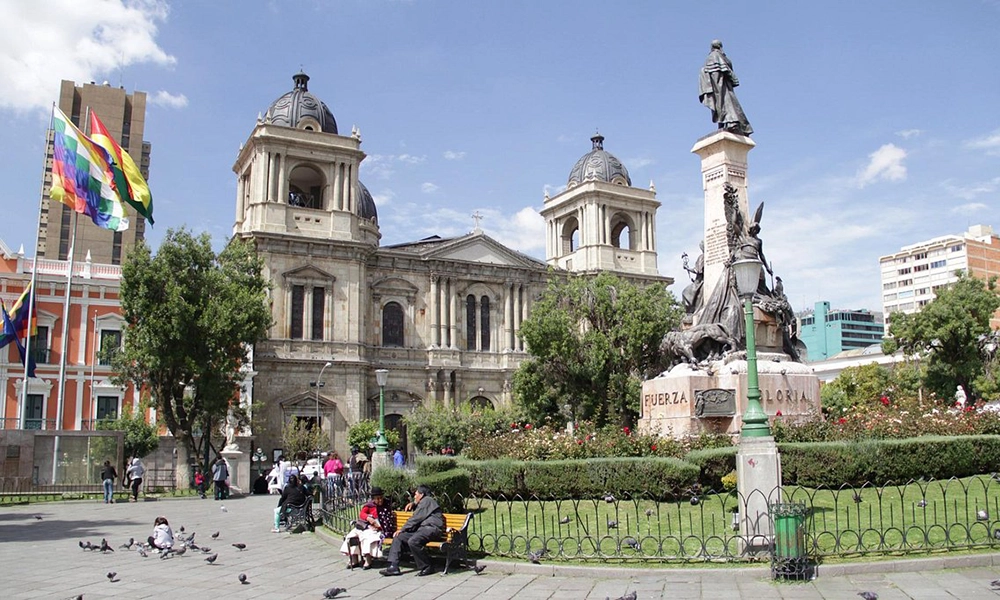
Cathedral of Our Lady of Peace
Complete Historical, Cultural, Religious, and Tourist Guide
The Cathedral of Our Lady of Peace is much more than the city’s main Catholic church: it is a symbolic hub where faith, republican history, political power, and La Paz’s cultural identity converge. Its austere silhouette dominates Plaza Murillo and has accompanied, for centuries, the most significant moments in Bolivian national life. Visiting it is to delve into the living memory of La Paz.
📍 Urban Context and Symbolic Value
Located at kilometer zero of Bolivia’s political power, the cathedral forms an urban complex with the Government Palace and the Legislative Palace. This proximity is not accidental: since colonial times, the Church has played a central role in social and political organization, something that remains visible in the urban layout of the historic center.
Plaza Murillo, formerly called Plaza Mayor, was conceived as the space where civil, religious, and social authority were articulated. The cathedral, therefore, is not only a temple, but a symbol of legitimacy, solemnity, and historical continuity.
🕰️ Extended History: From Colony to Republic
- Colonial Origins
After the founding of La Paz in 1548, a simple, main church was built using local materials. This initial structure was modified several times due to earthquakes, fires, and the city’s progressive growth.
- Reconstructions and Final Design
In the late 18th and early 19th centuries, it was decided to erect a more solid and monumental cathedral, befitting the status the city had attained. Construction progressed slowly due to political conflicts, economic limitations, and the independence process.
Finally, the current building was completed in 1932, integrating European Neoclassical principles with solutions adapted to the Andean geography. The result is a robust structure, designed to endure.
- A Stage for National History
The cathedral has witnessed:
- Te Deums and official ceremonies on national holidays
- Funerals of former presidents and historical figures
- Religious acts linked to political changes
- Key moments of national reconciliation and mourning
🏛️ Architecture in Depth
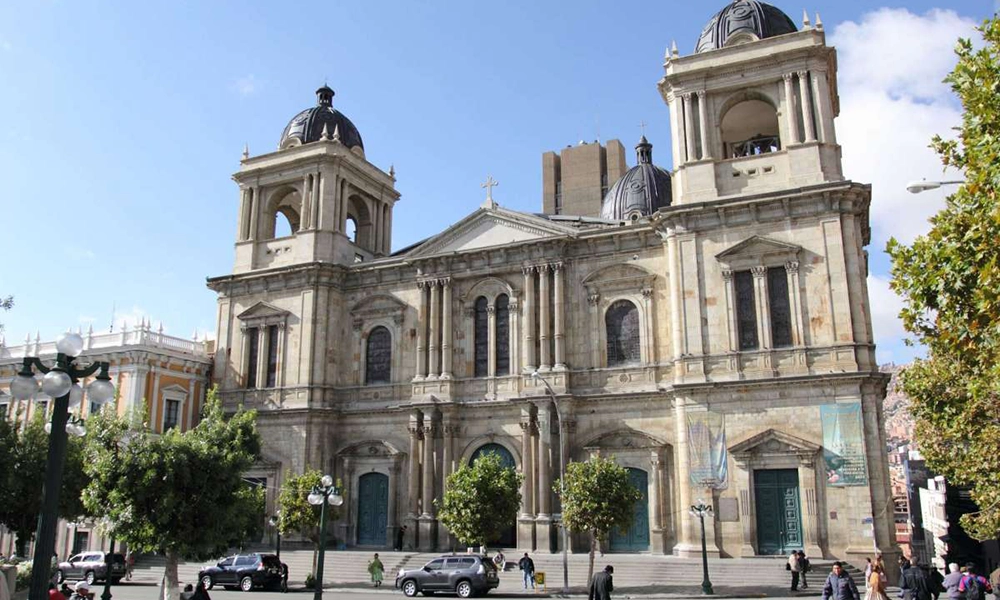
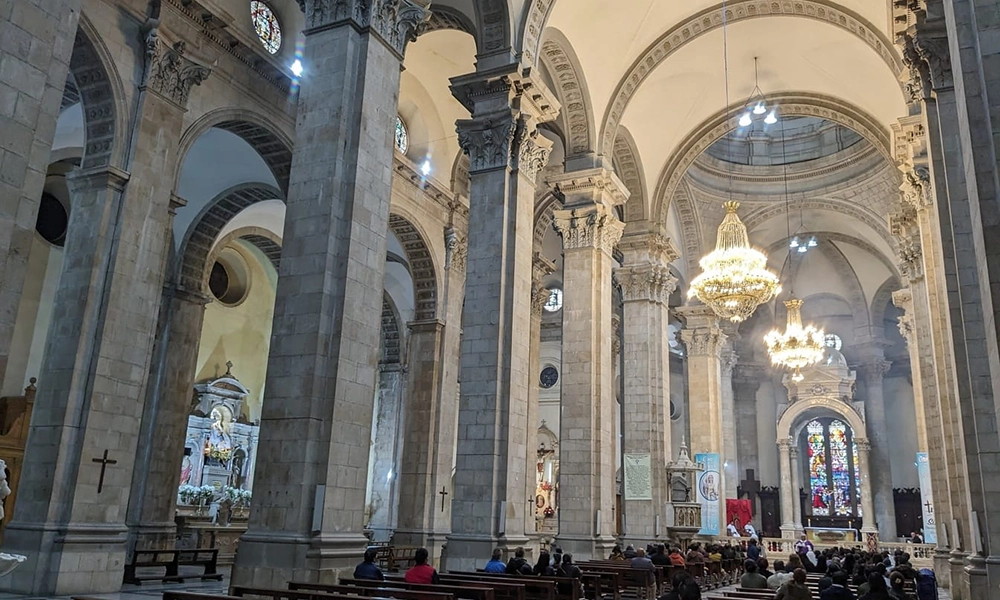
The cathedral’s neoclassical style is expressed through symmetry, sobriety, and monumentality.
Facade
- Built entirely of stone
- Classical columns supporting an austere pediment
- Bell towers that visually frame Plaza Murillo
Interior
- Spacious central nave with harmonious proportions
- Side chapels dedicated to different saints
- High ceilings that enhance liturgical acoustics
The architecture prioritizes a sense of order, stability, and transcendence—values associated with both faith and the state.
🎨 Sacred Art and Religious Heritage
The interior houses a discreet yet profoundly significant artistic heritage.
Highlights:
- Marble main altar, the visual and spiritual center of the temple
- Image of Our Lady of Peace, patron saint of the city
- Religious paintings from the 19th and 20th centuries
- Devotional sculptures in polychrome wood
- Details in bronze and carved stone
Unlike other Baroque cathedrals in the region, sobriety predominates here, reflecting the character of La Paz and the Republican Neoclassical style.
⛪ Religious Function and Liturgical Life
As the seat of the Archdiocese, the cathedral is the center of the most important celebrations of the Catholic calendar:
- Holy Week (processions and solemn services)
- Christmas and New Year’s
- Marian feasts
- Official Masses on national holidays
For the local faithful, it is a place of spiritual reference; For the visitor, it is an opportunity to observe Andean urban religiosity in a unique historical context.
🌄 Cultural Significance and La Paz Identity
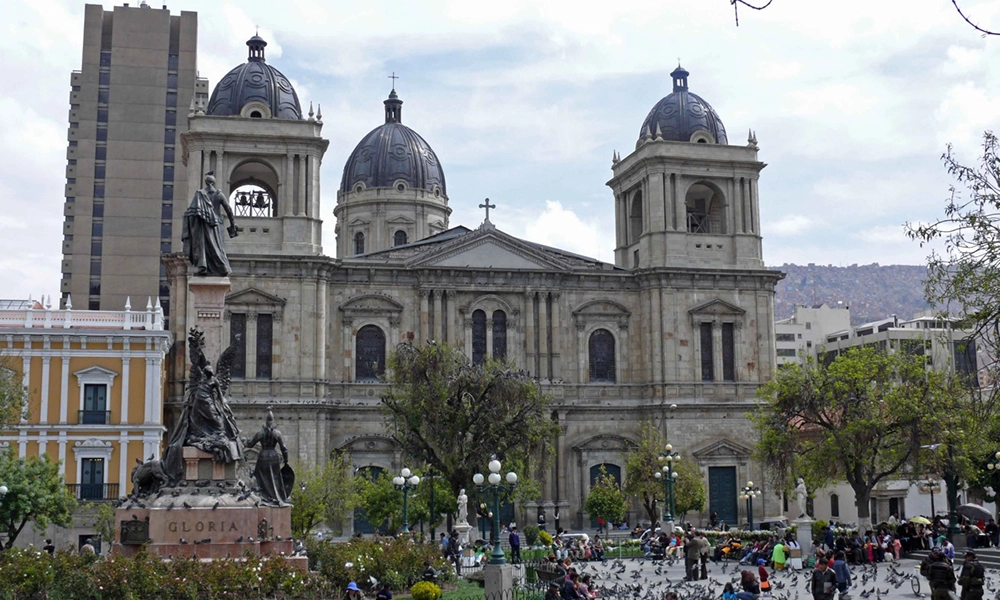
The cathedral represents:
- The enduring faith in a city marked by social change
- The historical dialogue between Church and State
- A visual and emotional touchstone for the people of La Paz
Its constant presence at public events reinforces its role as a symbol of national unity and solemnity.
👣 Visitor Experience: What to Expect
The visit is brief but rich in historical and symbolic content.
During the tour, you can:
- Analyze the visual relationship with Plaza Murillo
- Observe the architecture without excessive distractions
- Sit for a few minutes in silence and contemplation
- Photograph architectural details in natural light
It is an ideal space to understand La Paz from a historical and spiritual perspective.
🕯️ Hours and Access (approximate)
- Generally open every day
- Mornings and afternoons
- Free access during non-liturgical times
Hours may vary for special celebrations or official events.
♿ Accessibility and Surroundings
- Easy access from the plaza
- Space suitable for seniors
- Police presence in the surrounding area due to its status as a government zone
- Easy access to public transportation in the city center
📌 Practical Recommendations
- Visit in the morning
- Combine with a guided tour of the historic center
- Dress respectfully
- Avoid speaking loudly
- Do not use flash photography inside
❓ Extended FAQs
- How long does the visit last?
Between 20 and 40 minutes, depending on the visitor’s interest.
- Is it a tourist site or only a religious one?
It serves both purposes: an active temple and a historical monument.
- Can I enter during official events?
Access may be temporarily restricted on occasion.
- Is it worth visiting if I am not religious?
Yes, for its historical, architectural, and symbolic value.
✨ A Temple That Defines La Paz
The Cathedral of Our Lady of Peace is a place where history isn’t just displayed, it’s breathed in. Every stone, every ceremony, and every silence tells the story of the evolution of a complex, Andean, and profoundly symbolic city. Visiting it is to understand why La Paz isn’t just seen: it’s understood and felt.