

Cerro Rico of Potosí: History, Mines, Heritage, and a Complete Guide to Visiting It
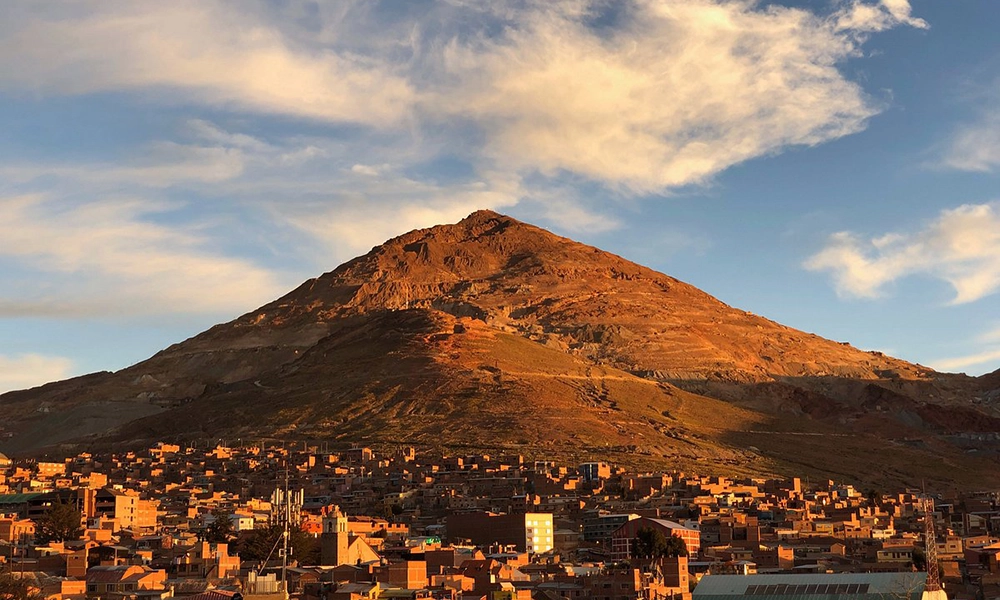
Cerro Rico of Potosí (also called Sumaj Orcko, “magnificent mountain”) is one of the most impressive sites in Bolivia and all of South America. It is not just a mountain: it is a symbol of Potosí’s history, of colonial mining, of the 16th-century global economy, and of a city that became a gigantic industrial center for its time. The mountain’s fame was so great that the phrase “worth a Potosí” originated, still used today to describe something extremely valuable.
Visiting Cerro Rico is a powerful and educational experience: it helps you understand how part of the modern world was built, but it also reveals the social and environmental cost of centuries of mining.
1) Where is Cerro Rico and why is it so important?
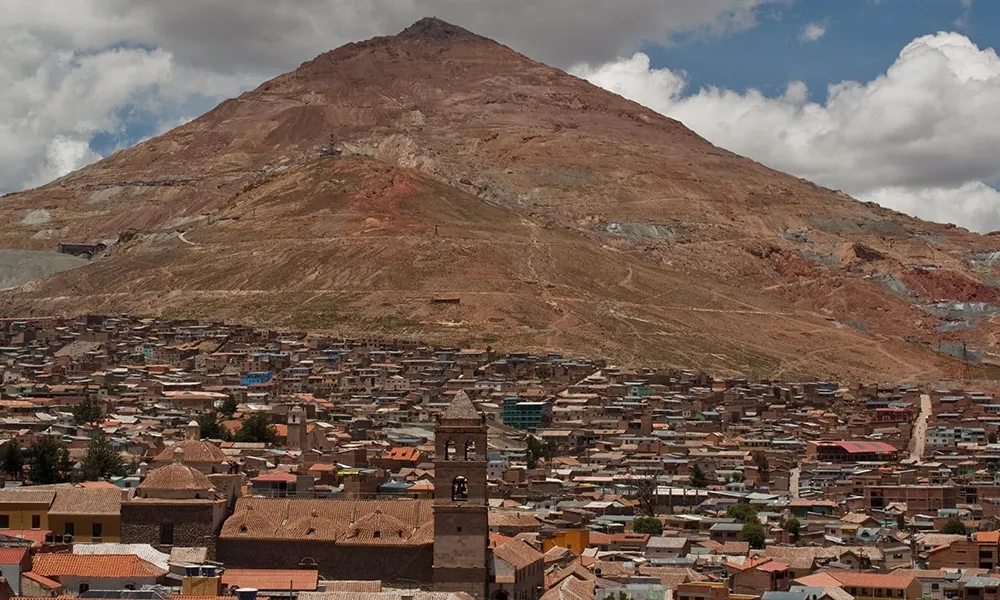
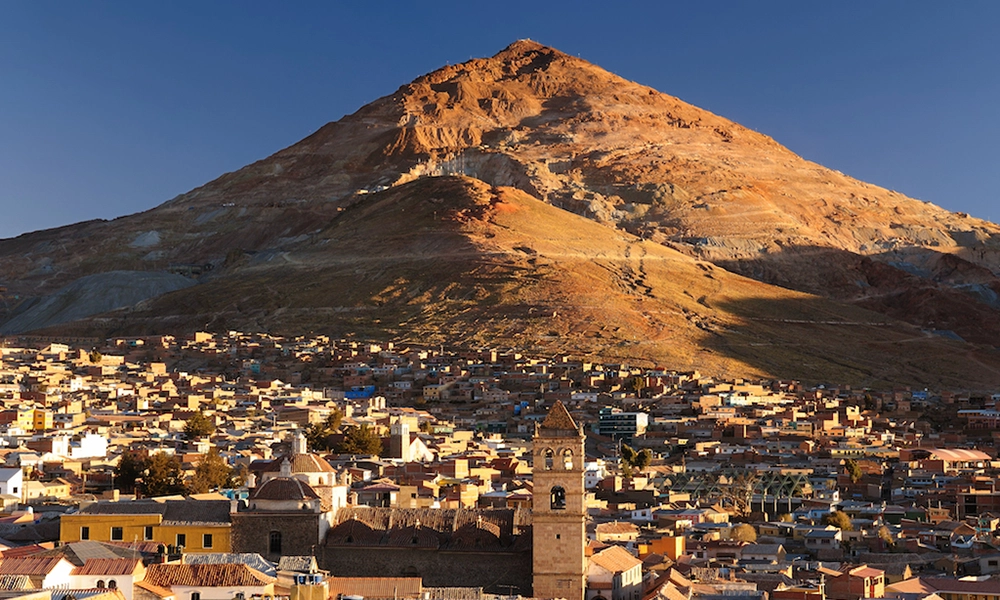
Cerro Rico is located next to the city of Potosí, on the Bolivian Altiplano, at a high altitude. Its conical shape dominates the landscape and is visible from almost anywhere in the city.
Its importance can be explained by three reasons:
- Historical: it was one of the world’s largest silver mining centers since the colonial period.
- Economic: Potosí silver influenced global trade and monetary systems of the time.
- Heritage: Cerro Rico is an integral part of the “City of Potosí” site, a UNESCO World Heritage Site.
2) The Legend of the Discovery (1545) and the Beginning of an Era
The most well-known story recounts that Diego Huallpa accidentally discovered veins of silver in 1545 while searching for a flame and lighting a bonfire to spend the night. The next day, he supposedly noticed silver “on the surface of the rock.” This is a widely circulated legend, repeated in chronicles and historical accounts.
From that moment on, Potosí changed forever: it began a period of rapid growth and a massive mining operation that transformed the city into an economic hub of the continent.
3) Potosí: From Andean City to “Great Industrial Complex” of the 16th Century
UNESCO describes Potosí as the largest industrial complex in the world during the 16th century, with a mining system supported by watermills and a water supply network of aqueducts and artificial lakes.
This means that, in addition to mines, the following emerged:
- Mining mills (mineral processing centers)
- Canals and hydraulic works to power machinery
- Workers’ neighborhoods (including the mitayo neighborhoods) linked to the mining industry.
4) The “mita” and the Human Cost (without romanticizing it)
The history of Cerro Rico is also marked by very harsh working conditions. During the colonial era, forced labor systems like the mita were implemented, affecting thousands of Indigenous families. This aspect is key to understanding the mountain honestly: the glitter of the silver cannot be separated from the suffering that accompanied its extraction.
When you visit the mines of Potosí, many responsible guides explain this context respectfully, because it is an essential part of the place’s history.
5) How the Wealth Was Extracted: Technology and Mineral Processing
Mining at Cerro Rico wasn’t just about “extracting silver”; it also required processing techniques. Over time, industrial methods were developed to separate metals, and the city became filled with infrastructure to sustain an enormous production rate: transportation, mills, warehouses, trade routes, and administrative control.
That’s why Potosí’s heritage is not just the mountain: it’s a complete cultural and industrial landscape.
6) The Tío of the Mine: Beliefs, Syncretism, and Mining Ritual
Inside many mines, there is the figure of the Tío, a mining spirit/deity very present in Bolivian culture. Miners often make offerings (such as coca leaves, alcohol, or cigarettes) to ask for protection and “permission” within the mine.
This is part of Andean syncretism: Catholic practices coexist with local beliefs linked to the mountain, Pachamama (Mother Earth), and the underworld.
7) World Heritage Site and a Current Problem: The Risk of Collapse
Potosí was inscribed on the World Heritage List in 1987, and over time, warnings have arisen about the degradation of the mountain due to continuous mining.
One of the best-known issues is the instability at the summit, with recorded sinkholes (for example, a large sinkhole reported since 2011).
UNESCO has raised concerns about instability and the risk of collapse, as well as environmental impacts and conservation issues.
This makes Cerro Rico a place that must be visited with awareness: it is a heritage site, but it is fragile.
8) Can you visit Cerro Rico? Yes, but with responsible tourism.
The typical visit is done with agencies/guides that organize a tour of the Potosí mines. It usually includes:
- Pre-visit safety briefing (helmet and flashlight)
- Entrance to authorized galleries
- Explanation of mining operations (tools, veins, internal transport)
- Historical and cultural context (including El Tío, if applicable)
Recommended for:
- Travelers interested in history, culture, and social realities
- People with a good tolerance for confined spaces and short walks
Not recommended for:
- People with claustrophobia
- Those with respiratory or heart problems
- Travelers who are new to the altitude (it’s best to acclimatize first)
9) Practical tips for your visit (very useful)
Before you go
- Acclimatize in Potosí for at least 1–2 days (high altitude).
- Sleep well and stay hydrated.
What to bring
- Warm jacket (it can be damp and cold inside)
- Durable pants and clothes you don’t mind getting dirty
- Sneakers or boots with good traction
- Water and a light snack
- Coca leaves or hard candy (if you’re used to them, due to the altitude)
During the visit
- Stay with your guide
- Walk calmly and watch your step
- Respect the miners: you’re entering their workplace
- Avoid jokes or taking intrusive photos
10) Viewpoints and photos: how to capture Cerro Rico
If photography is your thing, there are two key times:
- Morning: clearer air and better light for panoramic shots of Potosí
- Sunset: the mountain takes on intense colors and the city appears golden
Real tip: at high altitude, the sun is strong even if it’s cold, so sunscreen and sunglasses are very helpful.
11) What to see nearby to complement the experience
To make your visit to Potosí more complete, many travelers combine Cerro Rico with:
- Historical sites linked to the mining economy
- Colonial and republican architecture in the city center
- Museums and cultural sites that explain the “silver cycle”
(This way you have a more balanced trip: mines + history + city.)
12) Frequently Asked Questions about Cerro Rico in Potosí
- Is Cerro Rico still actively mined?
Yes, mining activity continues, and this is precisely what fuels the debates about the conservation and stability of the mountain.
- Is it safe to tour the mines?
It depends a lot on the operator and following their instructions. Ideally, you should go with an experienced guide, use appropriate equipment, and follow an authorized route.
- How long does the tour of the Potosí mines last?
It’s usually half a day (it varies depending on the tour and the agency).
- Is it worth it if I’m not interested in mining?
Yes, because Cerro Rico explains a large part of the history of Potosí and the continent. But if you’re uncomfortable seeing harsh realities, perhaps you’d prefer viewpoints and museums.
- Why does UNESCO consider Potosí so important?
Because it’s an exceptional urban-industrial landscape: mines, a hydraulic system, sugar mills, and a colonial city linked to a global economic phenomenon.
In closing: a place that will never be forgotten
Cerro Rico in Potosí is a destination that will be remembered forever: for its size, its historical significance, its mining culture, and what it represents in Bolivian identity. It’s a visit that combines heritage, memory, and reality, ideal for travelers who seek to understand, not just “see.”