

Charcas Colonial Museum: Art, Faith, and Power in Viceroyal Sucre
The Charcas Colonial Museum is one of the most valuable cultural spaces in Bolivia and all of South America. Located in the heart of the city of Sucre, this museum safeguards centuries of history, art, and thought from the colonial period, when the Charcas region was a leading political, religious, and intellectual center on the continent.
More than a museum, the Charcas Colonial Museum is a living testament to the viceroyalty’s past, where religion, economics, power, and cultural identity intersected, shaping modern-day Bolivia.
🕰️ Charcas: A Key Territory of the Colonial World
During the colonial era, Charcas was not a marginal region. On the contrary, it was one of the most influential in the Spanish Empire in South America. From here, vast territories were administered, and political, legal, and religious relationships were established, connecting cities such as Potosí, La Plata (present-day Sucre), Lima, and Buenos Aires.
The city of La Plata—now Sucre—was home to fundamental institutions such as the Royal Audiencia of Charcas and the University of San Francisco Xavier, making it a center of thought, art, and religious education. The Charcas Colonial Museum was created precisely to preserve this historical and cultural legacy.
🏗️ The Building: A Jewel of Colonial Architecture
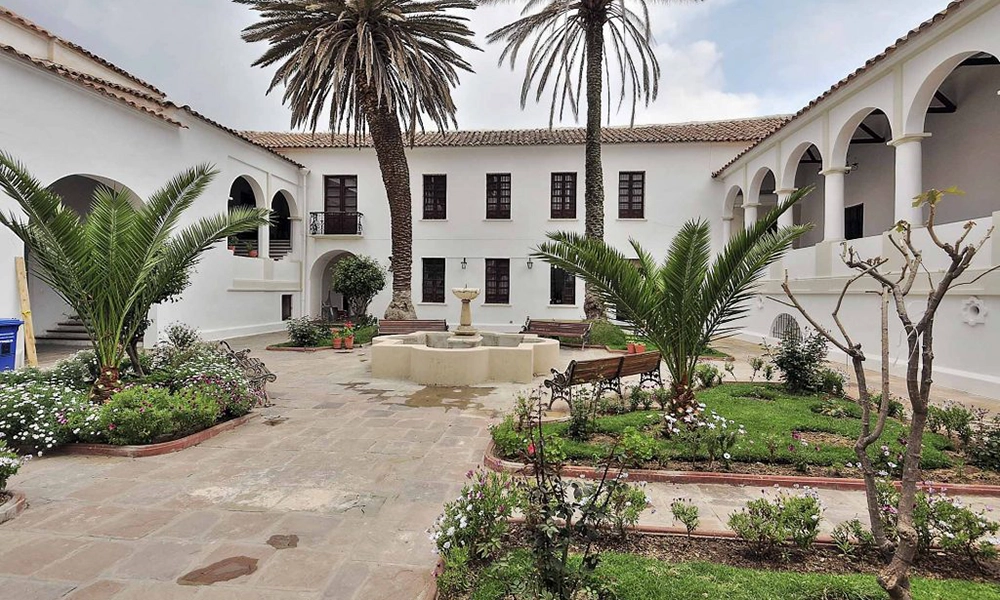
The museum is housed in a 17th-century colonial mansion, a stately building that reflects the economic and social power of the elites of the time. The building, traditionally known as the Palace of Great Power, is notable for:
- Spacious interior courtyards
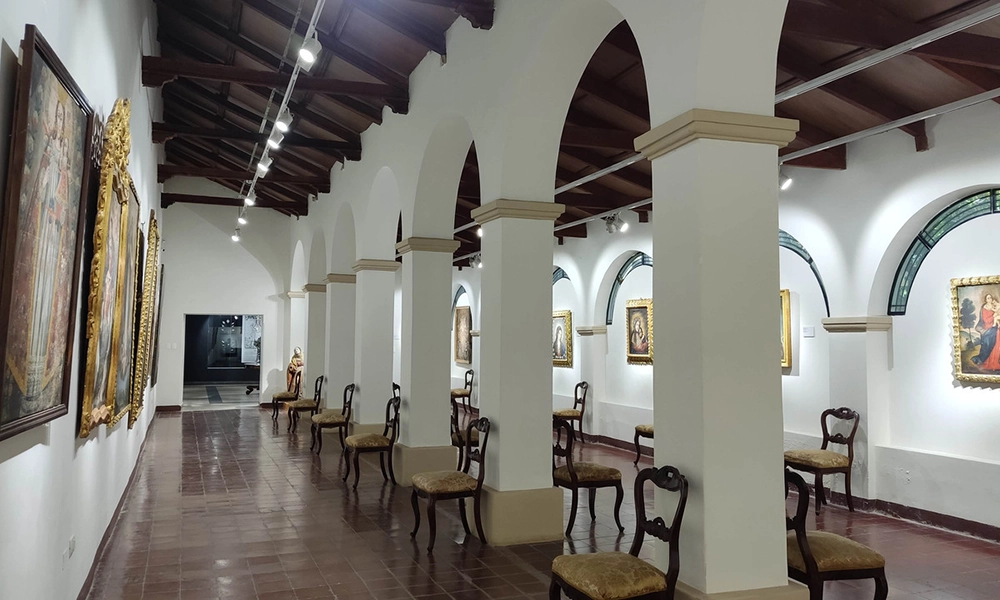
- Corridors with stone columns
- Carved wooden ceilings
- Thick walls that maintain a peaceful atmosphere and tranquility
Visiting the museum is not just about viewing artworks: it’s about walking through a colonial house, experiencing the scale of power and the aesthetics of the viceroyalty period.
📜 Museum Foundation and Mission
The Charcas Colonial Museum was founded in 1939 with the aim of rescuing, preserving, and studying the colonial heritage scattered among churches, convents, and private collections.
Since 1957, the museum has been administered by the Royal and Pontifical University of San Francisco Xavier of Chuquisaca, one of the oldest universities in the Americas. Thanks to this academic affiliation, the museum not only exhibits works but also fulfills a research and educational function.
🎨 The Collection: Four Centuries of Viceregal Art
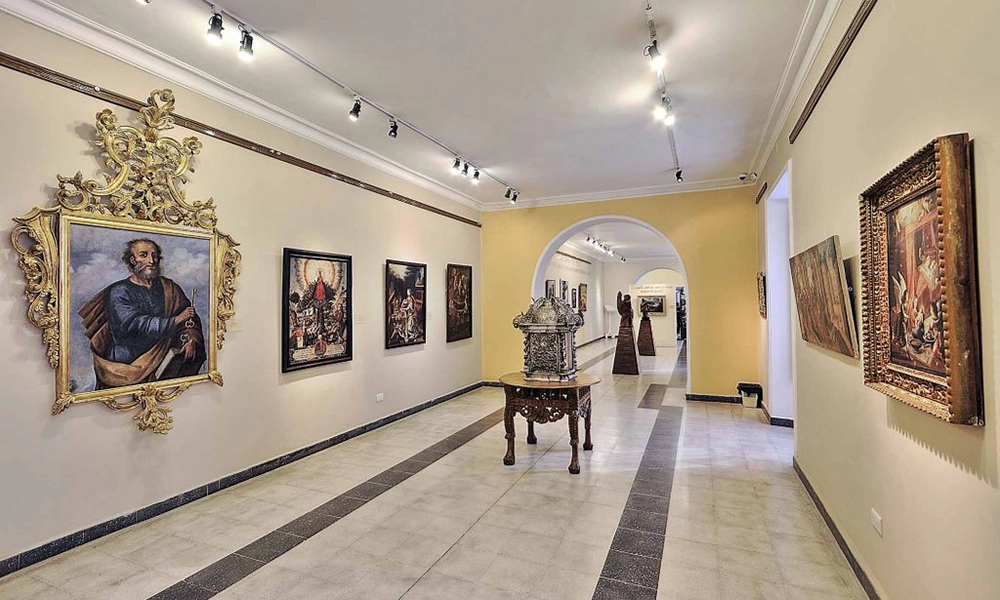
The Charcas Colonial Museum houses one of the most comprehensive collections of colonial art in Bolivia, with pieces spanning from the 16th to the 19th centuries.
🖌️ Viceregal Painting and the Charcas School
One of the museum’s greatest treasures is its collection of religious and viceregal paintings, where one can appreciate:
- The influence of European Baroque
- Local and Indigenous adaptations
- Profound religious symbolism
Works by artists associated with the Charcas School stand out, a regional artistic movement that reinterpreted European models from the Andean perspective.
Among the represented artists are figures such as Melchor Pérez de Holguín, one of the most important painters of Upper Peru, whose works reflect the symbolic and technical richness of the colonial Baroque.
⛪ Art and Religion: Images to Teach and Convince
During the colonial period, art had a clear function: evangelization. Paintings and sculptures served as pedagogical tools to transmit religious ideas to a largely illiterate population.
The museum features:
- Richly dressed Virgins
- Highly expressive Christs
- Saints with complex iconography
- Biblical scenes adapted to the local context
Many works combine Christian elements with Andean symbols, showcasing the process of cultural blending that defined the region.
🪙 Silverware, Sculpture, and Colonial Objects
In addition to paintings, the Charcas Colonial Museum houses a valuable collection of:
- ✨ Colonial Silverware
Chalices, monstrances, reliquaries, and liturgical objects made of silver, an abundant material thanks to the proximity to Potosí.
- 🗿 Religious Sculpture
Carved and polychromed wooden images used in churches and processions.
- 🪑 Colonial Furniture
Original furniture such as bargueños (cabinets), chairs, chests, and desks, which allow visitors to imagine the daily life of the colonial elite.
📚 A Museum for Research and Learning
The Charcas Colonial Museum is more than just an exhibition space. Its connection to the university makes it a center for the study of colonial art and history, used by:
- Researchers
- University students
- Art historians
- Professors
It also organizes temporary exhibitions, workshops, and cultural activities that keep the dialogue between past and present alive.
🌎 Cultural and Heritage Significance
The city of Sucre, where the museum is located, is a UNESCO World Heritage Site, and the Charcas Colonial Museum is an essential part of that recognition.
Its collection allows us to understand:
- How colonial power was built
- How religion was spread
- How a unique mestizo art emerged in the Andes
It is considered one of the most important colonial museums in South America.
🧭 Visiting the Charcas Colonial Museum
Visiting this museum is a leisurely and reflective experience. It’s not just about seeing antique works, but about understanding a key period in history, when social, cultural, and religious structures were defined that still influence the region.
It’s ideal for:
- Art lovers
- Students
- Cultural travelers
- People interested in colonial history
✨ Conclusion
The Charcas Colonial Museum is a direct gateway to Bolivia’s viceregal past. Among paintings, sculptures, silver objects, and colonial architecture, visitors discover how art was a tool of power, faith, and communication in the Andes.
Exploring its galleries is to understand that history isn’t just read: it’s observed, experienced, and felt.