

Christ of Peace Monument
An Icon of Cochabamba
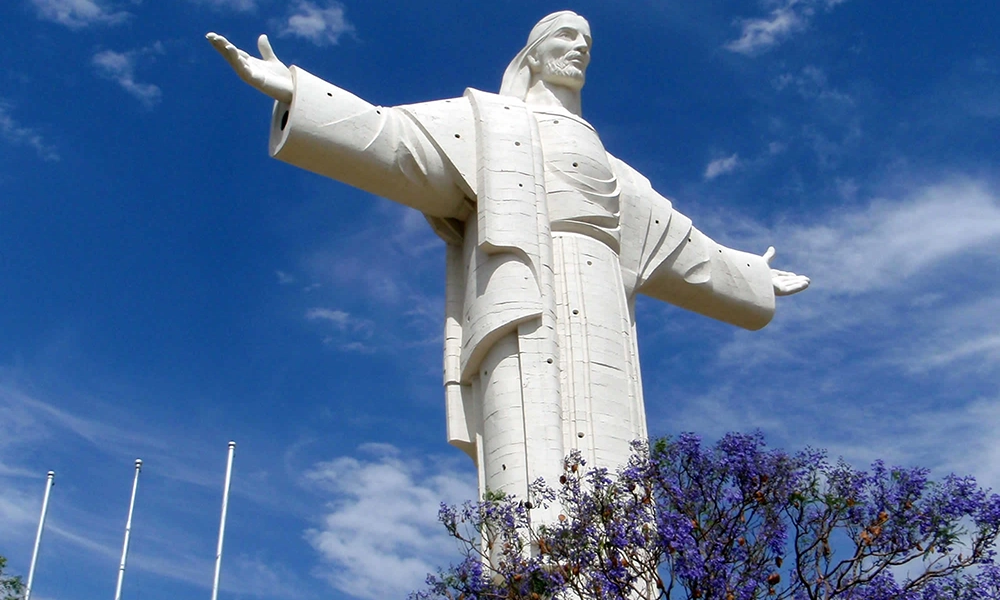
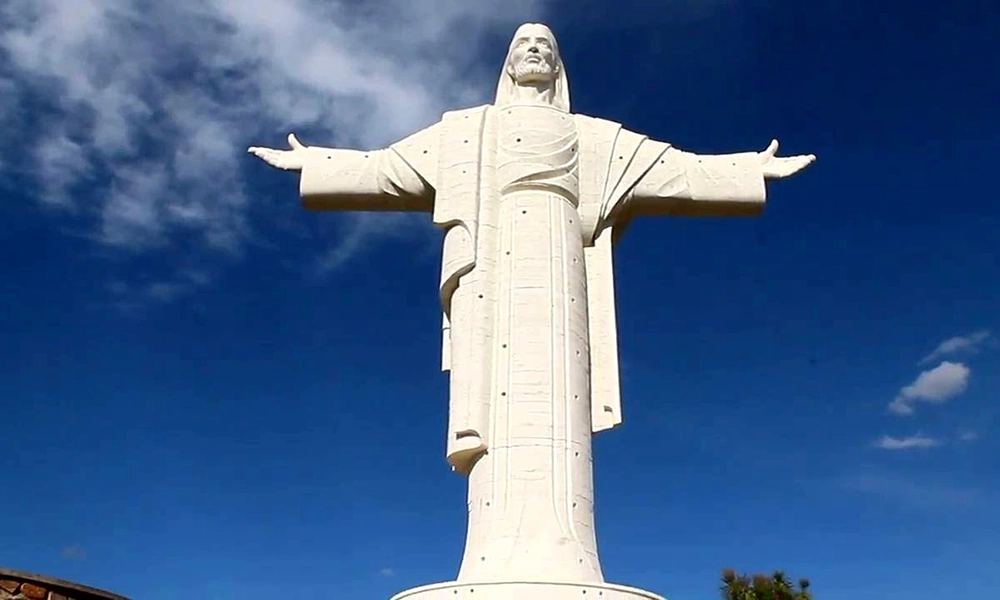
Christ of Peace is one of Bolivia’s largest and most emblematic monuments, located in the city of Cochabamba, in the central region of the country. With its imposing 34.2-meter-tall figure, it is considered the largest Christ statue in the world after Christ the Redeemer in Rio de Janeiro, and has become one of the region’s main tourist attractions.
Beyond its size and majesty, Christ of Peace is a symbol of peace and unity, representing harmony among the inhabitants of Cochabamba and uniting both tourists and locals in a shared space of spirituality and reflection.
📍 Location and Access
Christ of Peace is situated atop San Pedro Hill, a hill that offers panoramic views of Cochabamba and its surroundings. The monument stands on a platform approximately 3,000 meters above sea level, offering a privileged view of the city.
How to get there?
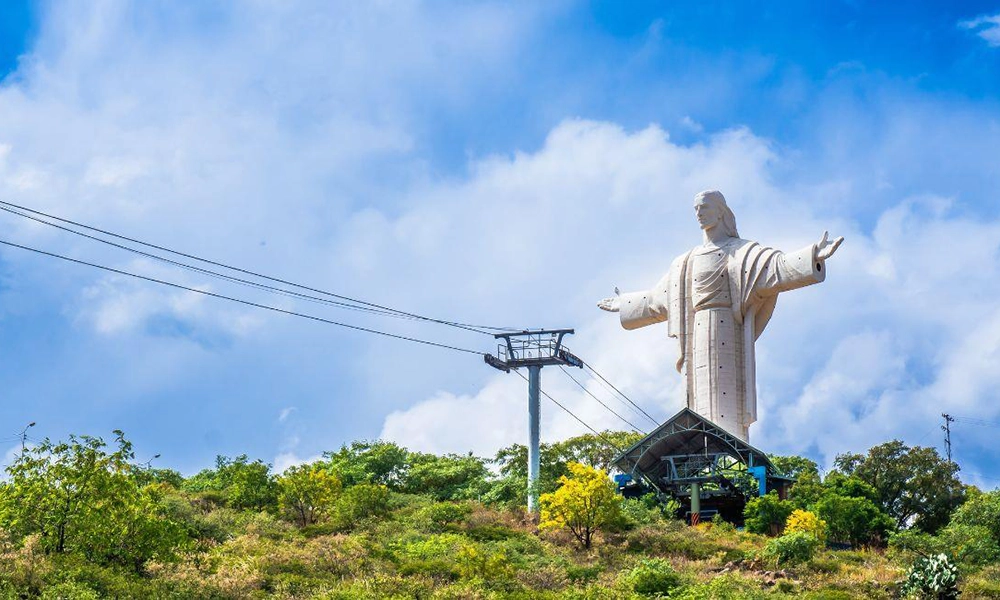
- Cable car: The most popular way to access the site is by cable car, which takes visitors to the top of the hill. The ride is quick and offers spectacular views of the city.
- Hiking: For the more adventurous, a steep trail of approximately 2.5 km can be hiked up.
- Public or private transport: You can also take a taxi or private transport to the base of the hill and then take the cable car.
🕰️ History of Christ of Peace
Christ of Peace was inaugurated in 1994 after several years of planning and construction. The project arose as an initiative to commemorate the 450th anniversary of the founding of Cochabamba.
The figure of Christ was inspired by Christ the Redeemer in Rio de Janeiro, although on a much larger scale. Its construction was spearheaded by the Christian Movement of Cochabamba, and the figure was designed by sculptor Mauro Ríos. The structure was built of reinforced concrete and coated with a layerof fiberglass to give it its final texture.
🌟 Meaning and Symbolism
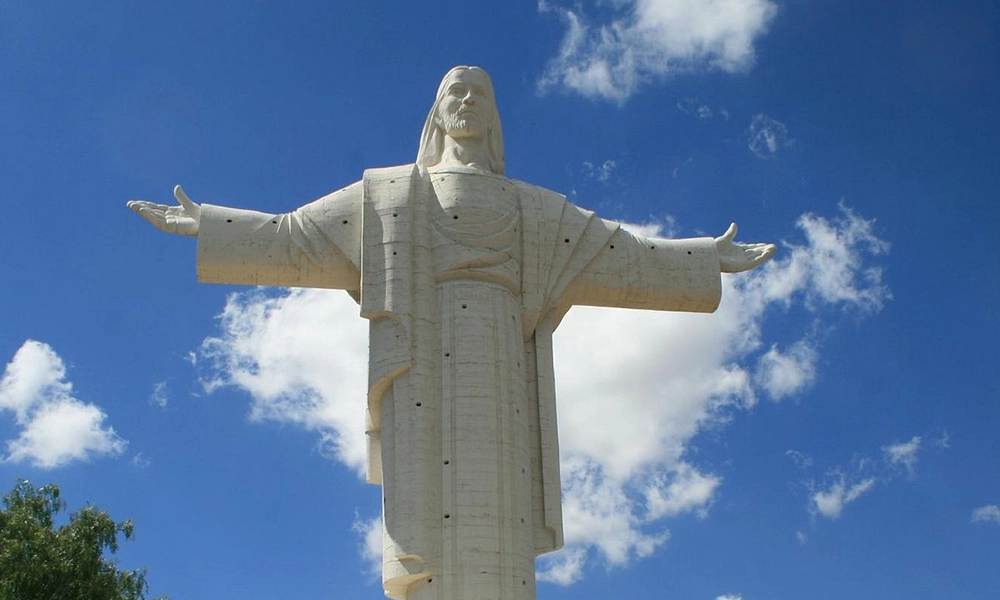
The Christ of Peace statue not only represents the traditional religious figure but is also a symbol of unity and peace for the Cochabamba region. The monument was designed so that Christ’s hands extend toward the city, symbolizing God’s welcome and unconditional love for all people, without distinction.
It is also a place of spiritual reflection, where people of all faiths can find a space of peace.
🏞️ Panoramic Views from the Christ of Peace statue
One of the main reasons to visit the Christ of Peace statue is the panoramic view it offers of the Cochabamba Valley. From the top, visitors can see the entire city, its surrounding mountains, and the beautiful Upper Valley.
What you can see from the viewpoint:
- The Cochabamba Valley: surrounded by mountains, with the city stretching along the valley floor.
- Alalay Lagoon: a beautiful body of water on the outskirts of the city.
- Cerro Tunari: one of the region’s highest mountains, which stands majestically in the background.
The view is especially breathtaking at sunset, when the colors of the sky and mountains blend together, creating a unique atmosphere.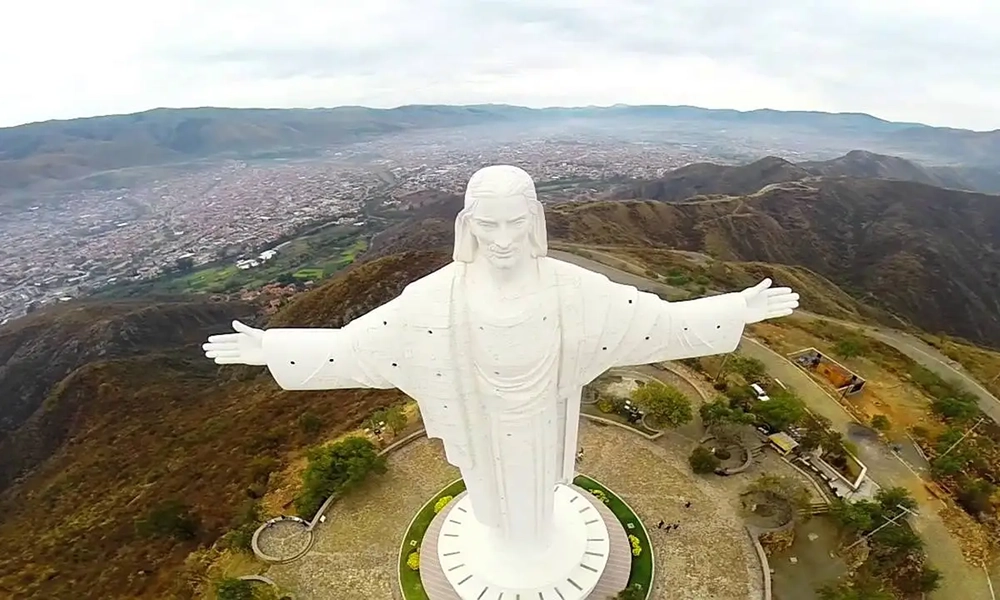
🚠 The Cable Car: An Unmissable Experience
The cable car is the most popular way to reach Cristo de la Concordia (Christ of Peace). This modern transportation system offers tourists an exciting experience, as they can enjoy panoramic views while ascending to the monument.
Cable Car Features:
- Distance: Approximately 2.3 km (1.5 mi)
- Travel Time: The ride lasts between 10 and 15 minutes.
- Spectacular Views: As you ascend, you can enjoy views of the city and the Andean landscape.
The cable car is also an excellent option for those who don’t want to hike but still want to enjoy the views.
🌿 Surrounding Flora and Fauna
San Pedro Hill, where Cristo de la Concordia is located, is a place of remarkable biodiversity. Although the fauna is not as abundant as in other areas of Bolivia, the hill is home to a wide variety of plant species adapted to the mountain climate.
Notable Flora:
- Andean cacti
- Cold-resistant plants
- Native vegetation of the Andean region
Fauna:
- Mountain birds: such as eagles and hawks.
- Small rodents: adapted to the dry climate of the hill.
🌦️ Climate at Cristo de la Concordia
The climate at the top of the hill is cool and temperate due to its altitude. The temperature varies throughout the day, but it is always cooler compared to downtown Cochabamba.
- Daytime: Daytime temperatures usually range between 15°C and 20°C.
- Nighttime: At night, temperatures can drop to 5°C to 10°C, especially during the colder months (June, July).
- Rainy Season: The rainy season runs from November to March, so it is recommended to visit Cristo de la Concordia during the dry season to enjoy the clear views.
🏞️ Activities to do at Cristo de la Concordia
1) Hike to Cristo de la Concordia
If you enjoy hiking, you can climb to the Christ statue on foot via the 2.5 km trail. Although it’s a steep hike, it’s a fantastic way to enjoy nature and the views.
2) Panoramic Photography
From the top of the hill, you can capture breathtaking views of Cochabamba, the valley, and the surrounding mountains, especially at sunrise or sunset.
3) Visit the Viewpoint
Once at the top, you can walk around the viewpoint that surrounds the base of the Christ statue to get different perspectives of the city and the Andean landscape.
4) Enjoy a Cable Car Ride
The cable car ride is a fun and relaxing activity for those who prefer not to hike up.
5) Spiritual Journey
If you are interested in spirituality, you can take some time to meditate or reflect at the top of the hill, where the tranquility and beauty of the surroundings invite introspection.
💰 Prices and Approximate Costs
- Entrance to Cristo de la Concordia (via cable car): Bs. 20–30 (depending on the operator and package chosen).
- Hiking Trail: Entrance is generally free, but some operators may offer guided tours.
- Cable Car Ticket: Bs. 30–50 (round trip).
- Group or School Group Rates: Discounts are available for school and tourist groups, with approximate prices of Bs. 10–20 per person.
❓ Frequently Asked Questions (FAQs)
1) How much time is needed to visit Cristo de la Concordia?
- If you only want to take the cable car and enjoy the views, about 2 hours is enough.
- If you want to do the hike, the visit time can be extended to 3–4 hours.
2) Is Cristo de la Concordia accessible for people with reduced mobility?
The cable car is accessible for people with reduced mobility, but the walking trail is not suitable due to its steep incline.
3) Does the cable car operate every day?
Yes, the cable car operates every day, generally from 9:00 AM to 6:00 PM, but it is recommended to check the specific schedules depending on the season.
4) Is it safe to hike up?
Yes, as long as you take precautions and walk at a moderate pace, especially due to the altitude.
5) Can I visit Christ of Peace at night?
Cable car access generally closes at sunset, but some nighttime visits are organized by tour operators on special occasions.
✅ Recommendations for your visit
- Wear comfortable clothing suitable for walking.
- Bring sunscreen and sunglasses, as the sun’s rays are strong.
- Bring water and light snacks.
- If you plan to hike, bring warm clothing and appropriate footwear. Check the weather before your visit to avoid surprises.
✨ Why visit the Christ of Peace?
Because it’s not just a religious monument: the Christ of Peace is a symbol of unity, a breathtaking viewpoint, and a unique experience that connects you with the history, spirituality, and nature of Cochabamba.
The Christ of Peace is much more than a giant statue. It’s a place of encounter, reflection, and enjoyment for all those who wish to experience Cochabamba from one of its highest perspectives. Whether you ascend by cable car or on foot, the Christ is one of Bolivia’s main attractions, a place where peace, art, and nature converge.