

Mirror Effect on the Salar de Uyuni: When and How to See This Unique Natural Phenomenon
The Salar de Uyuni, located in southwestern Bolivia, is not only the largest salt flat in the world, but also one of the most breathtaking natural landscapes on the planet. One of the most sought-after phenomena for travelers is the famous mirror effect of the Salar de Uyuni, a surreal visual experience that transforms the white desert into a gigantic reflected sky. Below, we tell you when this phenomenon occurs, why it happens, and the best time to see it, all optimized with keywords for organic SEO and written in a natural and human style.
📅 When does the mirror effect occur on the Salar de Uyuni?
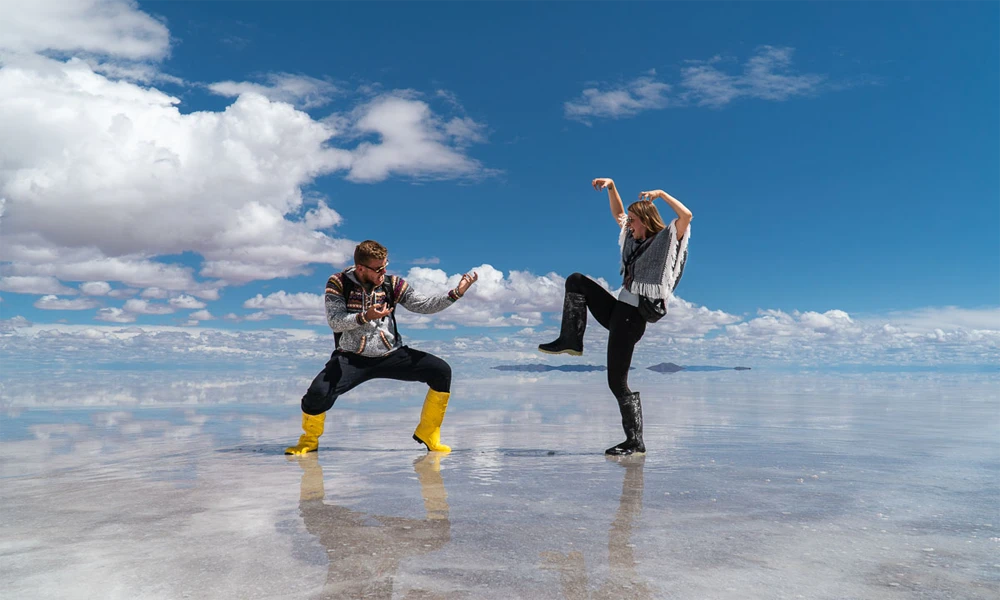
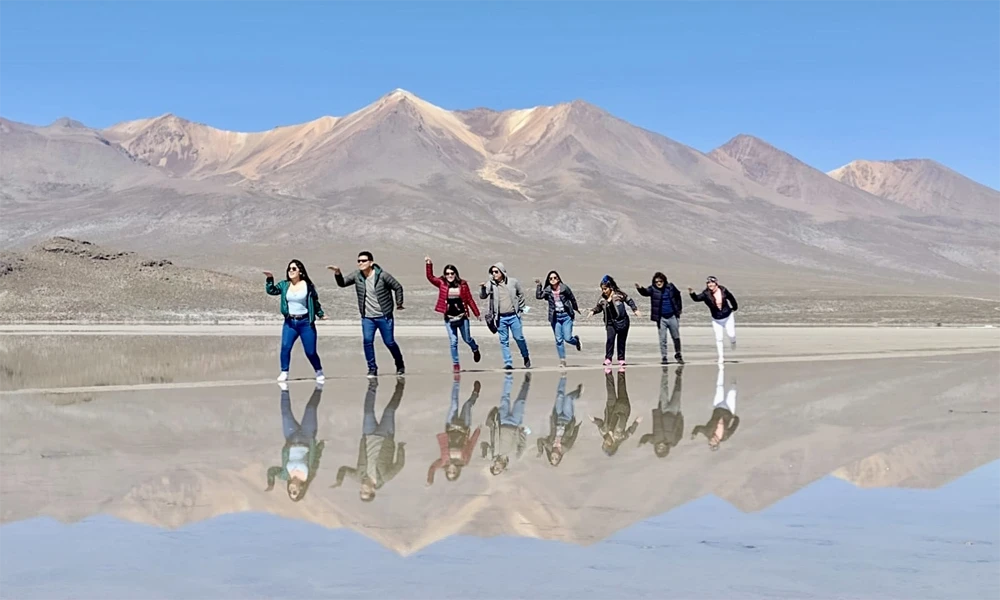
The mirror effect on the Salar de Uyuni occurs during the rainy season, which runs from late December to early April, with January and February being the ideal months to observe it in its full splendor. At this time of year, a thin layer of water covers the salt flats, creating a perfect reflection of the sky and giving the illusion of walking on clouds.
🌧️ Why does the mirror effect occur?
This phenomenon happens thanks to the geological characteristics of the salt flats. When it rains, the water doesn’t seep through due to the high salinity of the soil, so a thin layer of water forms on the surface. This layer acts as a giant natural mirror, reflecting the sky, clouds, sunsets, and any person or vehicle that crosses its path with incredible clarity.
📌 What is the best time of day to see the mirror effect?
Although it can be appreciated at different times, there are two periods of the day when the mirror effect of the Salar de Uyuni is most impressive:
Sunrise and sunset: the golden light and pinkish hues of the sky are reflected on the surface, creating unique scenes.
At midday: the clear sky and intense sunlight accentuate the mirror effect.
✨ If there’s a full moon, you can also experience a magical nighttime walk under a starlit sky!
🗺️ Where is the mirror effect best seen?
Although the entire salt flat can reflect the sky during the rainy season, there are areas where the water accumulation is more uniform, enhancing the effect:
- Colchani
- Incahuasi Island (when accessible)
- Area near the entrance to the salt flat in Uyuni
It’s always recommended to hire a local guide who knows the exact spots where the water has formed a perfect layer.
🧭 How to get to the Salar de Uyuni?
- ✈️ From La Paz: daily flights to Uyuni Airport (duration: 1 hour).
- 🚌 From La Paz or Potosí: overnight buses (8 to 10 hours).
- 🚙 From San Pedro de Atacama (Chile): 3-day/2-night tours with a connection to the salt flats.
📸 Tips for photographing the mirror effect
- Wear waterproof shoes or sandals: you’ll be walking on saltwater.
- Protect your camera or phone with a waterproof case.
- Wear bright clothing or colorful accessories to stand out in photos.
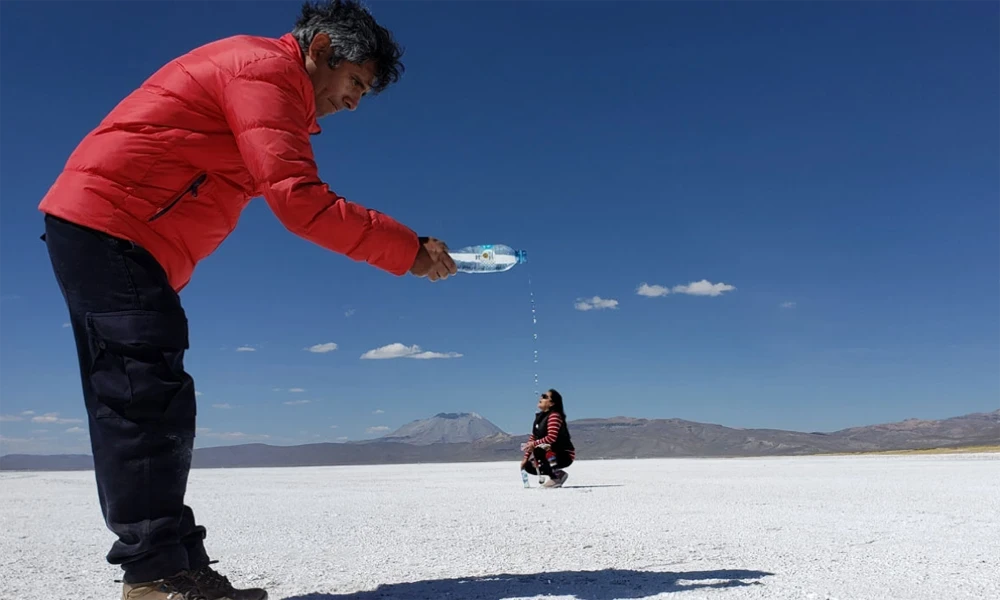
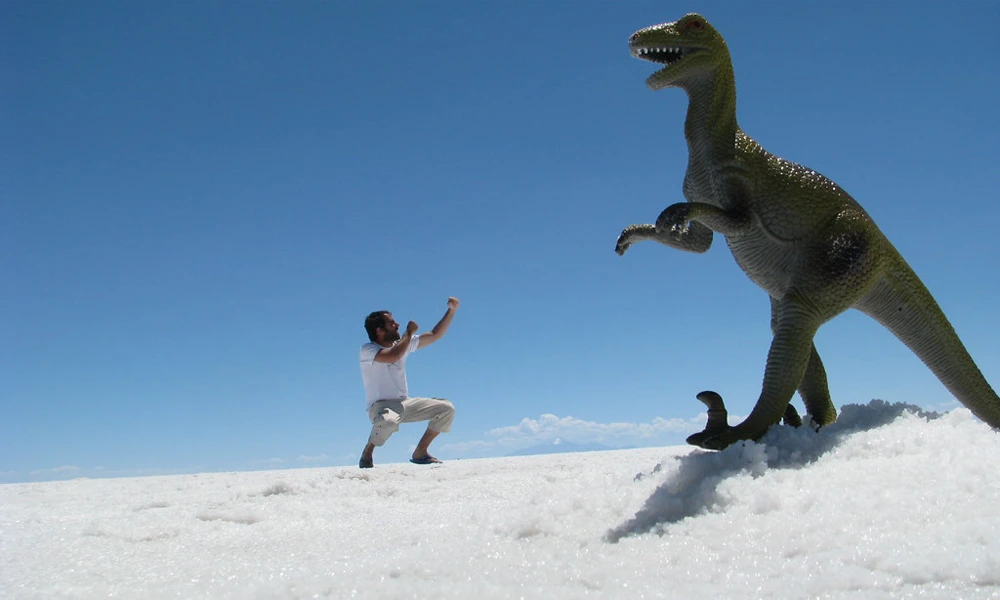
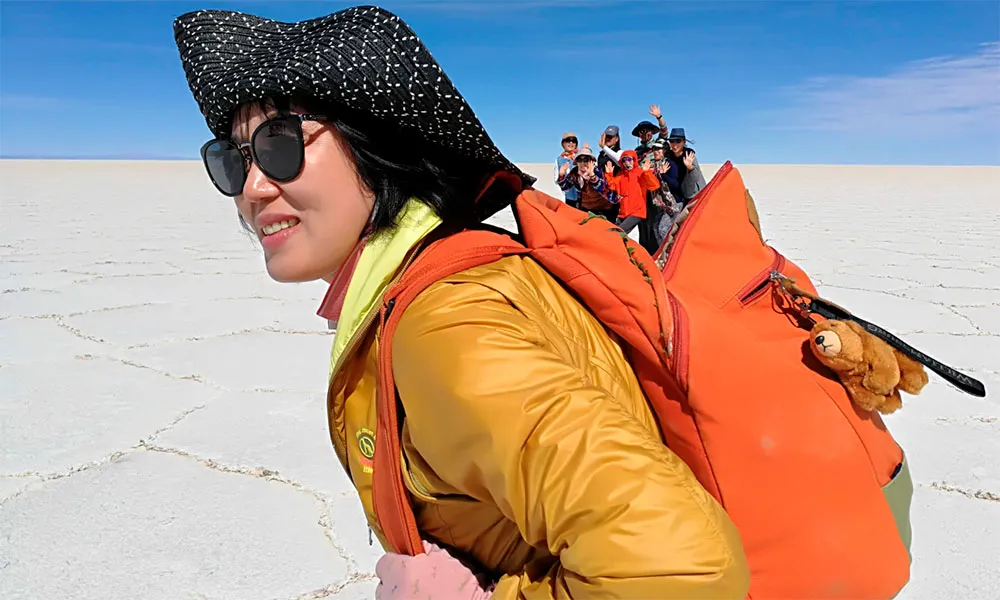
- Ask your guide for help capturing unique visual effects with forced perspective.
🧳 Recommendations for your trip during the rainy season
- Dress in layers; the weather is unpredictable.
- Bring sunglasses and sunscreen: the glare is very strong.
- Protect your electronic devices from the salt. Always check the weather forecast before your visit: heavy rains can make access to certain areas of the salt flats difficult.
❓ Frequently Asked Questions about the Mirror Effect of the Salar de Uyuni
- Is the mirror effect always visible during the rainy season?
Not necessarily. A thin layer of water is required for the reflection to be perfect. If there is excessive rain, some areas may be inaccessible, or the water may be too murky.
- Is it possible to do the classic 3-day tour during the rainy season?
Yes, but some areas, such as Incahuasi Island or the Siloli Desert, may not be accessible. The tour is adapted to weather conditions.
- Can the mirror effect be seen during the dry season?
No. During the dry season (May to November), the salt flats are completely dry, and while the famous hexagonal salt formations are visible, the mirror effect is not present.