
Eduardo Abaroa Plaza: Living History
Eduardo Abaroa Plaza, also known as Plaza Abaroa, is an iconic and significant public space in La Paz, Bolivia. More than just a place to rest or meet, this plaza embodies historical memory, national pride, and contemporary urban life, making it an unmissable stop on any tour of the city.
📍 Location and Urban Context
Eduardo Abaroa Plaza is located in the traditional Sopocachi neighborhood, one of La Paz’s most vibrant and culturally rich areas. It lies between 20 de Octubre, Sánchez Lima, Pedro Salazar, and Belisario Salinas streets, a lively and bustling area.
Its central location makes it a strategic point for locals and tourists exploring the surrounding cafes, restaurants, galleries, and art spaces.
🗽 A Hero and a Plaza with Identity
The plaza pays homage to Eduardo Abaroa Hidalgo, Bolivia’s most representative hero during the War of the Pacific (1879–1883). His resistance at the Battle of Topáter has become a symbol of patriotism and national pride.
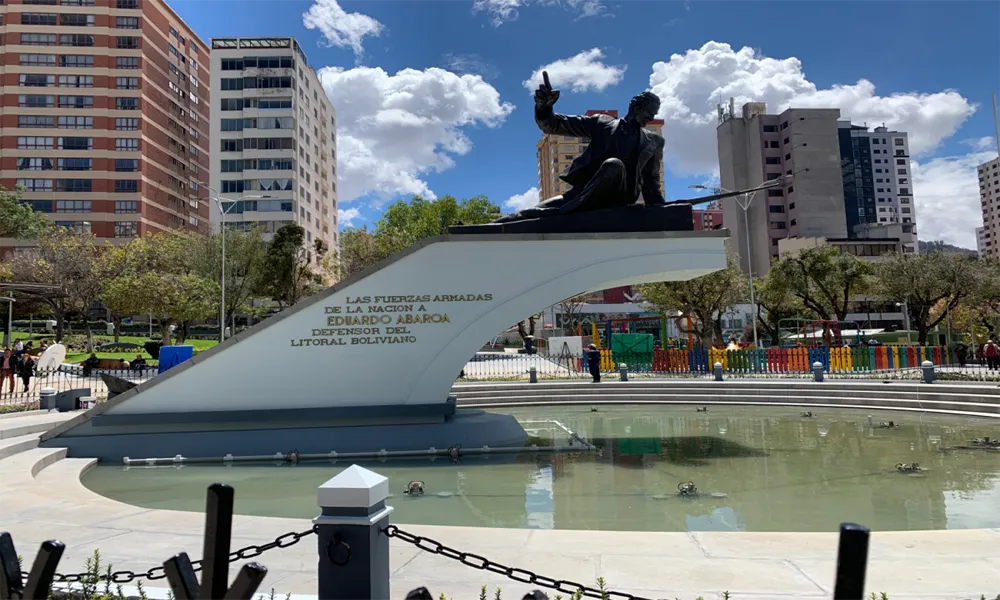
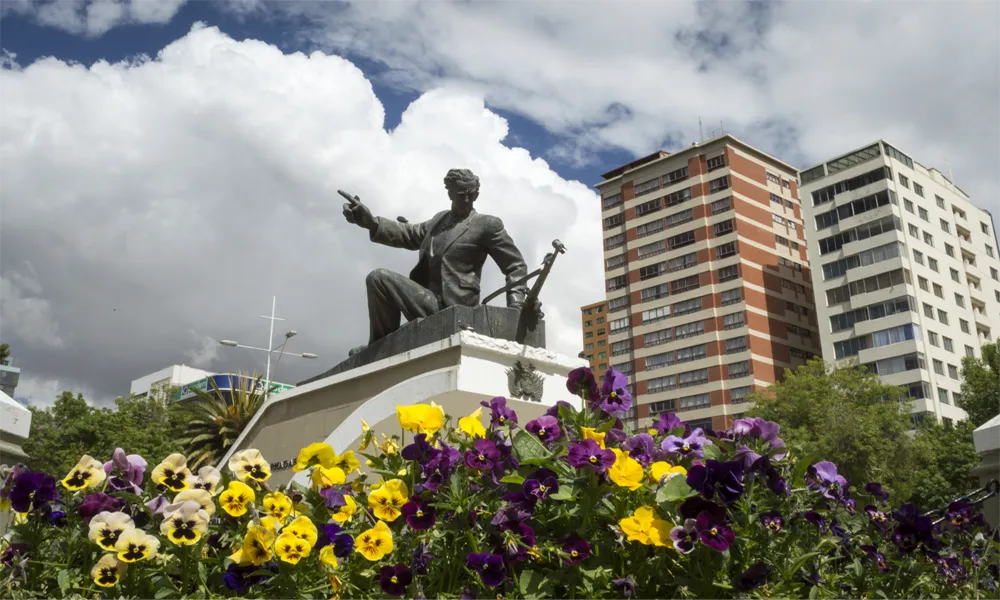
In the center of the plaza stands a bronze sculpture of Abaroa, conveying strength and defiance, atop a pedestal that resembles an unfinished bridge, symbolizing the sacrifice and struggle of this hero.
🛋️ Design, Monuments, and Artistic Details
The plaza has a rectangular shape, organized around a central axis that leads to the fountain and the main monument.
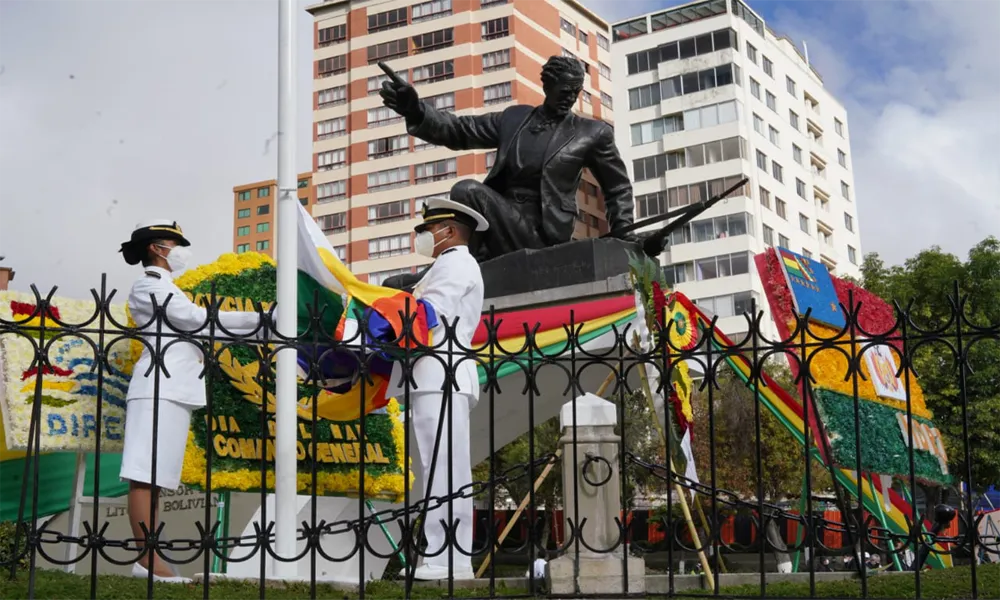
In addition to the Abaroa monument, a collection of coats of arms from the different departments of Bolivia, including those of the former Litoral region, stands out, evoking the country’s regional richness and diversity.
👨👩👧 Everyday Life: More Than Just a Historic Plaza
Today, Plaza Abaroa is not only a historical site, but also a meeting place for the residents of La Paz:
- 🐶 Community Space: It’s common to see locals walking their pets or meeting up with friends.
- 👶 Children’s Area: It has a playground perfect for families.
- 🛍️ Urban Activity: Artisans, street vendors, and young people skateboarding or cycling bring the plaza to life.
- ☕ Nearby Dining: The plaza is surrounded by cafes, restaurants, and modern options like bubble tea or international cuisine.
📅 Events, Ceremonies, and Commemorations
Every March 23rd, Bolivia’s Maritime Day, the plaza becomes the stage for official events, parades, and ceremonies honoring Abaroa and the country’s maritime claim.
It is also the site of various cultural events and community celebrations, making it a center of political and social activity in the city.
📸 Tips for Visitors
- Visit by day and night: The plaza has a tranquil atmosphere in the morning, but comes alive with energy at sunset.
- Free access: As a public space, the plaza is open 24 hours a day.
- Perfect for photos: The monument, the regional coats of arms, and the urban scene offer excellent photo opportunities.
- Explore the surrounding area: Don’t forget to explore the Sopocachi neighborhood, known for its bars, bookstores, and shops.
❓ Frequently Asked Questions
1. How do I get to Plaza Eduardo Abaroa?
The plaza is easily accessible by public transport, taxi, or on foot from downtown La Paz, especially from the El Prado area.
2. Is there access for people with reduced mobility?
Yes, the plaza is accessible for people with reduced mobility, with ramps and paved paths.
3. Can I have a picnic in the plaza?
Yes, it’s a popular spot for picnics, frequented by families and groups of friends. Be sure to bring everything you need, as there are no food vendors inside the plaza.
4. Can I take photos of the Eduardo Abaroa sculpture?
Yes, you can take photos of the sculpture and the surrounding monuments. However, we recommend against using drones without the proper authorization.
5. What other places can I visit near Plaza Abaroa?
Near the plaza, you can explore the Killi Killi Lookout, Plaza del Estudiante (Student Plaza), and various museums and art galleries in Sopocachi. It’s an excellent starting point for exploring the cultural side of La Paz.
Plaza Eduardo Abaroa is a symbol of history, identity, and community. It’s not only a meeting place for La Paz residents but also a site steeped in cultural and patriotic significance. If you visit La Paz, this plaza is a must-see, both for those interested in Bolivian history and for those who want to experience the city’s vibrant energy.