

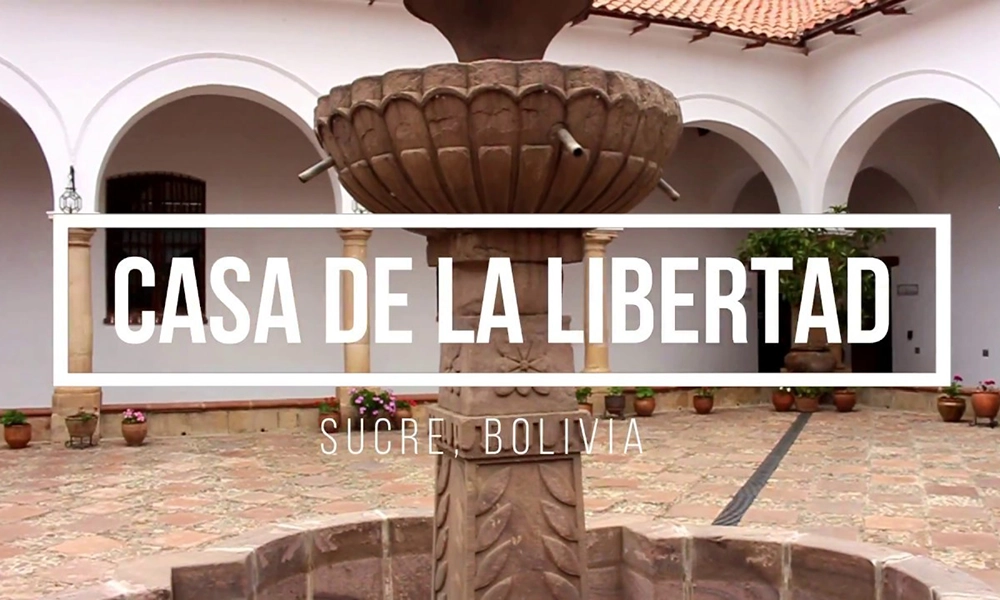
House of Liberty: The Birthplace of Bolivia
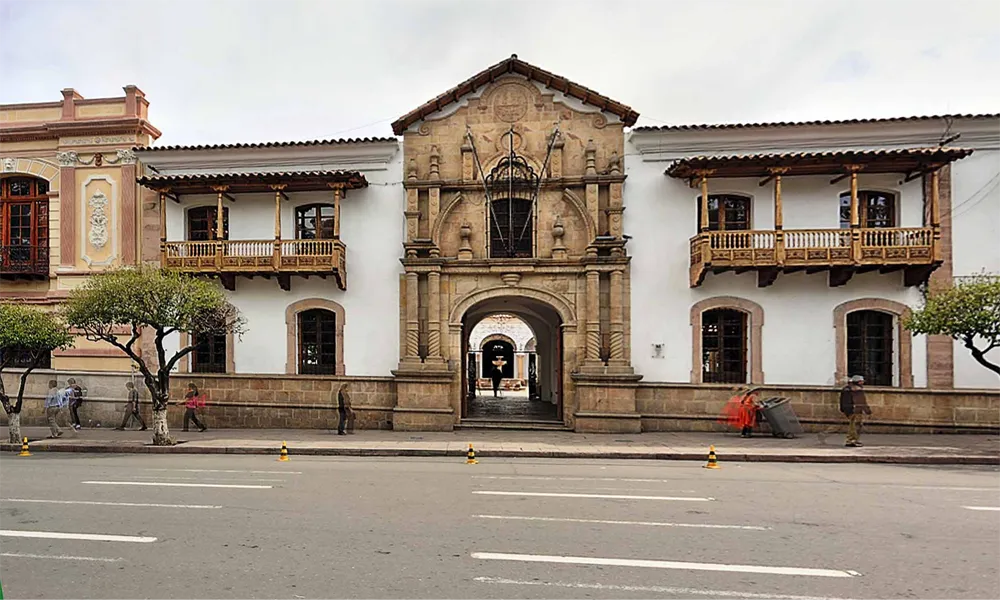
The House of Liberty, located in the heart of Sucre’s historic center, is one of the most important monuments not only in Bolivia, but in all of South America. It was in this historic building that the Bolivian Declaration of Independence was proclaimed and signed on August 6, 1825, marking the official birth of the Republic.
Visiting the House of Liberty is to retrace the steps of the protagonists of independence, understand the political context of the 19th century, and appreciate the role that Sucre—then known as Chuquisaca—played as the intellectual, legal, and revolutionary center of the continent.
📜 Historical Origins of the Building
Before becoming a symbol of independence, the House of Liberty was part of the Jesuit complex built in the 17th century. Later, it housed the Royal and Pontifical University of San Francisco Xavier of Chuquisaca, one of the oldest universities in South America.
From its classrooms emerged enlightened ideas, political debates, and movements that challenged Spanish colonial rule. It is no coincidence that many of the region’s independence leaders received their intellectual formation within its walls.
After independence, the building served for decades as the seat of the Legislative Branch, hosting congresses and key decisions for the young republic, before becoming a historical museum.
🏛️ Key Spaces of the House of Liberty
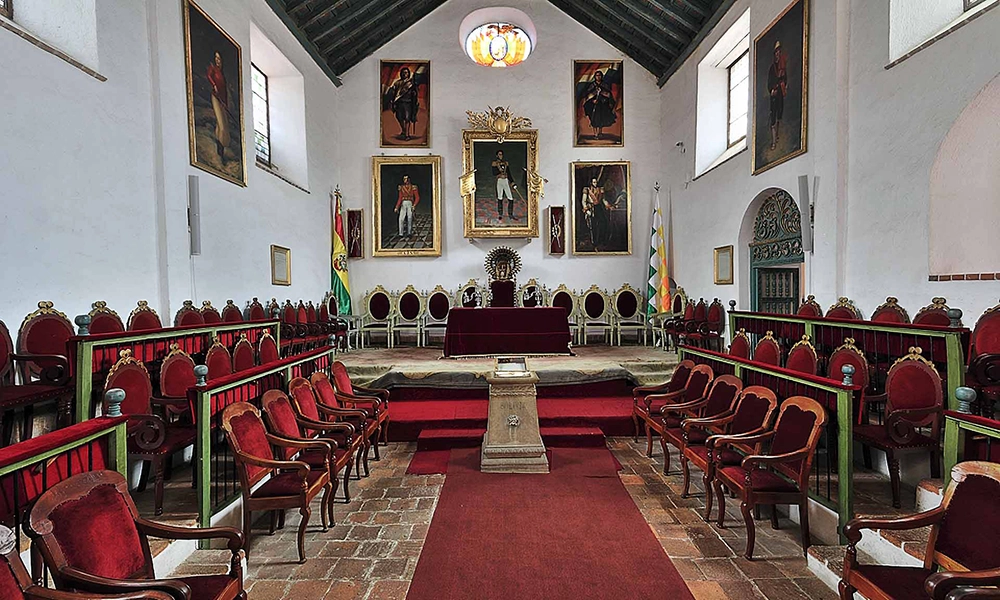
- ⭐ Independence Hall
This is the museum’s most emblematic space. It was in this room that the deputies of the 1825 Deliberative Assembly met to sign the Declaration of Independence. The hall retains its original structure, portraits of the founding fathers, and republican symbols that transport visitors to the nation’s founding moment.
- 📜 Historical Archive
The House safeguards more than 1,400 historical documents, including manuscripts, minutes, decrees, and official correspondence. Among them is the Act of Independence, considered a fundamental piece of Bolivian documentary heritage.
- 🖼️ Museum Galleries
The museum’s various galleries feature:
- Colonial and republican artifacts
- Paintings and portraits of historical leaders
- Original 19th-century furniture
- Maps and educational materials explaining the independence process
These galleries allow visitors to understand the political, social, and cultural evolution of Bolivia from the colonial period to the republic.
🌎 Cultural and Symbolic Importance
The House of Liberty is not just a museum, but a living symbol of national identity. It serves as the venue for official events, diplomatic visits, educational activities, and patriotic commemorations, especially every August 6th, when Sucre becomes the epicenter of national celebrations.
Furthermore, it forms part of the historic center of Sucre, a city recognized as a World Heritage Site, which reinforces its architectural and cultural value.
🧭 Practical Information for Visitors
📍 Location
Plaza 25 de Mayo, historic center of Sucre.
🕒 Regular Hours
- Monday to Friday: morning and afternoon
- Saturday and Sunday: reduced hours
(may vary on holidays and special dates)
💲 Admission
Different rates for nationals, foreigners, and students.
🗣️ Guided Tours
Included or available at scheduled times. Highly recommended for a better understanding of the historical context.
📸 Photography
Permitted in some areas, generally without flash.
❓ Frequently Asked Questions (FAQs)
- Why is the House of Liberty so important to Bolivia?
Because the document that gave rise to Bolivia as an independent country was signed in this building in 1825.
- How long does the visit last?
Between 45 minutes and 1.5 hours, depending on whether it is done with a guide.
- Is it suitable for students and children?
Yes. The museum has an educational focus and is frequently visited by schools and universities.
- Can I visit without a guide?
Yes, although the experience is considerably enhanced with a guided tour.
- What other places can I visit nearby?
The Metropolitan Cathedral, historical buildings, museums, traditional cafes, and the entire Plaza 25 de Mayo.
- Does the House of Liberty still have official functions?
Yes, it is occasionally used for ceremonial events and cultural events.
Visiting the House of Liberty is to understand how and where Bolivia was born. It is a space that combines history, architecture, collective memory, and national pride. For both tourists and Bolivians, this museum is a must-see in Sucre and an experience that connects the past with the present.