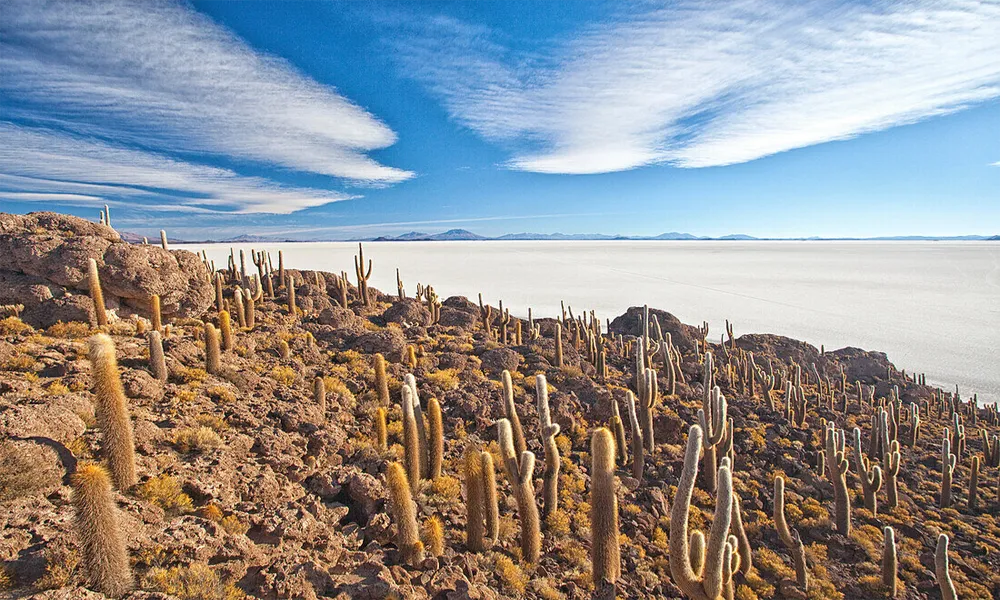

Incahuasi Island: The magical heart of the Salar de Uyuni
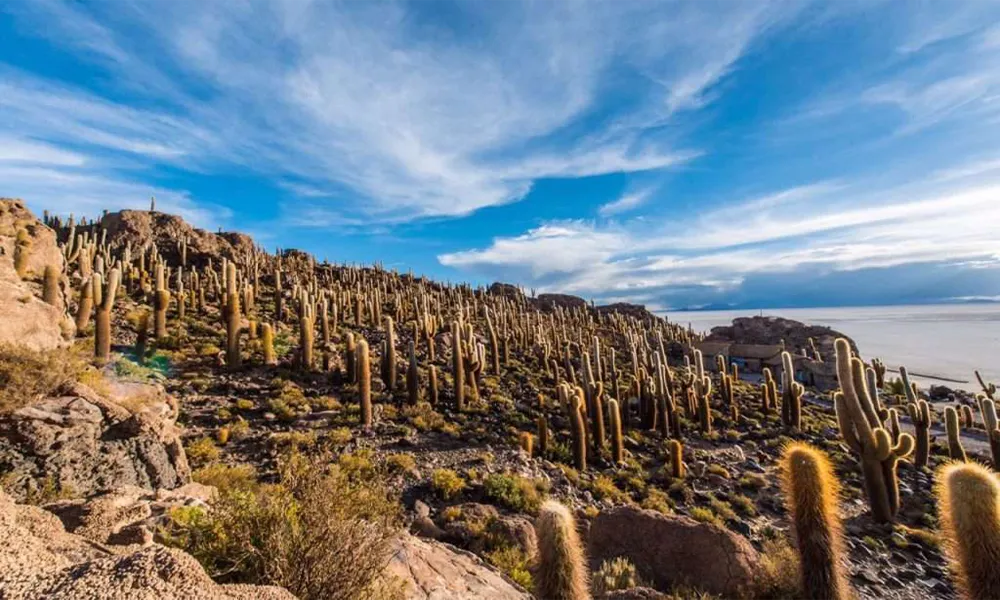
Incahuasi Island is one of the most iconic and photographed spots in the Salar de Uyuni, a place that seems otherworldly. Surrounded by an endless expanse of white salt, this rocky island covered in giant cacti breaks the monotony of the salt flats and offers one of the most breathtaking landscapes in Bolivia.
Visiting Incahuasi Island is more than just a tourist stop: it’s an experience that combines geology, ancient history, biodiversity, and unique panoramic views of the world’s largest salt flat.
📍 Where is Incahuasi Island located?
Incahuasi Island is located in the heart of the Salar de Uyuni, within the department of Potosí, Bolivia. It is approximately 100 km from the city of Uyuni, in the Bolivian highlands.
Its name comes from Quechua:
- Inca = king
- Huasi = house
That is, “The House of the Inca,” reflecting its historical and symbolic importance to pre-Hispanic cultures.
🧪 Natural Formation
Remnants of the ancient Lake Minchín and later Lake Tauca.
When these lakes evaporated, extensive layers of salt and some rocky elevations, such as Incahuasi, were left behind.
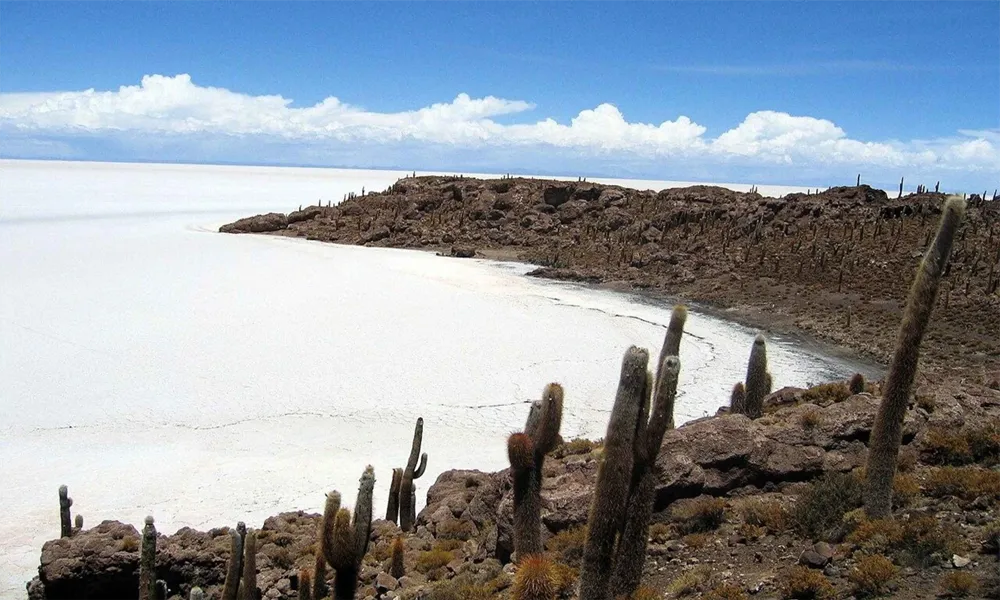
The island is composed mainly of volcanic rock and fossilized coral, clear evidence of its aquatic past.
🌵 Giant Cacti: Symbol of Incahuasi
The main attraction of Incahuasi Island is its giant cacti (Echinopsis atacamensis), considered among the largest in the world.
🌿 Characteristics of the cacti
- They can reach 10 to 12 meters in height.
- They grow approximately 1 cm per year, so some are over 1,000 years old.
- They are perfectly adapted to the extreme climate of the Altiplano: cold nights, intense radiation, and water scarcity.
- These cacti create a spectacular contrast with the endless white of the salt flats.
🦎 Flora and Fauna
Although the environment seems inhospitable, Incahuasi Island is home to life adapted to extreme conditions.
🌱 Flora
- Giant cacti
- Xerophytic plants adapted to saline and dry soils
🦜 Fauna
- Andean lizards
- Small birds adapted to the Altiplano
- Insects resistant to aridity
This ecosystem is fragile and protected, so it is recommended to stay on the marked trails.
🚗 How to get to Incahuasi Island
The most common way to visit the island is as part of a tour to the Salar de Uyuni, which usually includes 4×4 transportation, a tour guide, and stops at other highlights.
Main Options:
From Uyuni:
- Duration: 1 hour and 30 minutes in a 4×4 vehicle.
- Daily tours that include the island in 1, 2, 3, or 4-day itineraries.
From Potosí, Sucre, or La Paz:
- Transfers by bus or domestic flight to Uyuni, then join the tour.
🎟️ Entrance Fees and Hours
- General Admission: 30 to 40 BOB (approx. 5 to 6 USD).
- Visiting Hours: 8:00 AM to 5:00 PM.
Entrance fees are paid in cash directly on the island.
🗺️ Main Activities on Incahuasi Island
- Hike to the main viewpoint 🥾
Ascent along the designated trail for breathtaking panoramic views of the salt flats.
- Creative photography 📸
Thanks to the salt flat’s optical effect, it’s the ideal place for unique perspective photos.
- Exploring ancient cacti 🌵
Some reach over 10 meters in height and are a major attraction.
- Wildlife and fossil spotting 🪨
Discover coral remains, petrified algae, and small Andean species.
🏨 Nearby Hotels and Accommodations
Although there is no accommodation on the island, there are excellent options in and around Uyuni:
Luna Salada Hotel ⭐⭐⭐⭐
A hotel built with salt blocks, offering spectacular views of the salt flats.
Hotel Palacio de Sal ⭐⭐⭐⭐
One of the most famous and luxurious salt hotels in Bolivia.
Hotel Casa Andina Uyuni ⭐⭐⭐
Ideal for travelers seeking comfort and a convenient location.
Local Budget Hostels
Options from $15 USD per night.
🍽️ Recommended Cuisine
In Uyuni and on organized tours, you can sample typical regional dishes:
- Royal quinoa in all its forms 🍲
- Llama jerky 🥩
- Peanut soup 🥣
- Trout from Lake Titicaca 🐟
- Muña and coca infusions to combat altitude sickness.
📅 Best Time to Visit Incahuasi Island
☀️ Dry Season (May to November)
- Direct access to the island.
- Ideal for walking and climbing to the viewpoints.
- Clear skies and excellent visibility.
🌧️ Rainy Season (December to March)
- The salt flats are covered in water, creating the famous mirror effect.
- Access to the island is not possible on some days for safety reasons.
- Spectacular views when access is permitted.
🎒 Recommendations for your visit
- 🧢 Wear a hat, sunglasses, and sunscreen (very high radiation).
- 🧥 Bring warm clothing: the weather changes quickly.
- 💧 Stay hydrated and acclimatize to the altitude.
- 👟 Wear comfortable shoes for walking on volcanic rock.
- 🚯 Do not leave trash or touch the cacti.
❓ Frequently Asked Questions
1. Is camping allowed on Incahuasi Island?
No, the island is a protected area, and camping is prohibited.
2. Is the entrance fee included in the tours?
It depends on the package; most tours do not include the entrance fee, so it is paid separately.
3. Is it accessible year-round?
During the rainy season (January to March), access may be restricted.
4. Is it suitable for people with altitude sickness?
Yes, but it is advisable to acclimatize beforehand and bring coca leaves or candies.