
La Higuera: A Historic Corner of Bolivia That Invites Reflection
La Higuera is a small rural village that, despite its size, occupies a significant place in the history of Bolivia and Latin America. Surrounded by mountains, dirt roads, and a profound silence, this destination has become a space for remembrance, reflection, and encountering the most authentic Bolivia. Although it belongs to the department of Santa Cruz, its reality is very different from the modern life of Santa Cruz de la Sierra.
🧭 Location and Geographic Environment
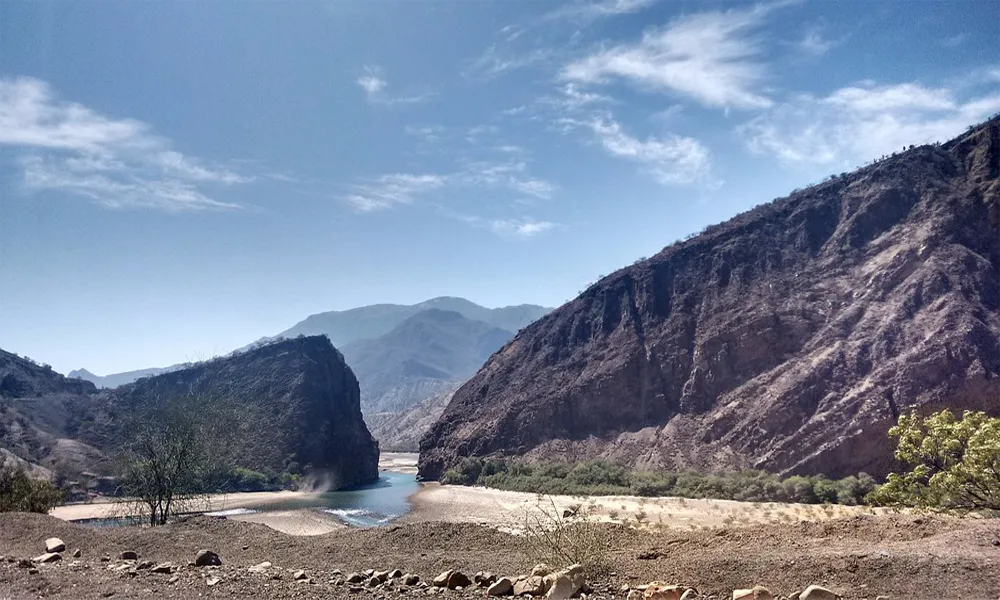
La Higuera is located in the southwest of the department of Santa Cruz, in a mountainous area near Vallegrande. Access is not easy: the roads are long and, in some sections, difficult, especially during the rainy season. However, the landscape more than compensates for the effort. Along the way, you can see valleys, ravines, native vegetation, and farming communities that preserve ancestral traditions.
This geographic isolation has allowed La Higuera to maintain a peaceful lifestyle closely connected to nature.
📖History and Cultural Significance
- Origin of the name: “La Higuera” derives from the abundance of fig trees in the past.
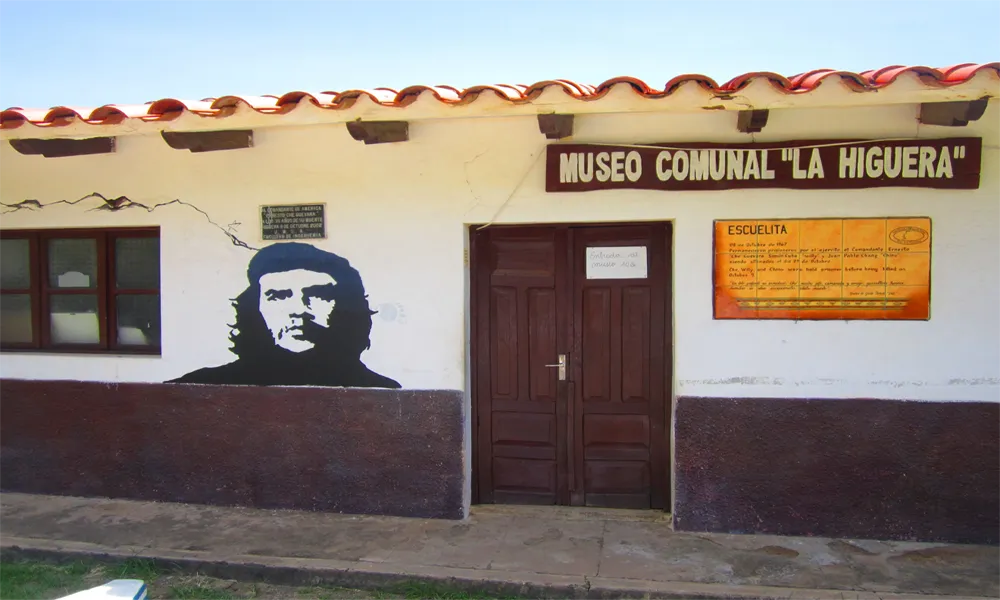
- Key historical events: On October 8, 1967, Ernesto “Che” Guevara was captured near here (in the Quebrada del Churo). The following day, he was executed in the La Higuera school, along with his comrade Simeón Willy Cuba Sanabria.
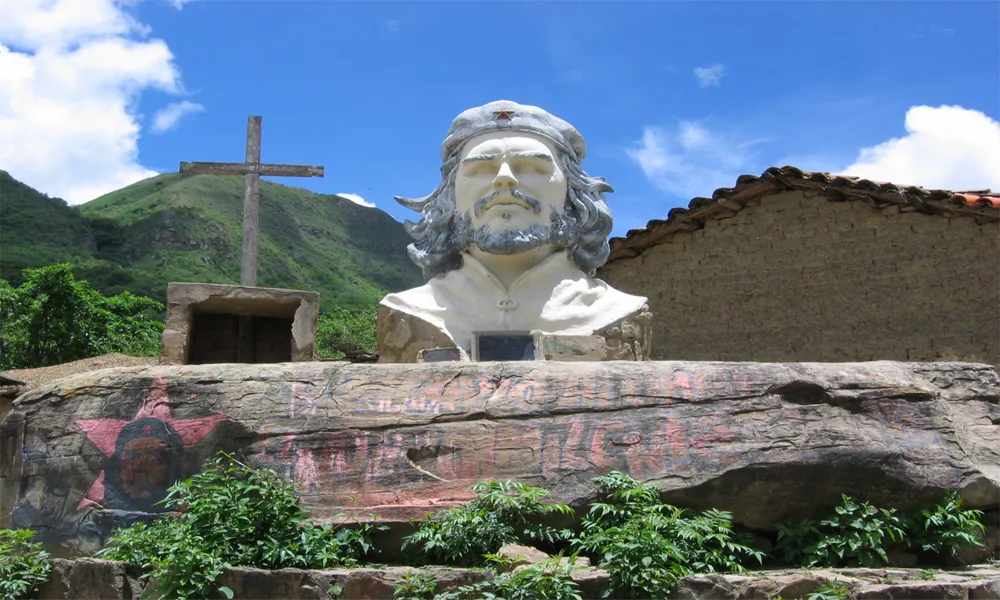
- The school now functions as a museum, and the town has a monument, bust, and commemorative plaques.
- The site is part of the “Che Route,” a tourist and historical memory circuit inaugurated in 2004 that visits emblematic sites linked to the revolutionary’s final days.
🏛️ Historical Importance of La Higuera
La Higuera is known worldwide as the place where Ernesto “Che” Guevara was captured and executed in 1967. The town’s former school, where this event took place, is preserved as a historical museum. Inside, you can find photographs, testimonies, and objects that narrate the events of that era.
For many visitors, this space is not just a tourist site, but a place of respect and reflection on history, revolutionary ideals, and the political conflicts of the 20th century in Latin America.
🏘️ Daily Life and Local Culture
Beyond its historical past, La Higuera is a vibrant town. Its inhabitants are primarily engaged in agriculture, livestock farming, and small community activities. Daily life unfolds at a leisurely pace: there are no large businesses, access to technology is limited, and oral traditions remain very important.
The houses are simple, built with local materials, and the streets reflect the tranquility of a town where everyone knows each other. Visitors often highlight the hospitality of the people, who are always willing to share stories and experiences.
🌿 Nature and Landscape
Natural surroundings of La Higuera are one of its greatest attractions. The surrounding mountains offer breathtaking views and an ideal setting for contemplation. The area’s biodiversity includes birds, native plants, and landscapes largely untouched by human activity.
Tranquility of the place, broken only by the wind or the sounds of the countryside, makes La Higuera a perfect destination for those seeking to disconnect from the fast pace of the city.
🧠 Educational and Tourist Value
La Higuera is a destination of great educational value. Schools, universities, and researchers visit the town to better understand Bolivia’s recent history and its political context. It is also part of the region’s so-called “historical route,” which includes other important sites related to the events of 1967.
The tourism that comes to the area is generally respectful and culturally interested, which helps preserve the town’s identity without transforming it into a mass commercial destination.
📍Community, Tourism, and Symbolic Pilgrimage
- Population: The 2001 census recorded only 119 inhabitants, mostly of Guarani origin.
- Emotional Tourism: Many visitors arrive on a kind of pilgrimage to the “revolutionary saint”: images, candles, and flowers are venerated, and he is even called “Saint Ernesto of La Higuera.”
- Social Context: It is a humble village, with descriptions of adobe houses decorated with phrases such as: “Ernesto, your struggle is the way” or “Until victory, always.”
- Collective Significance: It has become a powerful symbol for those who honor his reconciliation and legacy, sustained by a mixture of history, revolutionary faith, and living memory.
📌Access and Recommended Experiences
- How to get there: You can drive from Santa Cruz in approximately 5 hours and 20 minutes (approximately 263 km), or combine bus and shared taxi (trufi) with transfers, arriving in about 6 hours and 10 minutes for around USD 10–15.
- Recommended Tours: There are excursions that combine Samaipata – Vallegrande – Pucará – La Higuera, visiting museums, historical sites, and beautiful natural landscapes.
✨ An Experience Beyond Travel
Visiting La Higuera is not just about seeing a historical site; it’s about having a profound experience. It’s a place that invites silence, reflection, and understanding of the past. Those who come here leave with a different perspective on history, rural life, and collective memory.