

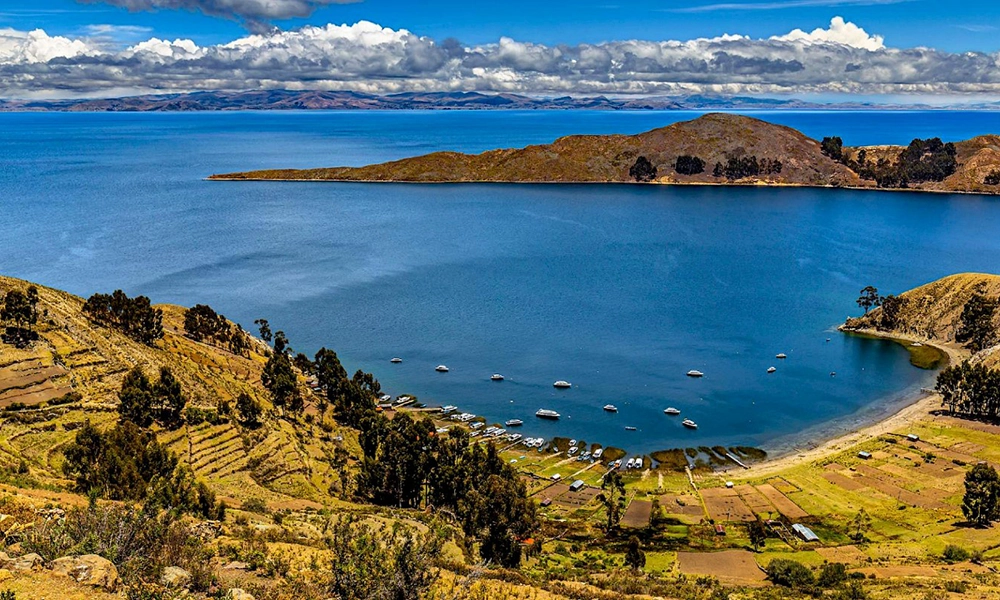
The highest navigable lake in the world, cradle of Andean civilizations and natural sanctuary of the Andes
Lake Titicaca is more than just a body of water: it is a sacred space, an ancient cultural hub, and one of South America’s most iconic landscapes. Located at over 3,800 meters above sea level, in the heart of the Andean highlands, this binational lake shared by Peru and Bolivia has been, for thousands of years, the spiritual, economic, and symbolic center of the civilizations that inhabited the Andes.
For the Andean peoples, Titicaca is the origin of life, the birthplace of the gods, the Incas, and the order of the world. For the contemporary traveler, it is a destination that combines nature, living culture, profound history, and landscapes that convey calm, silence, and grandeur.
📍 Location and Geographic Characteristics of Lake Titicaca
Lake Titicaca is located on the Andean Altiplano, a vast plateau situated between the Western and Eastern Cordilleras of the Andes.
Main Geographic Data:
- Altitude: 3,812 m above sea level
- Area: approx. 8,372 km²
- Length: 190 km
- Maximum width: 80 km
- Maximum depth: 281 m
- Countries: Peru (60%) – Bolivia (40%)
It is divided into two main sections:
- Lake Titicaca or Chucuito (deeper)
- Lake Wiñaymarca or Wiñaymarca (shallower)
🕰️ Millennial History and Andean Cosmovision
🌞 The Mythical Origin of the Inca Empire
According to Andean mythology, the god Inti (Sun) sent Manco Cápac and Mama Ocllo, founders of the Inca Empire, from the waters of Lake Titicaca to civilize the peoples and establish Cusco. Therefore, the lake was considered a sacred place, a portal between the world of the gods and humankind.
🏺 Pre-Incan Cultures
Before the Incas, the lake was the center of great civilizations such as:
- Pucará
- Tiwanaku
- Colla
These cultures developed advanced knowledge in agriculture, astronomy, architecture, and ritual, much of which still survives in present-day communities.
🧘 Lake Titicaca as a Spiritual Space
To this day, Lake Titicaca retains a strong spiritual significance. On its islands and shores, the following are performed:
- Andean rituals (offerings to Pachamama)
- Solar celebrations
- Andean-Catholic syncretic festivals
For many communities, the lake is a living being, a protective entity that deserves respect.
🌦️ Climate of Lake Titicaca
The lake’s climate is cold, dry, and high-altitude, with marked variations between day and night.
Average Temperatures:
- Day: 10°C to 18°C
- Night: -5°C to 5°C
Climate Characteristics:
- High solar radiation
- Frequent winds
- Very cold nights
- Concentrated rainfall in summer
📅 Best time to visit Lake Titicaca
✅ Dry season (April to October) – THE BEST
- Sunny days and clear skies
- Excellent lake visibility
- Ideal for boating and photography
- More stable weather
⚠️ Rainy season (November to March)
- Greener landscapes
- Fewer tourists
- January and February with heavier rainfall
👉 Ideal months: May, June, July, August, and September.
🚍 How to get to Lake Titicaca
From Peru (Puno)
- ✈️ Flight Lima – Juliaca (1 hr 40 min) + transfer to Puno
- 🚌 Bus Cusco – Puno (7–8 hrs)
- 🚆 Tourist train Cusco – Puno (Andean panoramic route)
From Bolivia (Copacabana)
- 🚌 La Paz – Copacabana (4 hrs)
- 🚤 Boats from Copacabana to Bolivian islands
🌱 Flora of Lake Titicaca
The lake’s flora is adapted to the altitude, cold, and salinity.
Emblematic Plant: Totora Reed
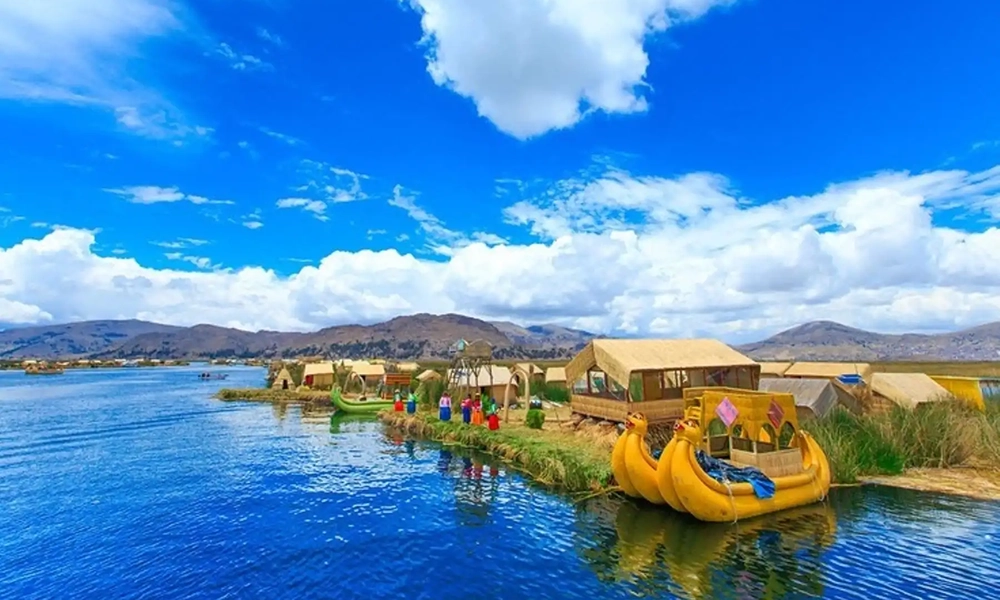
- Used to build floating islands
- Traditional raft making
- Material for housing and crafts
- Medicinal and food uses
Other species:
- Llacho (algae)
- High Andean grasses
- Traditional medicinal plants
🦩 Fauna of Lake Titicaca
The lake is home to unique and endemic species.
Notable Fauna:
- Titicaca Giant Frog (endemic and endangered)
- Titicaca Grebe
- Andean Gulls
- Wild Ducks
- Native Fish: carachi, ispi
It is an important corridor for migratory birds.
🏝️ Main Islands and Attractions of Lake Titicaca
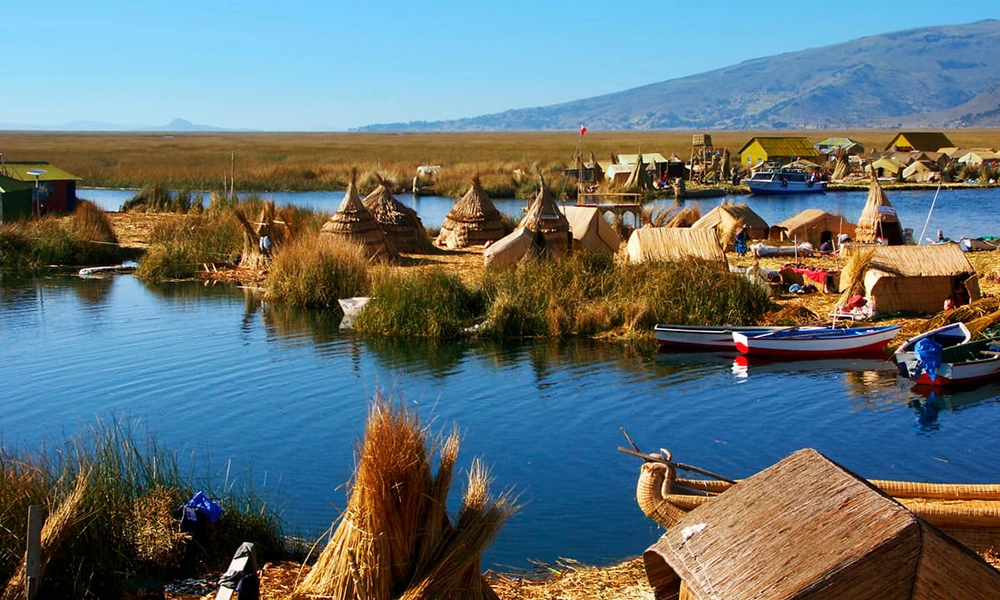
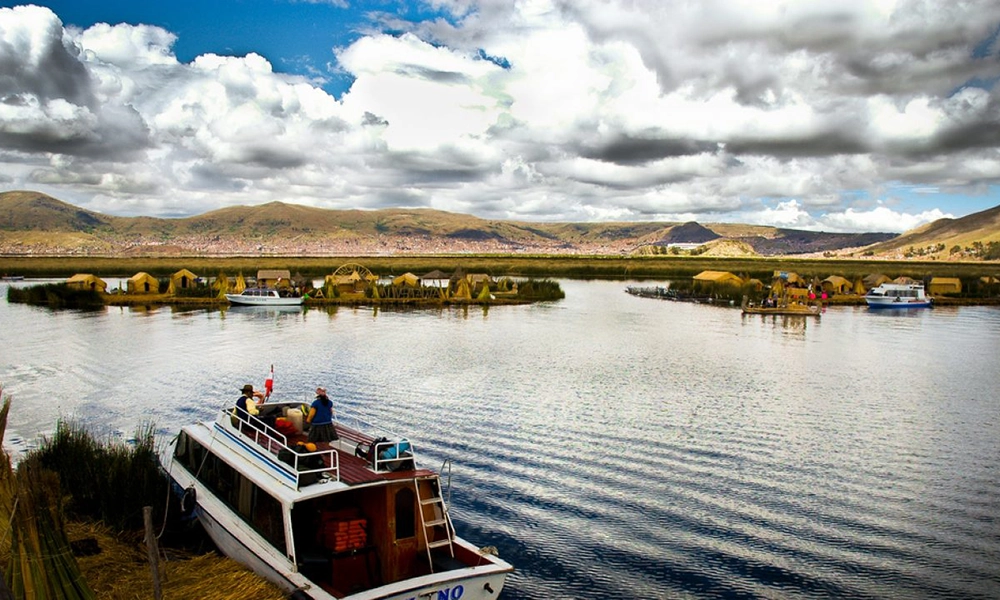
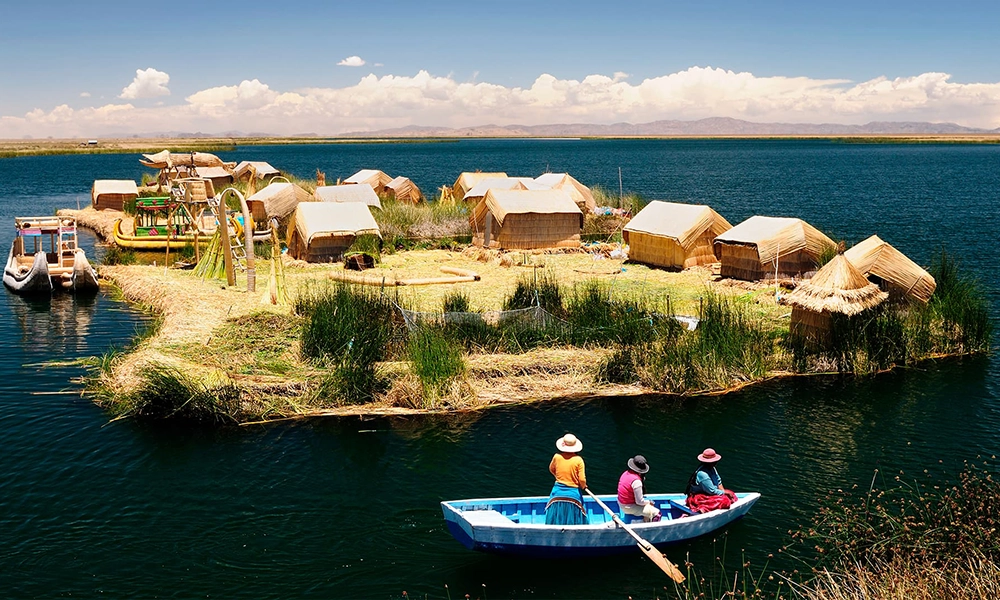
🏠 Floating Islands of the Uros
Artificial islands made of totora reeds; a living ancestral culture.
🧵 Taquile Island
Famous for its textile art, recognized by UNESCO.
🌄 Amantaní Island
Experiential tourism, spirituality, and sunset landscapes.
Isla del Sol (Island of the Sun)
A sacred Inca center and one of the most spiritual places on the lake.
🧭 Activities Available
- Boat Trips
- Experiential Tourism
- Kayaking in Calm Areas
- Scenic Hikes
- Birdwatching
- Landscape Photography
- Local Cuisine
- Andean Rituals (Cultural Experiences)
💰 Prices and Reference Costs
Tours from Puno:
- Uros Islands (Half Day): USD 10 – 20
- Uros + Taquile (Full Day): USD 25 – 40
- Uros + Amantaní (2 Days/1 Night): USD 35 – 60
Community Entrance Fees:
- Uros: S/ 10
- Taquile: S/ 10
- Amantaní: S/ 10
- (Prices are approximate)
❓ Frequently Asked Questions (FAQs)
Is Lake Titicaca cold?
Yes, the water is cold throughout the year.
Is swimming possible?
It’s not recommended due to the temperature and altitude.
Is altitude sickness dangerous?
It can occur; acclimatization is recommended.
Is there cell phone service?
Limited on the islands, good in Puno.
Is it suitable for children and the elderly?
Yes, with precautions due to the altitude.
✅ Final Recommendations
- Acclimatize for 1–2 days
- Wear layers of thermal clothing
- Use sunscreen
- Stay hydrated
- Respect local communities
- Walk slowly
✨ Why visit Lake Titicaca?
Because it’s a destination that transcends tourism. It’s living history, Andean spirituality, unique biodiversity, and a landscape that invites reflection and tranquility.
🧾 Final Conclusion
Lake Titicaca is one of the great cultural and natural treasures of the Americas. Visiting it is connecting with the origin of the Andes, with towns that keep their traditions alive and with a landscape that remains untouched by time.