

Main Square 10 de Noviembre, Potosí: History, Architecture, and Local Life in the Heart of the Imperial City
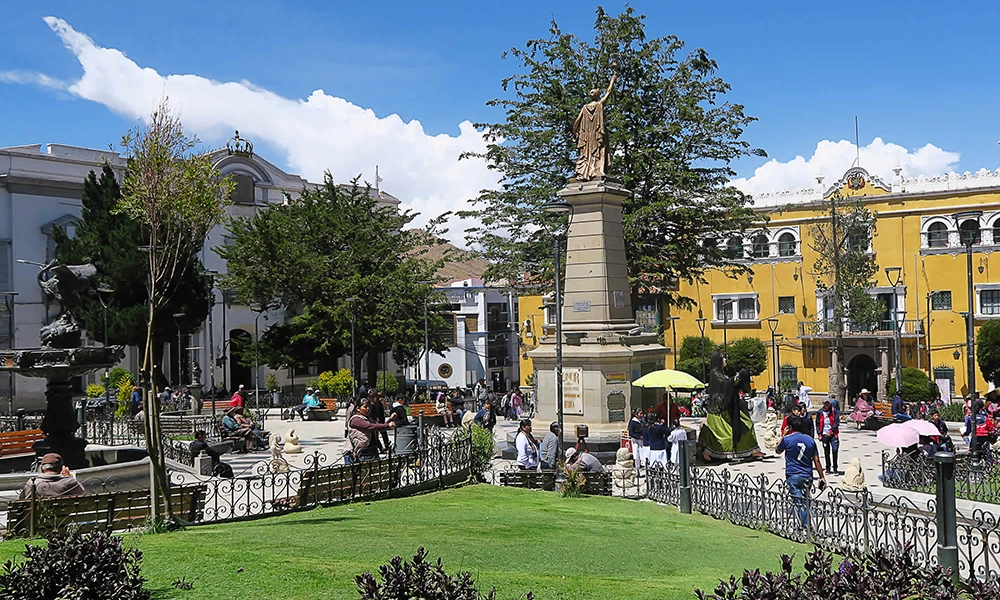
The Main Square 10 de Noviembre is the heart of Potosí. It’s not just a pretty square for photos; it’s the stage where colonial memory, civic pride, historic architecture, and the daily life of La Paz—or rather, Potosí—intersect. Students, merchants, families, and travelers coexist in a space that encapsulates the essence of the city.
Furthermore, thanks to its heritage surroundings, the square serves as the best starting point for exploring the historic center: from here, you can walk to churches, mansions, museums, and urban viewpoints.
📍 Where is it and why is it so important?
The Plaza 10 de Noviembre is located in the historic center of Potosí and corresponds to the colonial urban model of a “main square,” where the powers of the time (civil, religious, and administrative) were concentrated. Historically, the space was known as “Plaza de Regocijo” (Plaza of Rejoicing) because of the celebrations held there.
Today it continues to serve that purpose: it’s the place where civic ceremonies, cultural events, and everyday moments take place (from flag-raising ceremonies to spontaneous gatherings).
🕰️ Why is it called “November 10th”?
The name is associated with the 1810 libertarian uprising in Potosí, remembered as a key date in the emancipation process of Upper Peru. Even the modern renovation of the plaza was reopened on November 9, 2014, to commemorate that historic event.
🏛️ A plaza surrounded by history: buildings and heritage surroundings
One of the great attractions of this plaza is what surrounds it. Walking around is like strolling through an open-air museum of architecture and urban power:
⛪ The Cathedral (on one side of the plaza)
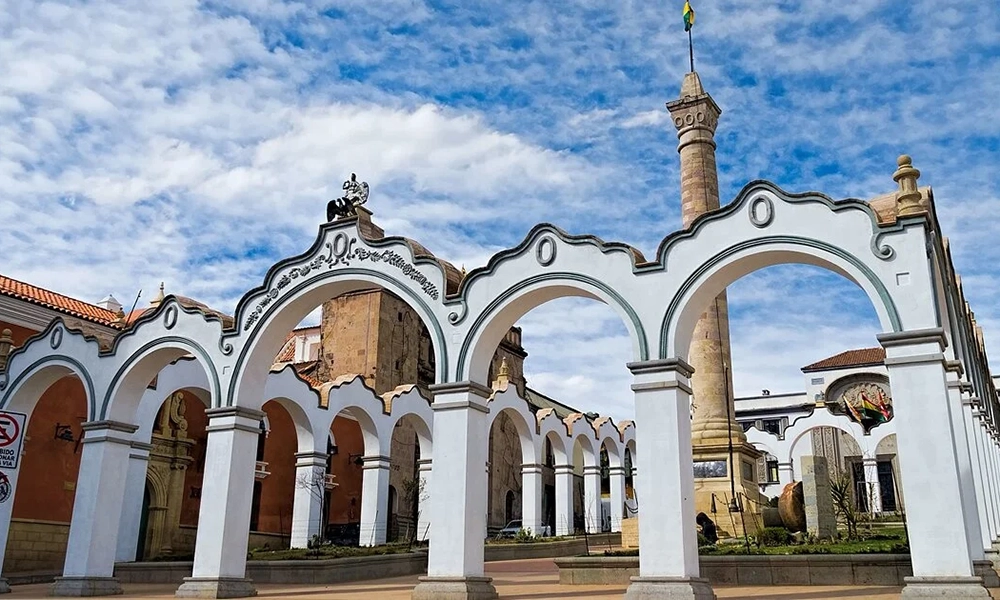
The Cathedral Basilica of Our Lady of Peace is located directly on Plaza 10 de Noviembre. It was built after the collapse of the old church (mentioned in 1807 in historical sources), and its construction took place between 1808 and the 1830s, incorporating Neoclassical influences and viceregal elements.
For many visitors, seeing it head-on from the plaza is one of the most classic images of Potosí.
🏢 Civic and Institutional Buildings
Public institutions and historical buildings are located around the edges of the plaza, maintaining the formal character of downtown Potosí. Many travelers highlight this “ring” of traditional buildings around the plaza as part of its charm.
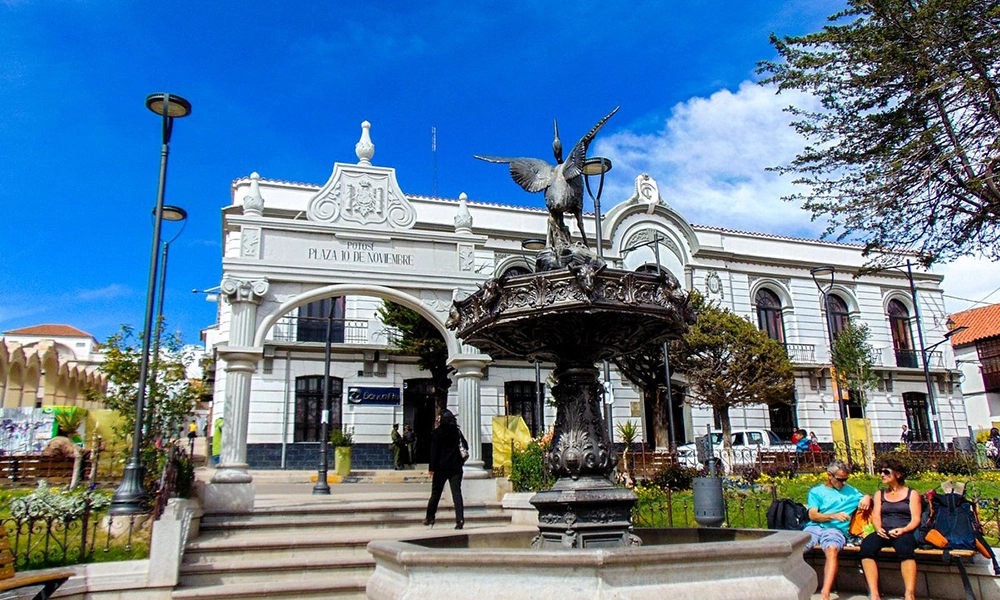
🎭 Sculptures, Fountains, and Details Many Overlook
The plaza is more than just “benches and gardens.” It boasts several sculptural and ornamental elements that give it character. Four standout sculptures are mentioned: the Statue of Liberty, a heron in one of the fountains, a muse, and a cherub.
Visit tip: View it as if it were a “gallery”: walk around it completely and look for those details, because they often get left out of the typical photo.
🌿 Renovation and Current Appearance
The plaza was renovated in 2014, with changes to the planters, the addition/improvement of water fountains, and the restoration of monuments. It was reopened on November 9th of that same year.
This explains why it now feels more organized, photogenic, and comfortable for walking or sitting for a while.
🌞 What the Plaza Is Like: A Real Local Atmosphere
Plaza 10 de Noviembre is not a place “just for tourists.” It’s a vibrant space:
- In the morning, you’ll often see people, students, and vendors selling snacks, juice, etc.
- On special occasions, it becomes the setting for civic ceremonies and cultural activities.
- At night, the lighting transforms the atmosphere and highlights its historical character (many travelers recommend it for this reason).
👣 What to do in Plaza 10 de Noviembre (practical plan)
1) View the plaza in layers
First, observe it as an urban space (gardens, fountains, sculptures). Then look up: balconies, facades, towers.
2) Classic photo + a different photo
- Classic: from an angle that includes the Cathedral.
- Different: details of sculptures or a low-angle view of the fountains.
3) Plan your walking route from here
From the plaza, you can easily plan a tour of the historic center without getting lost, as it’s the clearest landmark.
⏰ Best time to visit
- Morning: good light for architecture and fewer harsh shadows.
- Afternoon: more relaxed atmosphere, ideal for sitting and observing.
- Night: ideal for photos with urban lighting and a more “cinematic” feel.
🧣 Useful recommendations for travelers (Potosí is at high altitude)
- Bring a jacket, even if it’s sunny (Potosí is usually cold).
- Walk slowly if you’ve just arrived: the altitude is noticeable.
- If you plan to enter nearby churches, dress respectfully.
❓ Frequently Asked Questions
- Why is Plaza 10 de Noviembre so famous?
Because it’s the historical and civic center of Potosí, and it’s surrounded by emblematic buildings like the Cathedral.
- What does the name “10 de Noviembre” mean?
It’s related to the 1810 liberation movement commemorated in Potosí; That’s why the 2014 reopening was also linked to that historic date.
- What shouldn’t I miss in the plaza?
Its sculptures and details: the Statue of Liberty, the heron in the fountain, the muse, and the cherub.
- How much time is recommended?
Between 20 and 40 minutes if you’re just visiting the plaza; 1 to 2 hours if you’re using it as a base for exploring the city center.