

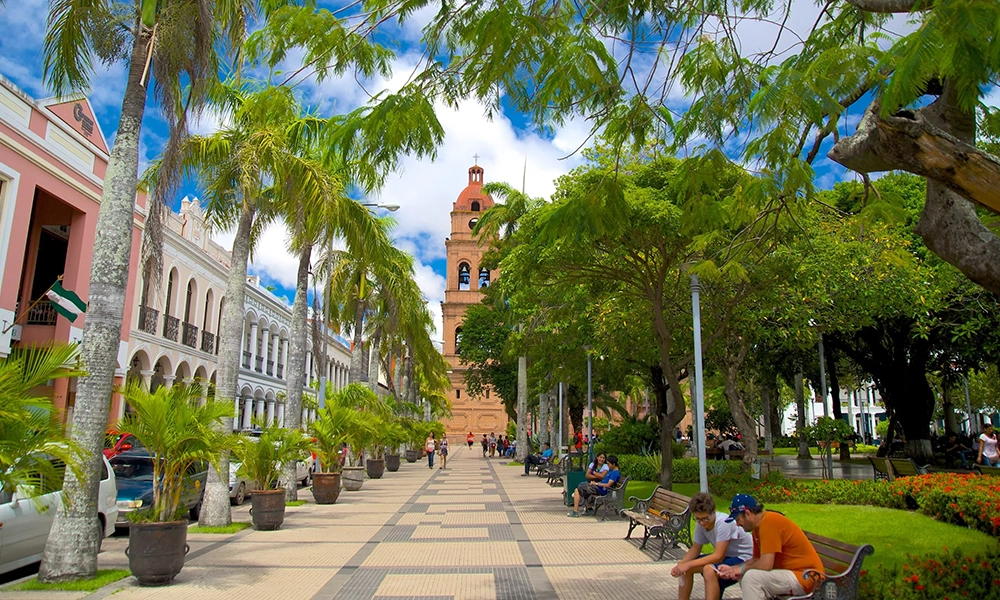
Plaza Metropolitana 24 de Septiembre
Historical, Cultural, and Social Heart of Santa Cruz de la Sierra
Plaza Metropolitana 24 de Septiembre is not just the main square of Santa Cruz de la Sierra: it is the urban origin, the symbolic center, and the most representative space of Santa Cruz’s identity. Here, colonial history, religious faith, daily life, and the modern growth of a city that has transformed from an isolated village into one of the most dynamic urban centers in South America converge.
Visiting this square is to understand Santa Cruz from its very roots. Everything revolves around it: the streets, the memories, the celebrations, the encounters, and also the social transformations. Therefore, more than a tourist attraction, Plaza 24 de Septiembre is a living space to be experienced, felt, and shared.
📍 Location: Kilometer Zero of Santa Cruz de la Sierra
Plaza 24 de Septiembre is located in the historic center of Santa Cruz and is considered the city’s kilometer zero. From this point, the first urban layouts were organized, and to this day, it remains the most important geographical and social landmark.
Immediate surroundings:
- San Lorenzo Cathedral Basilica
- Historical and administrative buildings
- Museums, libraries, and cultural centers
- Traditional cafes, restaurants, and hotels
- Pedestrian streets and shopping areas
Thanks to its location, the plaza serves as a natural meeting point for both tourists and residents.
🕰️ Historical origin of the plaza: from colonial layout to regional symbol
As in many cities founded under the Spanish model, the central plaza was conceived from the beginning as the organizing axis of urban life. In Santa Cruz de la Sierra, this space was, from early on, the place where civil power, religion, and community life were concentrated.
The name “September 24th” commemorates the cry for independence in Santa Cruz in 1810, a pivotal date in regional and national history. Since then, the plaza has also become a symbol of identity and civic pride.
Throughout the centuries, the plaza has witnessed:
- Historical proclamations
- Political and civic events
- Religious processions
- Urban transformations
- Profound social changes
Each stage of Santa Cruz’s history has left its mark on this space.
🌴 Urban Evolution and Current Design
The Plaza Metropolitana 24 de Septiembre has been remodeled on several occasions, always seeking to maintain its historical essence while adapting to the needs of a modern city.
Elements that define its design:
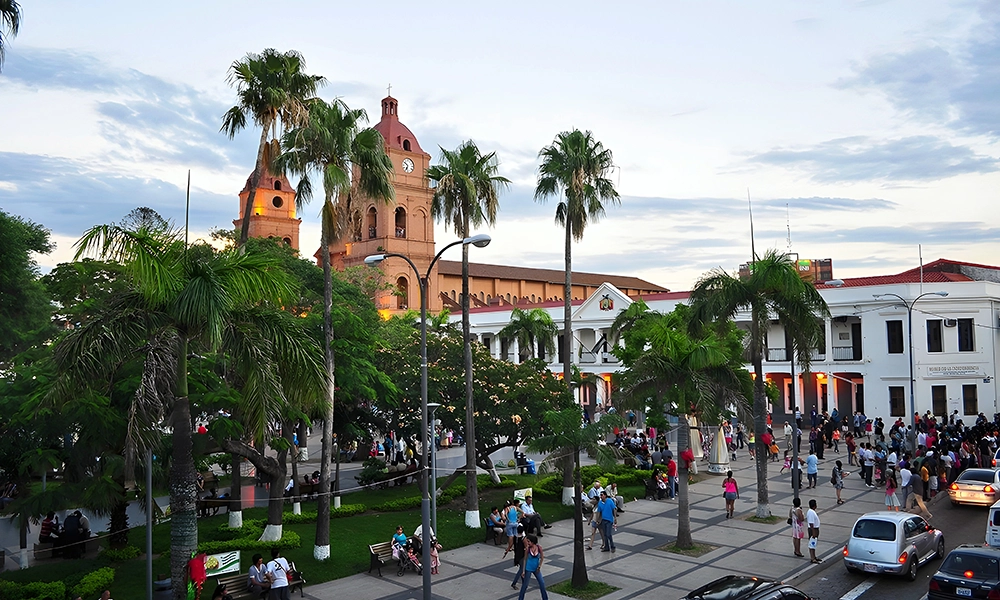
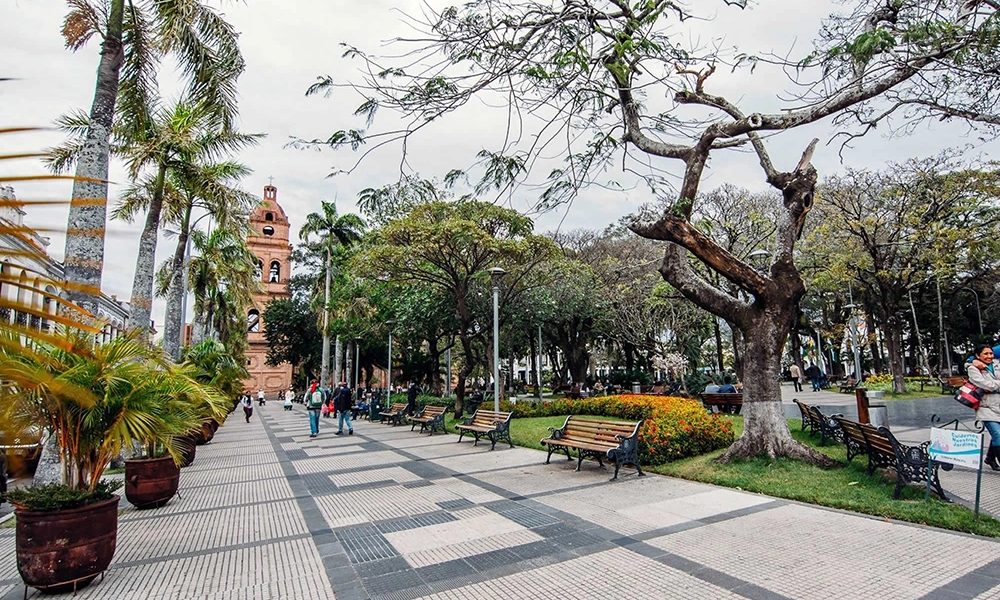
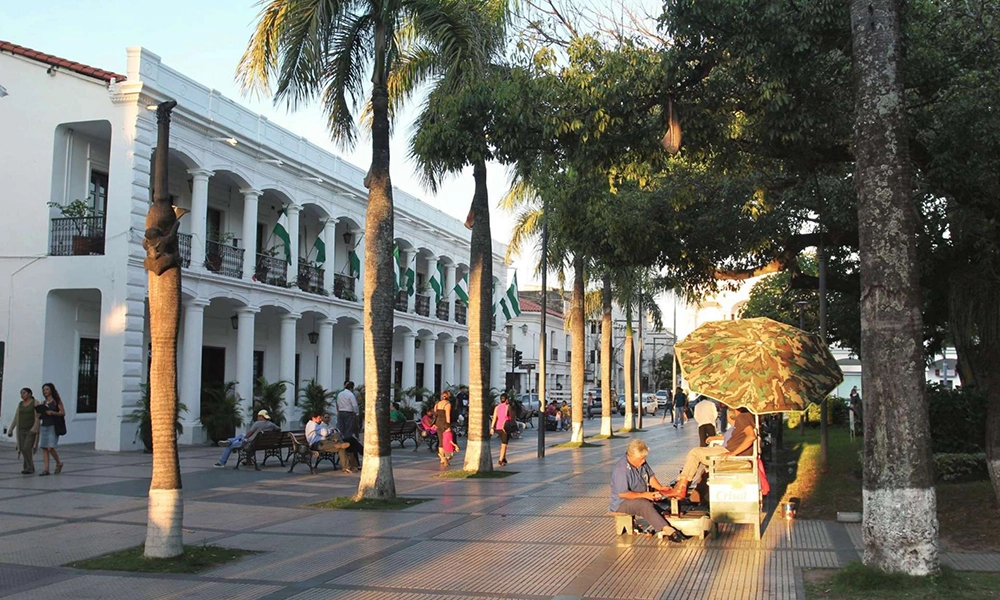
- Tall palm trees, a symbol of the eastern climate and landscape
- Well-maintained gardens that provide freshness and color
- Traditional benches that invite contemplation
- Ornamental fountains and pedestrian walkways
- Nighttime lighting that enhances its urban character
The result is a balanced plaza, where tradition and modernity coexist, designed for both relaxation and social interaction.
⛪ The Cathedral and the Plaza: An Inseparable Axis
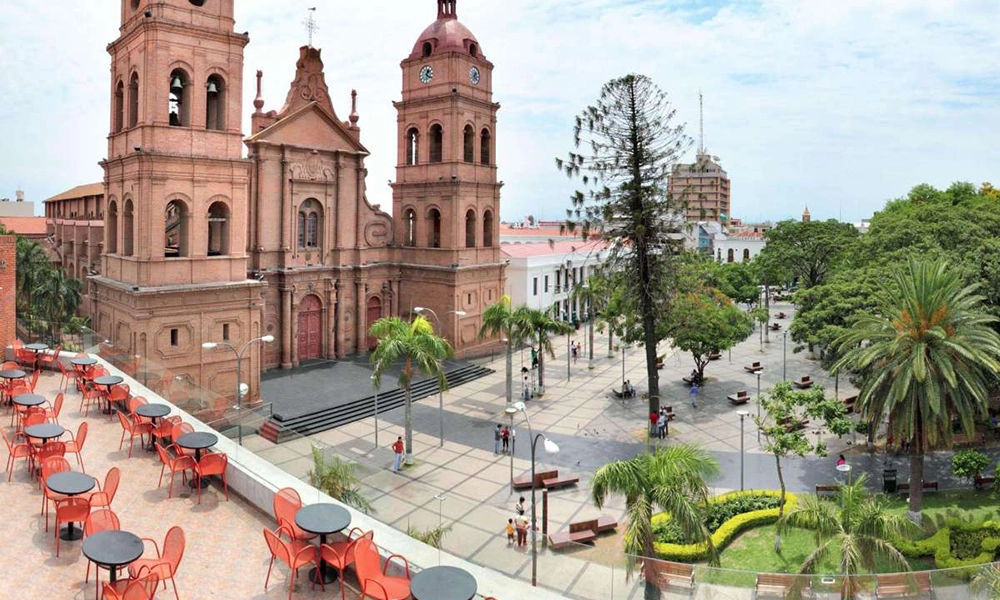
One of the most striking features of the area is the direct relationship between Plaza 24 de Septiembre and the Basilica Cathedral of San Lorenzo. This connection reinforces the plaza’s historical role as a religious, social, and cultural center.
From the plaza:
- You get the most iconic view of the cathedral.
- Processions and liturgical celebrations take place here.
- You can understand the role of faith in Santa Cruz’s history.
This urban ensemble is the most recognizable image of Santa Cruz de la Sierra.
👥 The Plaza as a Social and Everyday Space
Beyond its historical value, the plaza is part of the city’s daily life. From early morning until night, it is a constantly bustling place.
Here you’ll find:
- Families and senior citizens
- Students and workers
- Urban artists and musicians
- National and international tourists
The plaza is a democratic space where all generations coexist, converse, and share the same environment.
🎭 A cultural, civic, and symbolic stage
Plaza 24 de Septiembre plays a central role in the public life of Santa Cruz. Throughout the year, it becomes the stage for:
- National and regional celebrations
- Official civic events
- Religious festivities
- Concerts and cultural expressions
- Social and cultural demonstrations
During special occasions, the plaza fills with flags, music, and expressions that reflect the spirit of Santa Cruz.
🌆 The plaza at different times of day
In the morning
It’s peaceful and bright. Ideal for exploring the historic center, visiting nearby museums, and appreciating the colonial and republican architecture.
In the afternoon
It becomes a meeting place. Families, young people, and tourists enjoy the weather and relaxed atmosphere.
At night
The lighting transforms the space. Nearby cafes and restaurants become more prominent, and the plaza becomes an attractive spot for safe and pleasant evening strolls.
☕ What to do around Plaza 24 de Septiembre
From the plaza you can:
- Enjoy a coffee at a traditional café
- Visit nearby museums and galleries
- Stroll through historic streets
- Savor the local cuisine
- Start a city tour of the old town
Everything is within walking distance, making this a strategic location for urban tourism.
🧭 Visitor Experience
For travelers, Plaza Metropolitana 24 de Septiembre offers an authentic and accessible experience:
- No entrance fee or set hours
- It allows you to observe local life unfiltered
- It’s ideal for urban and cultural photography
- It serves as a landmark
Here, you don’t “consume” an attraction: you experience a space.
✅ Practical Recommendations
- Visit early in the morning or at sunset due to the weather
- Combine the plaza with the Cathedral and nearby museums
- Respect monuments and green spaces
- Ideal as the beginning or end of a tour of Santa Cruz
✨ Why is Plaza 24 de Septiembre a must-see?
Because it is the historical, cultural, and emotional heart of Santa Cruz de la Sierra. Everything the city was, is, and aspires to be, in one way or another, passes through this space.
Here, Santa Cruz is understood not only as a tourist destination, but as a living, breathing city.
The Plaza Metropolitana 24 de Septiembre is much more than a plaza: it is collective memory, a meeting point, a cultural stage, and an urban symbol. Visiting it is to experience Santa Cruz from its center, through its history, and through its people.