

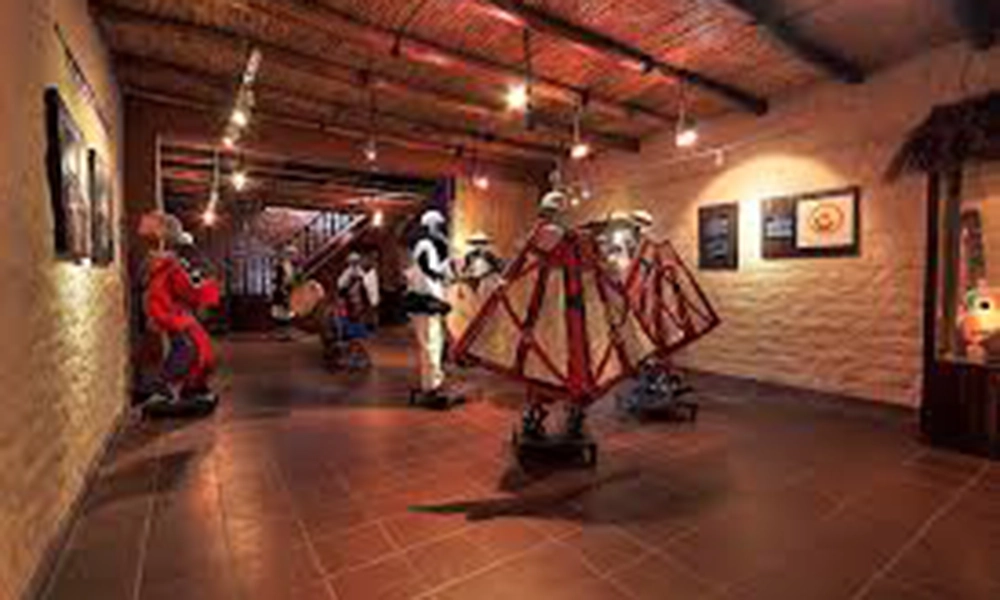
Museum of Indigenous Art (ASUR): Living Memory Woven in the Andes
The Museum of Indigenous Art, popularly known as the ASUR Museum, is one of the most profound, authentic, and revealing cultural spaces in the city of Sucre. It is not a traditional museum where one only observes ancient objects; it is a place where indigenous art lives on, where textiles speak, tell stories, and transmit the worldview of Andean peoples who have preserved their identity for centuries.
Visiting this museum is to enter a symbolic universe where every thread has meaning and every design is a form of collective memory.
🕰️ Origin of the Museum and the ASUR Project
The Museum of Indigenous Art was born from the work of the organization ASUR (Anthropologists of the Southern Andes), a project created with the objective of researching, preserving, and revitalizing the indigenous textile art of Chuquisaca.
For a long time, Andean textiles were considered merely “crafts,” without acknowledging their symbolic, technical, and cultural complexity. ASUR broke with this view, demonstrating that these textiles are:
- Works of art
- Systems of visual communication
- Historical records
- Spiritual expressions
The museum emerged as a space to dignify Indigenous knowledge, restore value to weaving communities, and ensure the transmission of ancestral wisdom to new generations.
🏗️ The Building and Atmosphere
The museum is located in a traditional house near the La Recoleta neighborhood. Its architecture is simple and welcoming, designed to allow visitors to focus on the exhibited pieces.
The rooms are clearly organized, with carefully considered lighting and explanatory texts that help visitors understand the designs while respecting their cultural origins. The atmosphere is tranquil, ideal for a leisurely and reflective visit.
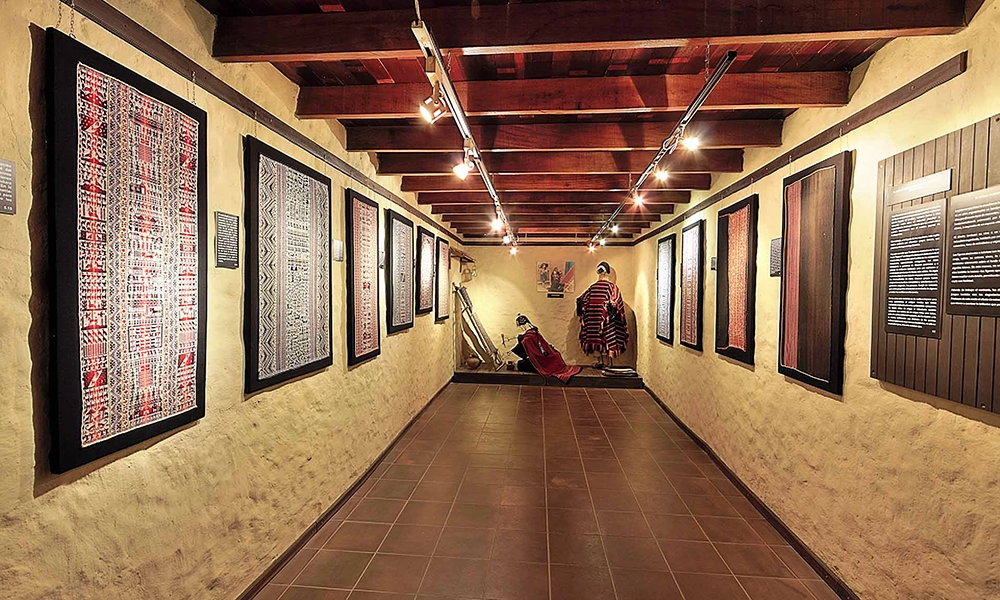
🧭 A Journey Designed for Learning
The Museum of Indigenous Art features several themed rooms that guide visitors step-by-step through the world of Andean textiles. Unlike other museums, here you’ll find not only finished pieces, but also:
- Weaving Techniques
- Materials Used
- Natural Dyeing Processes
- Symbolic Meanings
On occasion, you can observe weavers at work, allowing you to appreciate the immense skill, patience, and knowledge required for each piece.
🧶 Jalq’a Textiles: The Universe of the Invisible
One of the museum’s central focuses is the textiles of the Jalq’a people, internationally renowned for their unique and profoundly symbolic style.
Main characteristics:
- Dense and complex designs
- Predominance of dark tones
- Abstract figures and mythical beings
- Representations of the spiritual world
Jalq’a textiles do not seek to represent visible reality, but rather the inner and spiritual world, populated by forces, beings, and energies. Each weaving is a visual narrative that can only be understood within the Andean worldview.
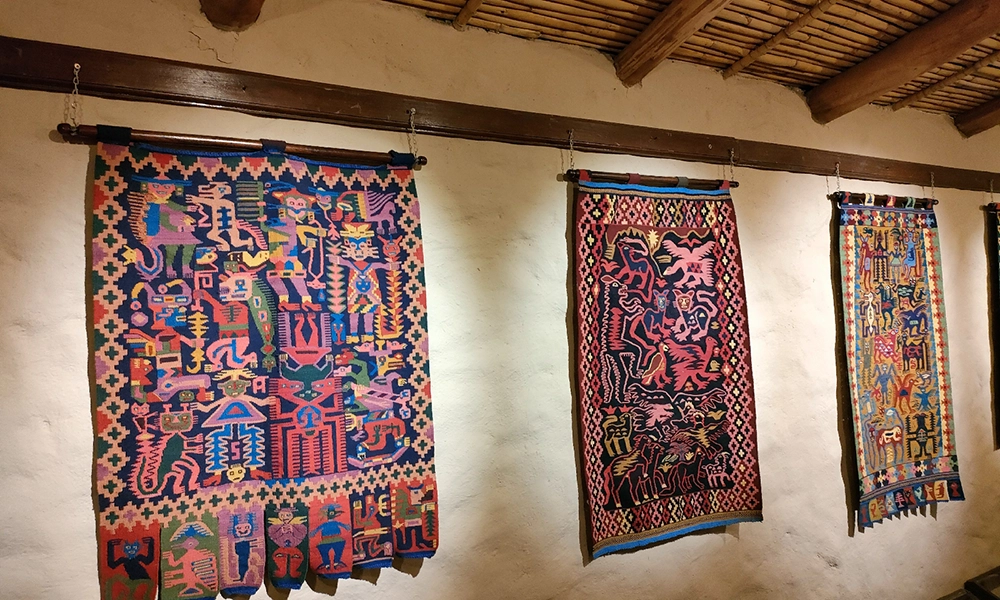
🧵 Tarabuco Textiles: Life Told in Threads
Another fundamental collection in the museum is that of Tarabuco textiles, distinguished by their narrative and figurative nature.
These textiles feature:
- Scenes of daily life
- Rituals and festivities
- Human and animal figures
- Elements of the natural environment
Tarabuco textiles function as a visual chronicle, a way of recording history and traditions without the need for alphabetic writing. Each garment conveys identity, belonging, and cultural continuity.
🎨 More than Aesthetics: Textiles as Language
One of the great contributions of the ASUR Museum is to teach that Andean textiles are a visual language. It is not just about colors and beautiful shapes, but a complex system where:
- Colors communicate states, territories, or energies
- Figures have specific meanings
- The composition follows cultural rules
- The weaving transmits ancestral knowledge
Understanding this completely changes the way we look at an indigenous garment.
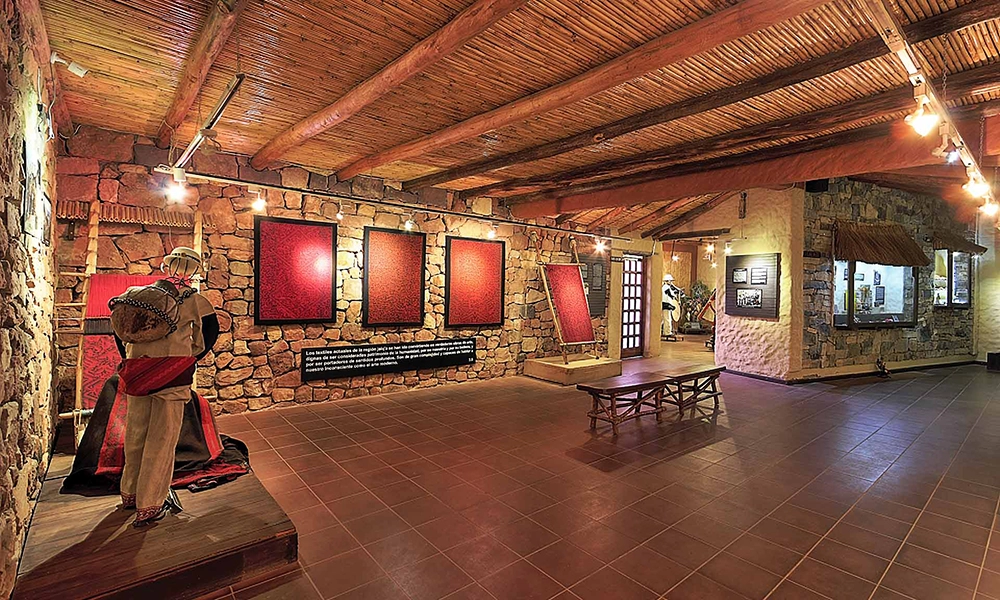
🤝 A Museum Committed to Communities
The Indigenous Art Museum is not a space isolated from social reality. It is part of a project that seeks to directly benefit weaving communities by promoting:
- Fair trade
- Cultural appreciation
- The continuity of traditional weaving
- Respect for Indigenous knowledge
In the museum shop, you can purchase textiles and products made by the communities, always with information about their origin and meaning.
🌎 Cultural Importance and Recognition
The ASUR Museum is considered one of the most important ethnographic museums in Bolivia and an international reference point in the study of Andean textile art. Its work has contributed to the recognition of Chuquisaca textiles as living cultural heritage.
Furthermore, it perfectly complements a visit to other historical sites in Sucre, showing a different side of the past: that of the Indigenous peoples.
🧭 Tips for your visit
- 🕰️ Set aside at least 1 hour to explore at a leisurely pace
- 👀 Read the explanatory panels: they greatly enrich the experience
- 📷 Photography is only permitted where allowed
- 🎁 If you purchase a textile, ask about its meaning
This visit invites you to see things with fresh eyes.
The Indigenous Art Museum (ASUR) is a space where art isn’t confined to display cases: it’s alive. Each textile is a voice that speaks of identity, memory, spirituality, and cultural resistance.
Visiting this museum is to understand that Bolivia wasn’t built solely on palaces, churches, or plazas, but also on looms, the hands of weavers, and the symbols that continue to tell stories to this day.