

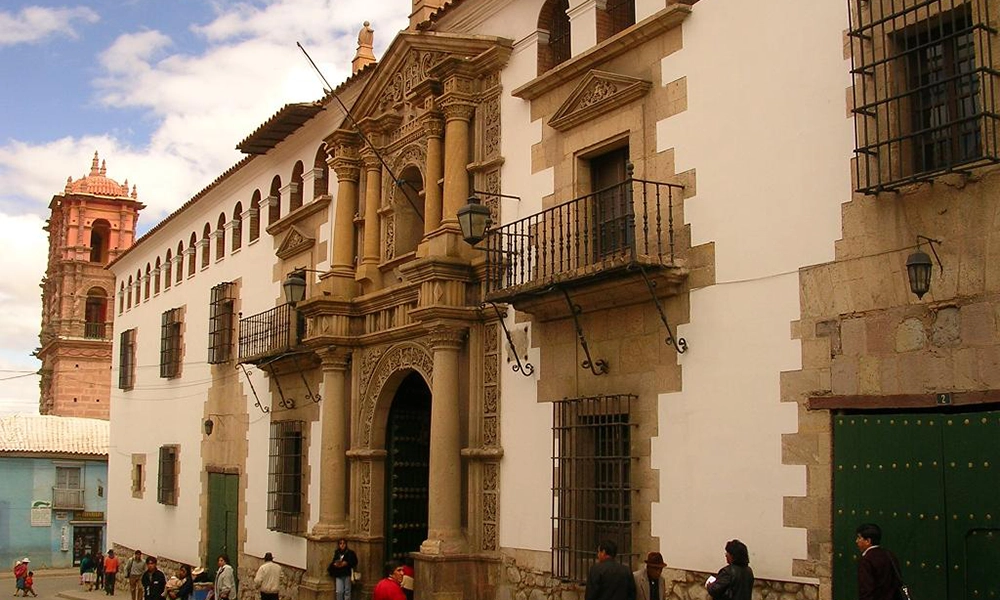
Potosí National Mint: The Factory Where Silver Became Power
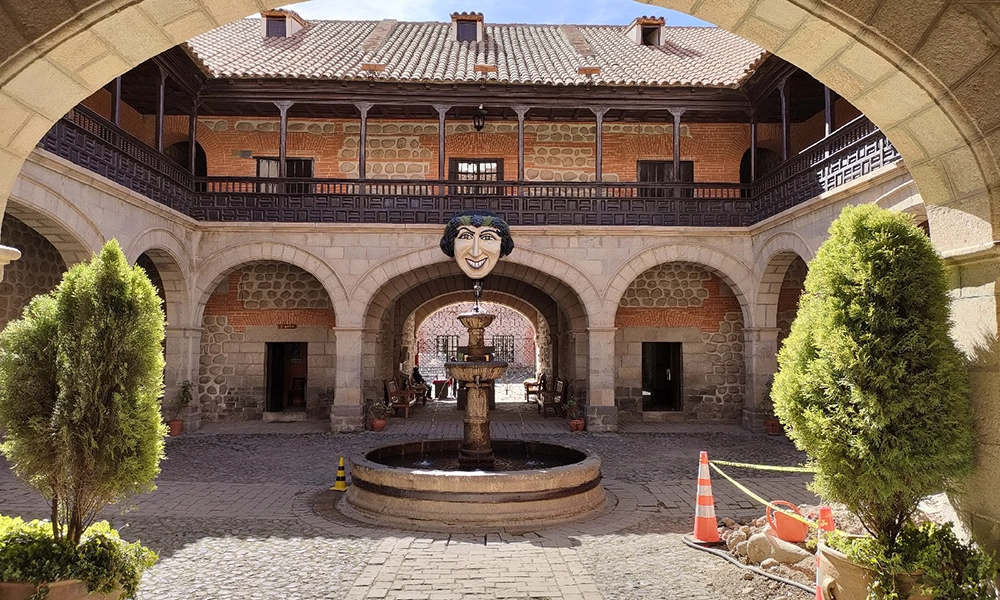
In the heart of the city of Potosí, Bolivia, stands one of the most impressive and symbolic colonial buildings in the Americas: the National Mint. Its thick walls, spacious courtyards, and cool corridors not only house antique objects; they hold a vast history: the story of how the silver from Cerro Rico fueled economies, moved empires, and forever shaped the lives of thousands of people.
Today, the National Mint functions as a museum, but for centuries it was a place of intense activity: there, silver was transformed into coins that circulated throughout the world.
Potosí: A City That Changed the World
To understand the Mint, one must first understand Potosí. In the 16th century, the city became one of the most important on the planet thanks to the exploitation of silver from Cerro Rico, discovered in 1545. This wealth made Potosí a key economic center of the Spanish Empire.
It was said that with the silver from Potosí, a bridge could be built all the way to Spain. Although this was an exaggeration, the idea reveals something real: Potosí was synonymous with wealth. And that wealth needed control and organization. That’s where the Mint came in.
Why was a Mint created?
When so much precious metal was circulating, it wasn’t enough to simply extract silver: it had to be converted into official currency, with a recognized weight and purity. Coins were the foundation of commerce, payments, taxes, and the power of the State.
That’s why a mint was founded in Potosí to produce coins. Processes were carried out there that today might seem “industrial” for their time:
- Melting the metal
- Purifying it
- Transforming it into sheets
- Cutting it into pieces
- Marking it with official seals (coinage)
Coins weren’t just objects: they represented trust, control, and authority.
The First Mint (1572) and the Problem of the “Macuquinas”
The first Potosí Mint was founded in 1572. At that time, coinage was done by hand: by hammering pieces of metal.
This is how coins called macuquinas came about, famous for their irregularity: they were not always perfectly round or with uniform edges. This made them vulnerable to fraud. Many people filed small pieces of silver off the edges (known as “trimming”) and then used the coin as if it were worth the same.
This problem, coupled with the enormous increase in production, forced the modernization and reconstruction of the mint.
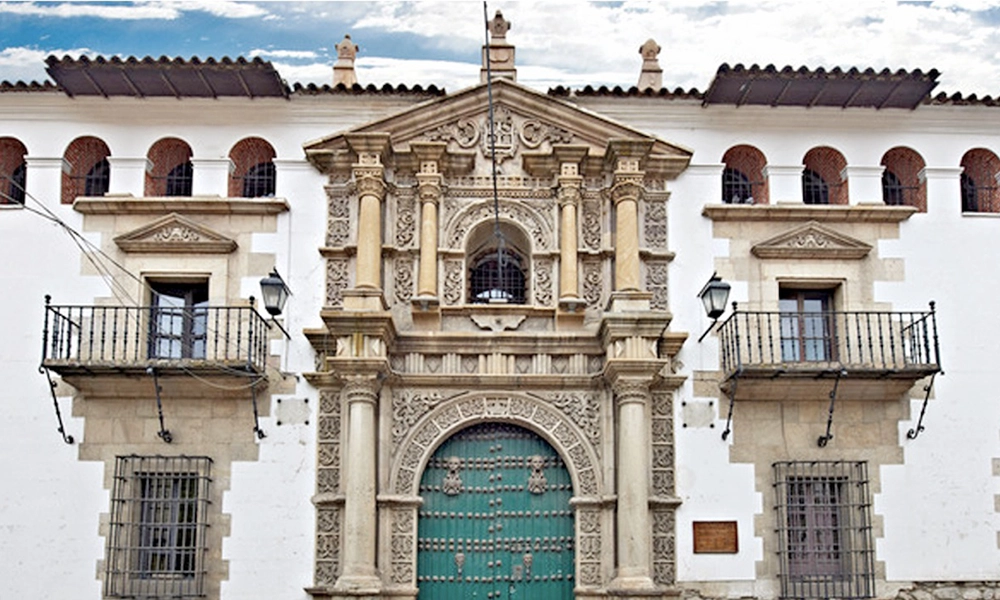
The Current Building: A “Fortress” from 1773
The National Mint that visitors see today is primarily the second large building, completed and inaugurated in 1773. It was built to be immense, sturdy, and secure.
In fact, the design resembles that of a fortress: thick walls, few openings to the outside, and interior courtyards that organize the flow of people. This was no exaggeration: enormous riches moved within the building.
The colonial architecture of the site impresses not only for its size but also for its purpose: to protect the silver and control production.
Work, Technology, and Effort: How Coins Were Made
Inside the Mint, you can understand different technological stages:
🔨 Manual Minting
In the early days, coins were struck one by one. It was slow and less precise.
⚙️ Minting Machinery
Over time, machines were incorporated to:
- roll silver (make thin sheets)
- cut more uniform pieces
- stampe official symbols more accurately
🐎 Animal Power
A surprising part of the story is that several machines were powered by animals (such as mules), turning mechanisms to move heavy equipment.
Production was intense, repetitive, and physically exhausting.
The Other Side of Silver: Exploitation and Suffering
You can’t talk about Potosí without talking about its human cost.
The wealth from the silver was made possible by a system of harsh and often forced labor, especially on Indigenous populations under the mita system, which compelled communities to send workers to the mines.
Although the Mint was a technical and administrative center, it was part of the same economic system that thrived on the extreme labor at Cerro Rico.
Therefore, visiting the museum is not just about seeing machines: it’s also about reflecting on what lay behind that “progress.”
Coins That Traveled the World
The coins produced in Potosí circulated throughout the Americas, Europe, and Asia. One of the great symbols was the Spanish dollar (a widely used silver coin), considered one of the first “global” currencies, accepted in international trade.
The value of this silver was recognized in many places. That’s why Potosí became a household name. Hence the expression:
“To be worth a Potosí”
Which means: to be worth a great deal, to be extremely wealthy.
From Factory to Museum: What You See Today
The National Mint is now a historical and cultural museum with different areas:
- 🪙 Numismatics
Colonial, republican, and commemorative coins; and the tools used to make them.
- ⚙️ Original Machinery
Rolling and minting equipment and antique systems that showcase technological evolution.
- 🎨 Art and History
Colonial paintings, religious objects, documents, and pieces that reflect the social life of the time.
- 📜 Historical Archive
One of the most valuable sections: documents that help us understand the economy, colonial administration, and history of Bolivia.
A Place to Understand World History
The National Mint is not just a “pretty” or old place. It’s a place where you understand something enormous:
- how a connected global economy was born
- how the wealth of one place can change the destiny of others
- how history has its bright spots (innovation, architecture, culture) and its dark sides (exploitation, inequality)
It’s a visit that educates, impresses, and leaves you thinking.
The National Mint of Potosí is a direct gateway to a key period in history. Among colonial courtyards and giant machines, you can feel the weight of the past: silver, power, labor, and memory.
Potosí was an engine of the world for centuries, and the Mint was the place where that wealth became tangible: coins that traveled across continents.