
Ollagüe Volcano: The Smoking Giant
Ollagüe Volcano is one of the most impressive and least explored active volcanoes in southwestern Bolivia. Its constant fumarole emissions, extreme altitude, and surrounding mineral landscape make it a fascinating destination for adventurous travelers, photographers, and lovers of Andean geography. This natural colossus is part of the alternative tours of the Salar de Uyuni and offers a distinct, quiet, and profoundly authentic experience.
📍 Geographic Location and Context
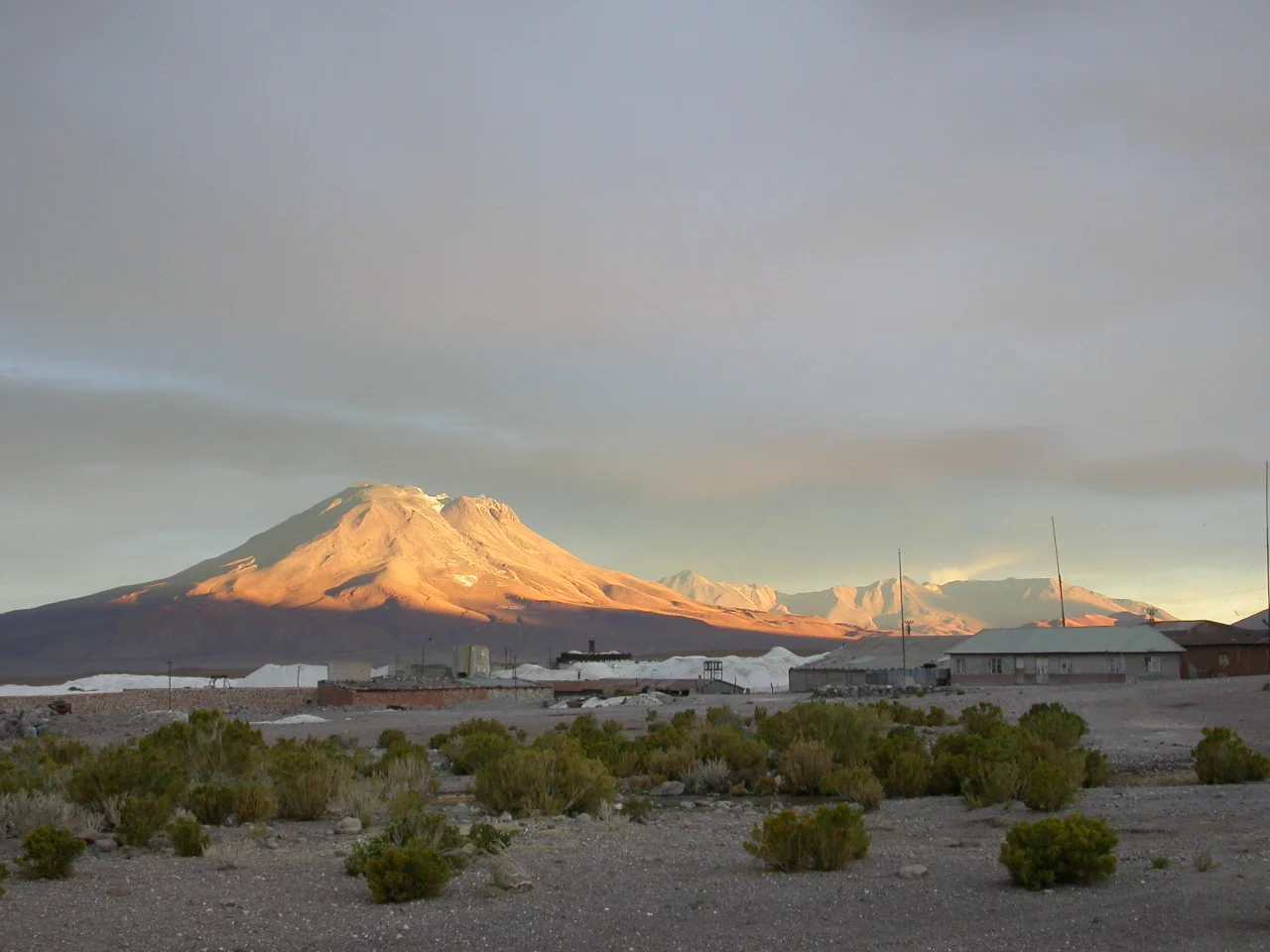
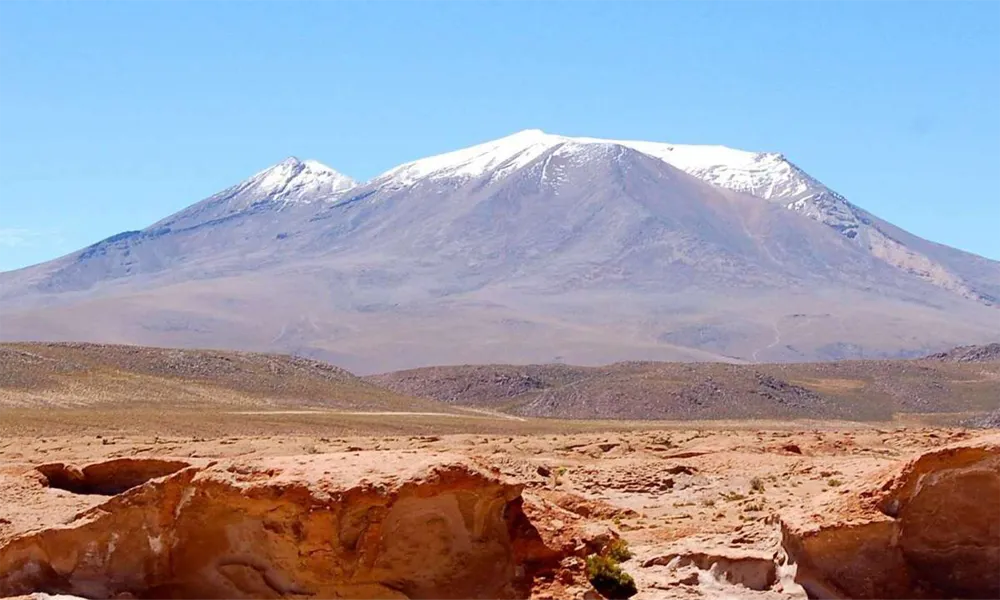
Ollagüe Volcano is located within the Eduardo Avaroa National Reserve, in the department of Potosí, in southwestern Bolivia. It marks the natural border with Chile and rises to approximately 5,868 meters above sea level, dominating the Altiplano landscape with its perfectly defined conical silhouette.
This volcano is surrounded by vast desert plains, secondary salt flats, and volcanic rock formations that reflect millions of years of geological activity.
🌋 Geological Origin and Volcanic Activity
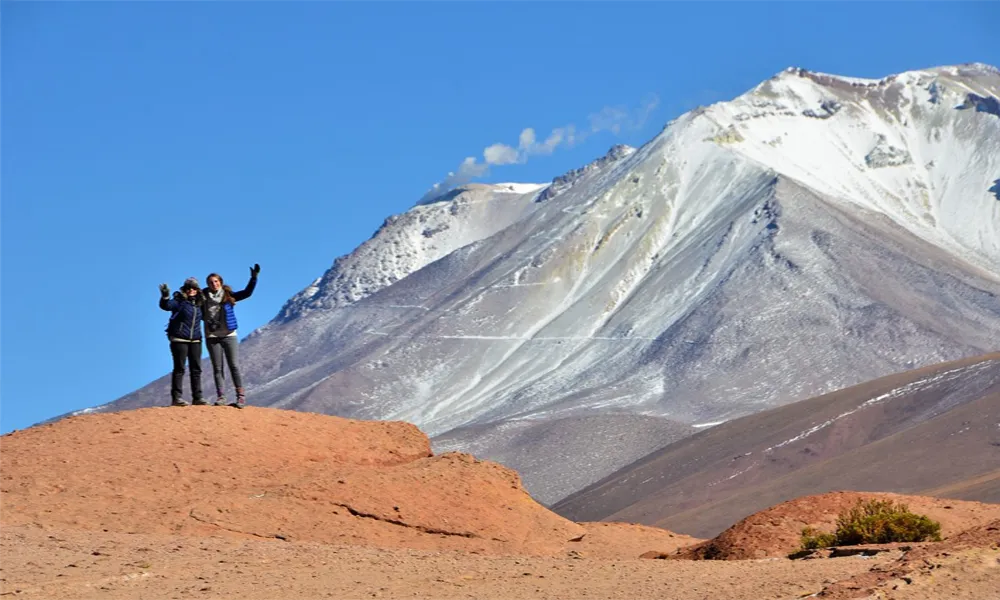
Ollagüe Volcano belongs to the Central Andes volcanic mountain range. Its most distinctive feature is the presence of active fumaroles on its upper flank, visible from a great distance as plumes of white smoke rising from the mountain.
Key Geological Characteristics:
- Active volcano, although with low-intensity eruptions.
- Constant emission of sulfurous gases.
- Dark volcanic rocks and mineral deposits.
- Remnants of ancient solidified lava flows.
- Activity studied by Bolivian and Chilean geologists.
These fumaroles make Ollagüe one of the few active volcanoes visible during tours of Uyuni.
🏔️ Landscape and Natural Environment
The area surrounding Ollagüe Volcano is one of the most extreme in the Bolivian Altiplano. The landscape combines ochre, reddish, and gray tones, contrasting with the intense blue sky and, in some months, snow on the summit.
Landscape features:
- High-altitude volcanic desert.
- Arid plains with sparse vegetation.
- Rock formations eroded by the wind.
- Panoramic views of neighboring volcanoes and salt flats.
A feeling of total isolation and absolute silence.
It is an ideal setting for landscape photography, documentary filmmaking, and geological observation.
🌿 Flora and Fauna of Ollagüe Volcano
Despite the extreme conditions, life manages to adapt in the area surrounding the volcano.
High Andean Flora:
- Yareta (an ancient, slow-growing plant).
- Tough, drought-resistant grasses.
- Scattered vegetation adapted to the cold and solar radiation.
Wildlife:
- Vicuñas in remote areas.
- Andean fox. High Andean birds adapted to the altitude.
- Occasional sightings of viscachas.
Biodiversity is scarce but valuable, reflecting the natural balance of the Altiplano.
🚙 How to get to Ollagüe Volcano from Uyuni?
Ollagüe Volcano is primarily visited as part of a 4×4 tour from Uyuni, as there are no paved roads or direct tourist signage.
General Route:
- Uyuni → San Cristóbal → southwestern volcanic areas → Ollagüe Volcano.
- Dirt roads and desert sections.
- Progressive altitude above 4,500 meters above sea level.
⚠️ Visiting the volcano independently is not recommended due to the lack of cell phone service, changeable weather conditions, and its distance from populated areas.
🌦️ Climate and Best Time to Visit
The climate at Ollagüe Volcano is extreme year-round.
Weather Conditions:
- Daytime temperatures: 5°C to 12°C.
- Nighttime temperatures: down to -15°C.
- Strong winds and very dry air.
- High solar radiation.
Best time to visit:
- April to November (dry season): best visibility and access.
- June to August: clear skies, intense cold.
- January to March: occasional rain, limited access.
🎒 Recommendations for visiting Ollagüe Volcano
- Wear thermal clothing in layers.
- Windproof and waterproof jacket.
- Sunscreen and UV sunglasses.
- Water and energy snacks.
- Do not approach the fumaroles.
- Respect the signs and the guide.
- Avoid strenuous physical activity due to the altitude.
❓ Frequently Asked Questions about Ollagüe Volcano
- Is Ollagüe Volcano active?
Yes, it is an active volcano, and fumaroles of gas and sulfur can be seen at the summit and surrounding areas.
- Is it possible to climb the volcano?
Some specialized expeditions allow trekking to areas near the crater, although this is not part of the regular tours from Uyuni.
- What can you see on the route to Ollagüe?
High Andean lagoons, flamingos, high-altitude deserts, rock formations, and the spectacular Salar de Uyuni.
- Is it necessary to acclimatize before visiting?
Yes, due to the extreme altitude, it is recommended to acclimatize in Uyuni or San Pedro de Atacama before starting the expedition.
🌄 Why visit Ollagüe Volcano?
Visiting Ollagüe Volcano is to immerse yourself in one of the wildest, most silent, and authentic landscapes of the Bolivian Altiplano. It is ideal for those seeking off-the-beaten-path destinations, active volcanoes, extreme nature photography, and a profound connection with the geological power of the Andes.