

Pampa Aullagas — Mystery, Highlands, and Ancestral Memory in Oruro
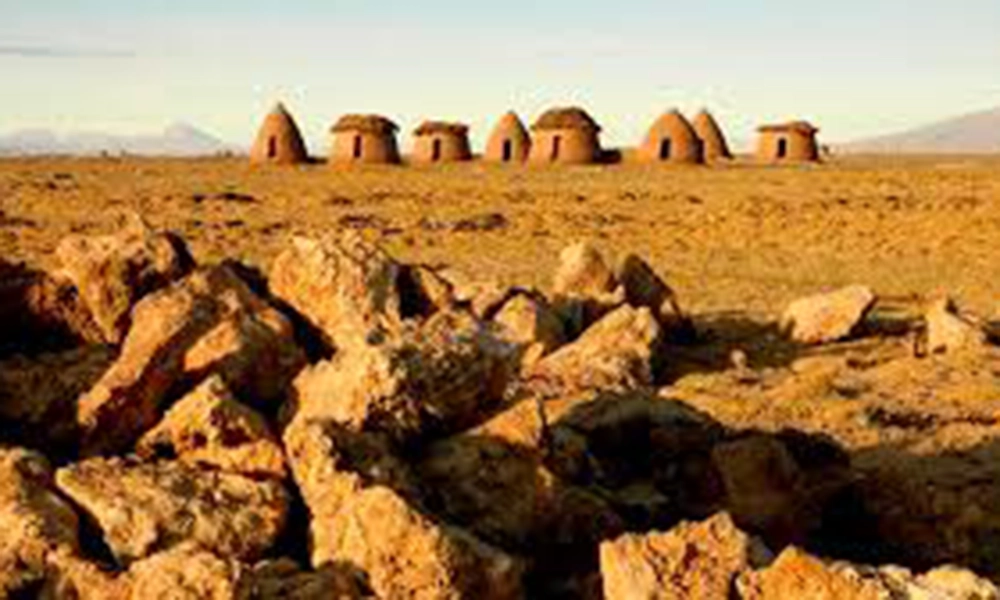
Pampa Aullagas is one of the most enigmatic and least explored communities on the Bolivian altiplano. Located in the department of Oruro, this town has earned a special place in the cultural and tourist imagination for its stark landscape, its deep Andean roots, and the theories that link it to ancient civilizations and mythical tales of the ancient world.
Beyond hypotheses and legends, Pampa Aullagas is a real, vibrant, and silent territory, where time seems to move at a different pace and where the geography preserves traces of a past marked by water, salt, and human adaptation to extreme conditions.
📍 Location and Geographic Context
Pampa Aullagas is located on the central Bolivian altiplano, in a high-altitude area with an extreme climate, surrounded by vast plains, saline soils, and ancient lake basins. It forms part of a territory that, according to geological studies, was once covered by large prehistoric lakes, whose retreat gave rise to the current salt flats of the southwestern Andes.
This environment explains the feeling of infinite vastness that visitors experience: open horizons, immense skies, and a geography that invites contemplation and silence.
🧭 How to get to Pampa Aullagas?
Getting to Pampa Aullagas isn’t easy, and it’s precisely this difficulty that has allowed it to retain its authentic and relatively untouched character.
- From cities like Uyuni or Oruro, the journey usually involves several legs, combining local ground transportation and unpaved roads.
- In many cases, it’s necessary to coordinate private or community transportation, especially during the rainy season.
- The journey can be long, but the trip itself is part of the experience: ever-changing landscapes, rural communities, and a direct connection to the deep high plateau.
Visiting Pampa Aullagas is, in essence, a journey rather than a simple trip.

🌄 The Landscape: A Legacy of Ancient Lakes
One of the most fascinating aspects of Pampa Aullagas is its landscape shaped by water. The area was part of the prehistoric lake system of the Altiplano, which explains the presence of saline soils, white plains, and formations reminiscent of ancient lake shores.
Walking through these spaces evokes the feeling of being on land steeped in geological and cultural memory, where nature and history silently intertwine.
🗿 Ruins and Archaeological Remains
In the area surrounding Pampa Aullagas, one can find the remains of ancient constructions, stone walls, and scattered structures that pique the interest of researchers, travelers, and the simply curious.
Although it is not a formal archaeological site, these remains bear witness to ancient human occupations adapted to the Altiplano environment, possibly linked to pre-Hispanic cultures that knew how to coexist with the extreme climate and limited resources.
The lack of tourist signage reinforces the feeling of genuine exploration, but also demands respect and care from visitors.
🌊 Pampa Aullagas and the “Andean Atlantis”
One of the elements that has most popularized the name Pampa Aullagas is the theory that links it to the Atlantis described by Plato. Some authors have suggested that descriptions of a civilization surrounded by rings of water could hypothetically fit the ancient lake geography of the Bolivian highlands.
It is important to clarify that this idea belongs to the realm of interpretation and debate, not to scientific confirmation. However, it has contributed to sparking international curiosity and positioning Pampa Aullagas as a place laden with symbolism and mystery.
👥 Living Culture and Community Life
Despite its isolation, Pampa Aullagas is not an abandoned place. It is a living Andean community, where traditions, language, agricultural practices, and the connection to the land remain alive.
Daily life is governed by the climate, the rainy season, and community activities. For visitors, contact with the local people is a unique opportunity to understand the Andean worldview, based on respect for Pachamama (Mother Earth), balance, and collective memory.
🚶♂️ What to do in Pampa Aullagas?
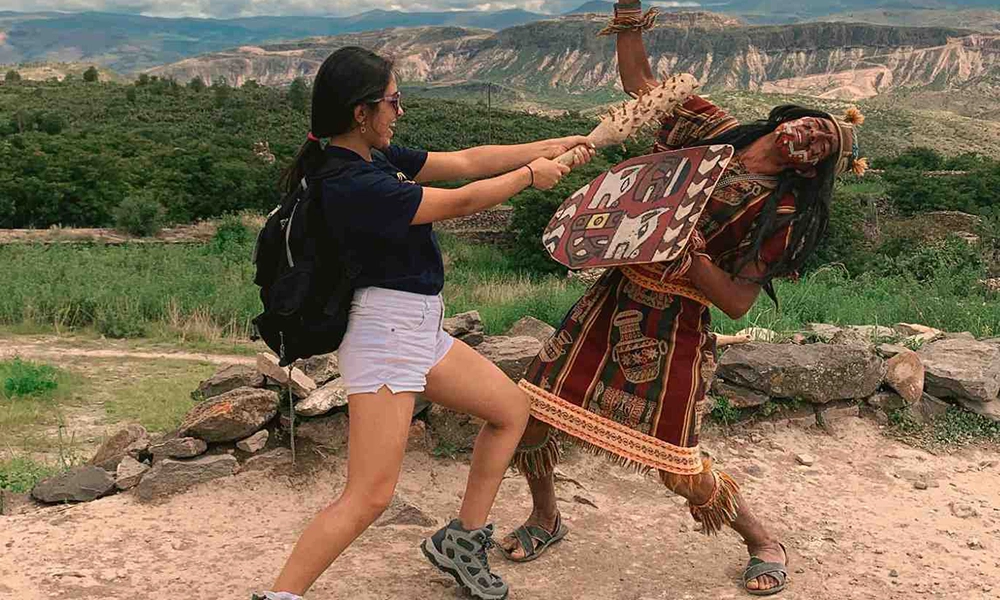
Although it’s not a mass tourism destination, it offers authentic experiences:
- Explore the high plateau landscape and observe its natural formations.
- Respectfully explore the surrounding archaeological sites.
- Photograph minimalist landscapes, open skies, and intense sunsets.
- Converse with local residents and listen to stories passed down through generations.
- Incorporate the visit as part of an alternative route through the high plateau, complementing the more well-known salt flats.
🌦️ Climate and best time to visit
The climate is cold and dry for most of the year, with marked differences between day and night.
- Dry season (approximately May to October): better access conditions and clear skies.
- Rainy season (November to March): changing landscapes, but more challenging routes.
The time of year you choose will depend on the type of experience you’re looking for: accessibility or dramatic landscapes.
🎒 Important Recommendations
- Bring thermal clothing and dress in layers.
- Sun protection: the sun is intense on the Altiplano.
- Bring water, food, and cash, as services are limited.
- Plan your transportation in advance.
- Respect the natural and cultural environment; do not remove artifacts or alter the landscape.
🧭 Tourist and Cultural Significance
Pampa Aullagas represents a type of tourism focused on exploration and reflection, quite different from conventional tourism. It’s not a place to rush around or take quick photos, but rather to stop, observe, and understand the Altiplano from a profound perspective.
It’s an ideal destination for travelers interested in archaeology, geography, Andean cultures, and extreme landscapes.
Pampa Aullagas is one of those places that defies easy explanation. Its value lies not only in the theories surrounding it, but also in its silence, its ancient landscape, and its people. Visiting it is to delve into the heart of the Bolivian highlands, where history, nature and mystery coexist without artifice.