

La Recoleta Monastery in Sucre: Franciscan Faith, Architecture, and the Memory of the White City
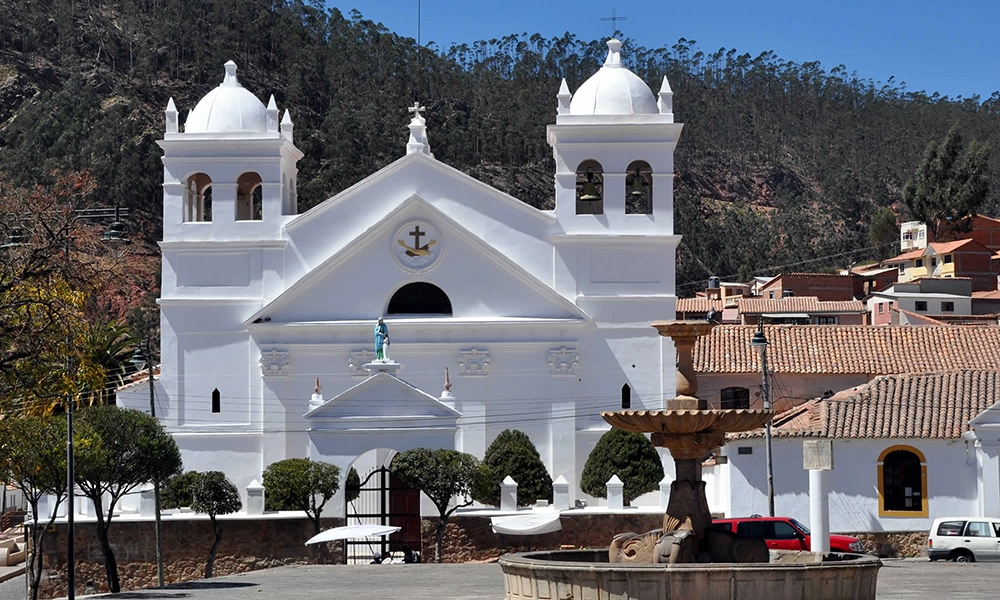
The La Recoleta Monastery is one of the oldest, most symbolic, and most representative religious and heritage complexes in the city of Sucre. Located on a hill overlooking the valley, this monastery has not only been a space for prayer and monastic life, but also a fundamental point in the origin, expansion, and urban organization of the old city of La Plata.
La Recoleta is living history: its walls, courtyards, and corridors have witnessed more than four centuries of religious, social, and cultural transformation.
🕰️ Foundation and Historical Context
The La Recoleta Monastery was founded in 1601 by the Franciscan Order, during an early stage of the colonial development of Upper Peru. At that time, Sucre—then called La Plata—was consolidating itself as a political, legal, and religious center of enormous regional importance.
The Franciscans chose this elevated location not only for practical reasons, but also for symbolic ones: the height represented closeness to the divine and, at the same time, offered a strategic position from which to observe and accompany the growth of the city.
From its beginnings, La Recoleta fulfilled multiple functions:
- Center for evangelization
- Space for religious formation
- Place of retreat and contemplation
- Moral and spiritual guide for the population
✝️ Franciscan spirituality and its influence
The spirit of the monastery is deeply marked by Franciscan spirituality, based on humility, simplicity, and community life. Unlike other religious orders that built highly ornate temples, the Franciscans prioritized sobriety and functionality.
This approach is clearly reflected in La Recoleta:
- Simple and harmonious architecture
- Understated decoration
- Spaces designed for silence and reflection
The monastery was conceived as a place of retreat, where the friars could dedicate themselves to prayer, study, and community work, in close contact with the nature surrounding the hill.
🏗️ Colonial architecture of the monastery
The architectural complex of the La Recoleta Monastery is one of the finest examples of colonial religious architecture in Sucre. Its design responds to the needs of monastic life and the values of the order.
- 🧱 Cloisters and interior courtyards
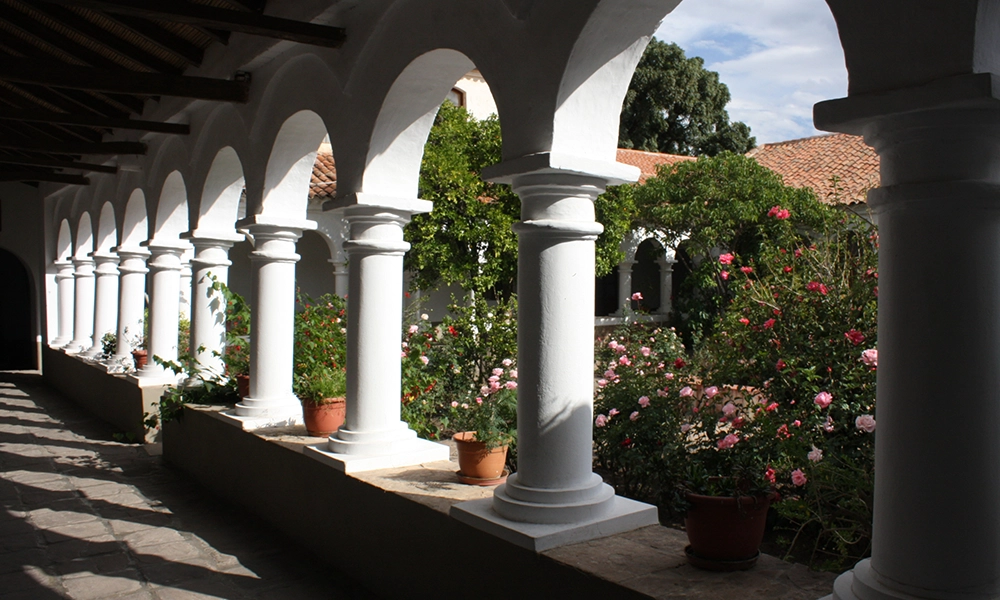
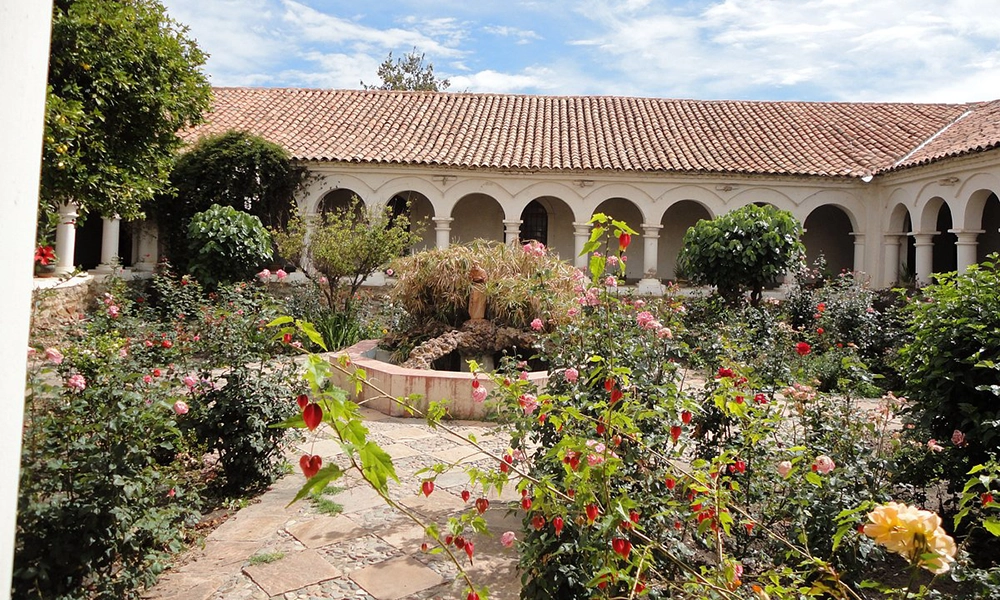
The cloisters are organized around open courtyards, with simple arched corridors and whitewashed walls. These spaces allowed for movement, meditation, and the daily life of the friars.
- ⛪ Monastery church
The church is austere in style, with a solid structure and restrained decoration. Its interior retains original features and continues to be an active place of worship, reinforcing the spiritual continuity of the site.
- 🪟 Cells and Outbuildings
The former monastic cells are small and austere, reflecting the Franciscan ideal of simple living. There were also areas designated for study, cooking, and communal work.
🌄 La Recoleta and its relationship with the urban landscape
One of the most remarkable aspects of the monastery is its relationship with its surroundings. La Recoleta offers a privileged view of the city, which historically allowed for the observation of urban expansion and a constant connection with civic life.
Next to the monastery is the Mirador de La Recoleta, considered the best panoramic viewpoint in Sucre. From there, you can appreciate:
- The historic center
- Colonial churches and domes
- Characteristic white rooftops
- The orderly layout of the city
This connection between architecture, spirituality, and landscape makes La Recoleta a unique place.
📜 Historical and social role of the monastery
During the colonial era and the early years of the Republic, the Monastery of La Recoleta played a central role in the life of Sucre. It was a space for:
- Religious formation
- Preaching and spiritual guidance
- Moral influence on society
- Community organization
Furthermore, the monastery helped consolidate the northern part of the city and became an urban landmark, around which neighborhoods and roads developed.
🌎 Heritage value and international recognition
The La Recoleta Monastery is part of the historic center of Sucre, a city declared a World Heritage Site by UNESCO. Its preservation is key to understanding the religious and urban history of Bolivia.
The monastery represents:
- The early presence of religious orders
- The colonial evangelization process
- The formation of Sucre’s historical identity
🧭 La Recoleta Today: Tourism, Faith, and Contemplation
Currently, the La Recoleta Monastery is a popular destination for both worshippers and tourists. Many visitors combine:
- A visit to the monastery
- A stroll along the viewpoint
- Relaxing in the surrounding area
- Photographing the cityscape
Despite the influx of tourists, the site maintains an atmosphere of respect and tranquility, consistent with its spiritual origins.
🧠 Tips for your visit
- 🕰️ The best time to visit is in the morning or at sunset
- 🤫 Please remain silent within the religious spaces
- 📷 Photography is only permitted where allowed
- 👟 Wear comfortable shoes (the area has slopes)
A complete visit typically lasts between 45 minutes and 1 hour.
The La Recoleta Monastery is much more than an old building: it is a symbol of the spiritual and urban birth of Sucre. Its understated architecture, strategic location, and profound historical significance make it one of the most important places in the White City.
Visiting La Recoleta is like walking through the origins of Sucre, contemplating the city from above, and understanding how faith, architecture, and landscape came together to shape one of Bolivia’s most important historical centers.
❓ Frequently Asked Questions
1. Is the La Recoleta Monastery worth visiting?
Yes, it’s one of the best places to learn about Sucre’s colonial history and enjoy breathtaking views.
2. How much time does it take to visit?
On average, 1 to 2 hours is enough to explore the cloisters, the museum, the church, and the viewpoint.
3. Do I need to book in advance?
It’s not mandatory, but if you’d like a specialized guided tour, it’s recommended to book with local agencies.