

Samaipata Fortress, Bolivia
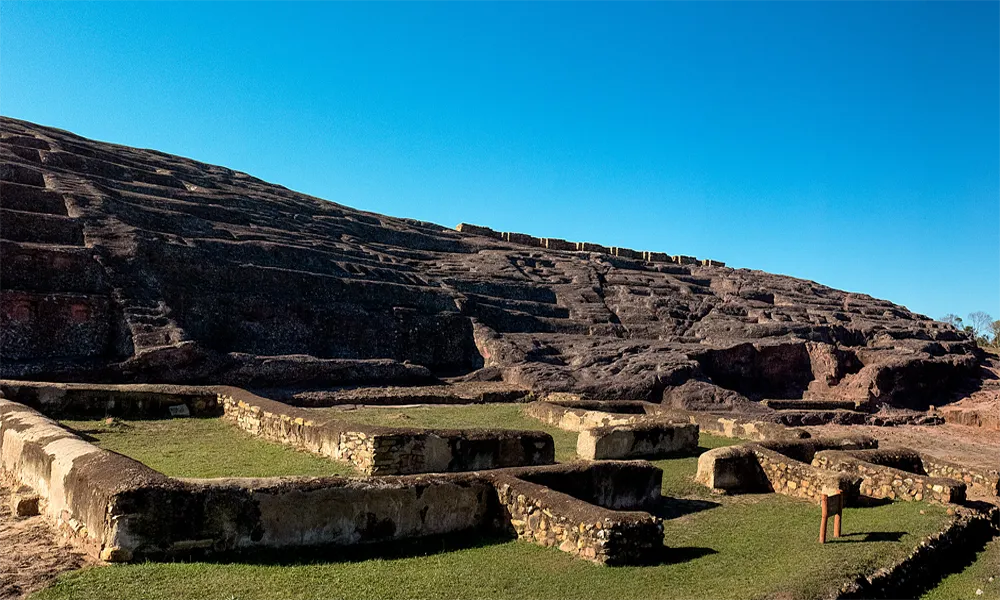
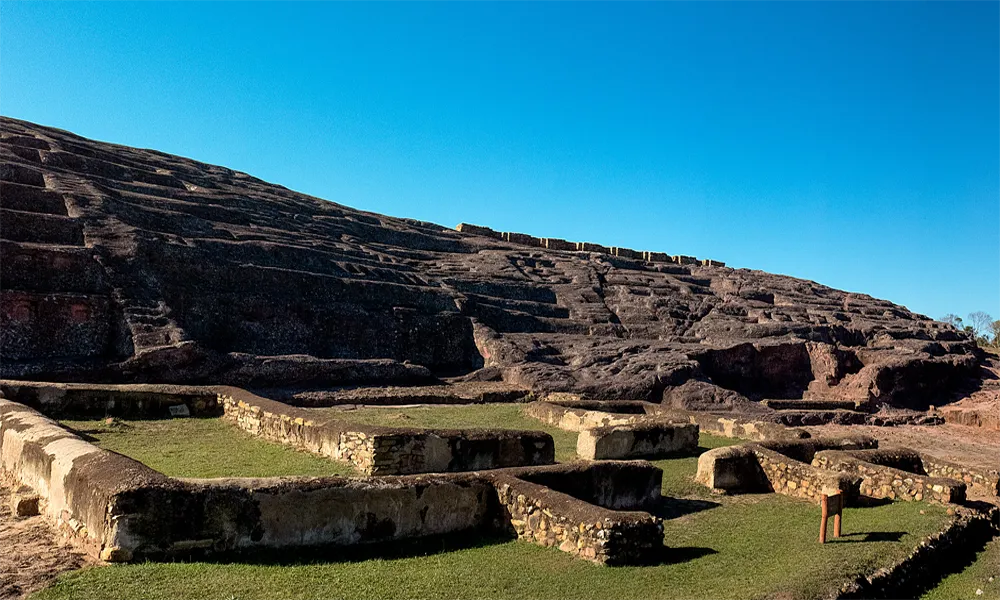
The Samaipata Fortress is one of Bolivia’s most enigmatic and fascinating archaeological sites. Located in the eastern foothills of the Andes, near the picturesque town of Samaipata, this monument combines pre-Hispanic history, spiritual symbolism, and a breathtaking natural landscape.
Recognized as a World Heritage Site, the Samaipata Fortress is notable for its enormous carved rock, considered one of the largest in the world, and for having been a key meeting point between Andean and Amazonian cultures.
📍 What is the Samaipata Fortress?
Despite its name, the Samaipata Fortress was not a military fortress in the classic sense. It is a ceremonial, religious, and administrative complex, used by different cultures throughout history, primarily the Chané, the Inca, and later, the Spanish.
The site is organized into two main areas:
- The large sculpted rock, with channels, geometric and zoomorphic figures.
- The architectural structures, such as plazas, enclosures, and pathways.
🗿 The large carved rock: the heart of the site
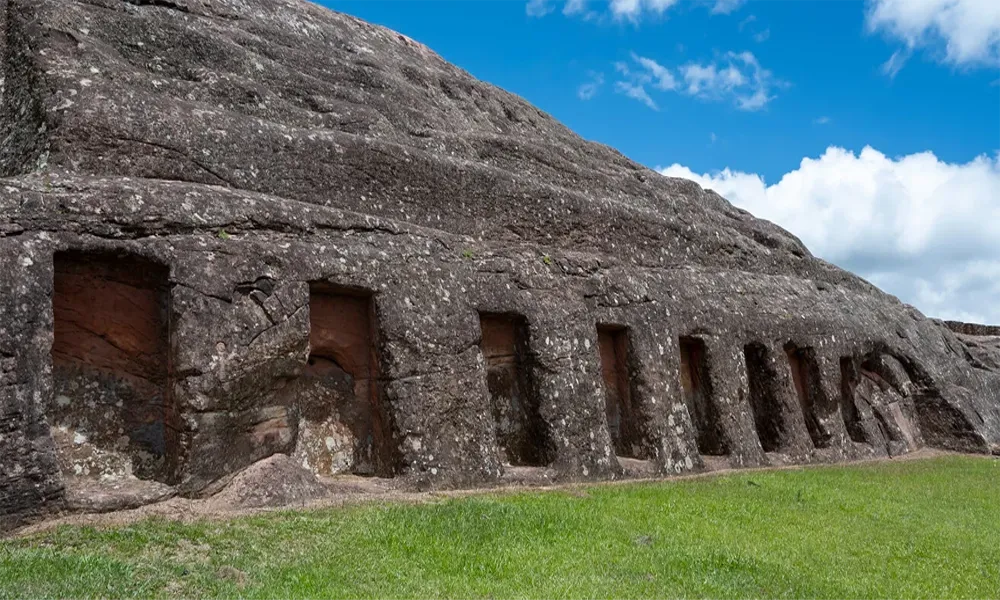
The most impressive element of the Samaipata Fortress is its gigantic sandstone rock, sculpted with:
- Hydraulic channels
- Carved staircases
- Figures of animals such as snakes and felines
- Geometric and symbolic designs
These carvings are associated with rituals related to water, fertility, the sun, and the Andean worldview, which reinforces its sacred character.
🏺 History and cultures that inhabited the site
- 🌀 Pre-Inca period
The first occupations correspond to Amazonian and Chané peoples, who used the rock as a ceremonial center.
- 🏔️ Inca Period
The Incas incorporated Samaipata into their administrative and religious system, constructing plazas and enclosures that consolidated their dominion in the eastern region of the empire.
- ⚔️ Colonial Period
During the arrival of the Spanish, the site was reused as a strategic point, although it was later abandoned.
🌄 Natural Environment and Landscape
The Samaipata Fortress is located in an ecological transition zone, where the following converge:
- Inter-Andean dry forests
- Subtropical vegetation
- Fertile valleys and green hills
The site offers spectacular panoramic views, especially at sunrise and sunset, making the visit a truly cultural and scenic experience.
🚶 Visit Experience
Exploring the Samaipata Fortress is a tranquil and contemplative experience. During your visit, you can:
- Walk along archaeological trails
- Observe ancient carvings
- Learn about the social and spiritual organization of ancient cultures
- Enjoy the silence and energy of the place
- The site invites reflection and respect for the ancestral legacy.
🧭 Recommendations for your visit
- Wear comfortable clothing and a light jacket.
- Wear non-slip shoes.
- Protect yourself from the sun and wind.
- Do not walk on the carved engravings.
- Avoid touching or damaging the structures.
- Maintain a respectful attitude toward the site.
❓ Frequently Asked Questions
- Why is it called “Fort” if it wasn’t a fortress?
The name is due to colonial interpretations; in reality, it was a ceremonial and administrative center.
- Is it suitable for all types of visitors?
Yes, although caution is advised for people with reduced mobility due to uneven surfaces.
- What is the best time to visit?
Early morning or late afternoon, when the weather is cooler and the light enhances the reliefs.
- Is photography allowed?
Yes, always respecting the site’s conservation guidelines.
🌎 A Unique Ancestral Legacy in Bolivia
The Samaipata Fortress is an exceptional testament to the encounter of cultures and the profound spiritual connection between humankind and nature. Its monumental carved rock, its ancient history, and its natural surroundings make it an essential visit for those who wish to understand the cultural and archaeological richness of Bolivia.