

Sanctuary of Our Lady of the Mineshaft: Living Faith, Mining, and the Cultural Soul of Oruro
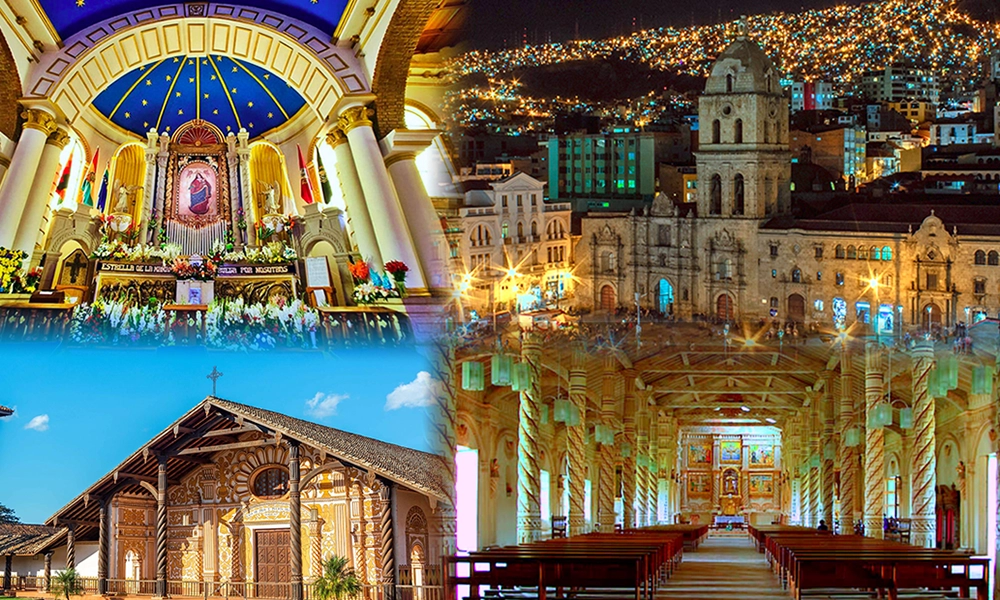
The Sanctuary of Our Lady of the Mineshaft is one of the most important religious and cultural sites in Bolivia. Located in the city of Oruro, this sanctuary is not only a center of Marian devotion but also the spiritual heart of the Carnival of Oruro, one of the largest cultural events in Latin America.
Here, faith is not lived in silence: it is danced, promises are made, thanks are given, and it is passed down. The Mineshaft represents the profound fusion between the Catholic religiosity introduced during the colonial period and the ancestral Andean worldview linked to the land, the mine, and the guardian mountains.
📍 Location: A Sanctuary Born from the Mine
The sanctuary stands at the foot of Cerro Pie de Gallo (Rooster’s Foot Hill), a hill historically linked to mining activity. In this area, there were ancient mineshafts, tunnels excavated by miners, from which the temple takes its name.
This location is not accidental: from its origins, devotion to the Virgin has been associated with protection from the dangers of mining, one of the hardest and most risky activities on the Altiplano.
From the sanctuary’s atrium, one can appreciate a sweeping view of the city of Oruro, reinforcing its symbolic character as a temple that watches over and protects the city.
🕊 Origin of the Devotion to the Virgin of the Mineshaft
Devotion to the Virgin of the Mineshaft dates back to the colonial era. According to oral tradition, the image of the Virgin miraculously appeared inside a mine shaft, becoming from then on the protector of the miners and the people of Oruro.
Over time, this devotion acquired unique characteristics. In the Andean imagination, the subterranean world was already a sacred space inhabited by powerful forces. Thus, the Virgin of the Mineshaft became integrated into a belief system where the following coexist:
- Catholic faith,
- respect for Pachamama (Mother Earth),
- and the symbolic presence of the Tío de la Mina (Uncle of the Mine).
This religious syncretism is one of the most unique features of Bolivian Andean spirituality.
🏛 History of the Sanctuary of the Socavón
The current temple is the result of several stages of construction and expansion. Initially, there was a small chapel linked to the mine shaft, which grew as popular devotion increased.
During the 20th century, the sanctuary acquired its current form, with a sober and monumental architecture, in a neoclassical style with local adaptations, designed to accommodate thousands of faithful during major festivities.
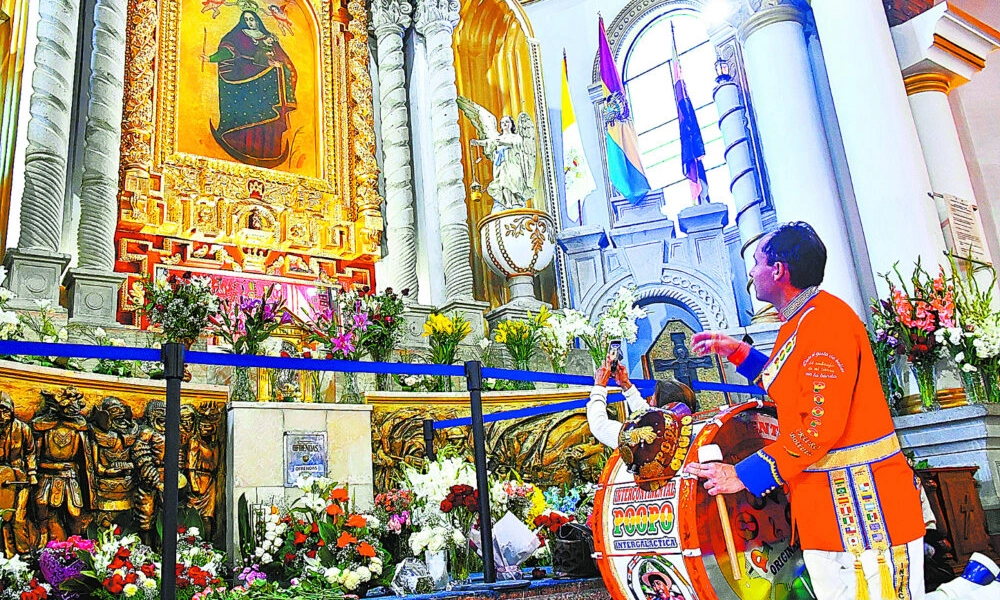
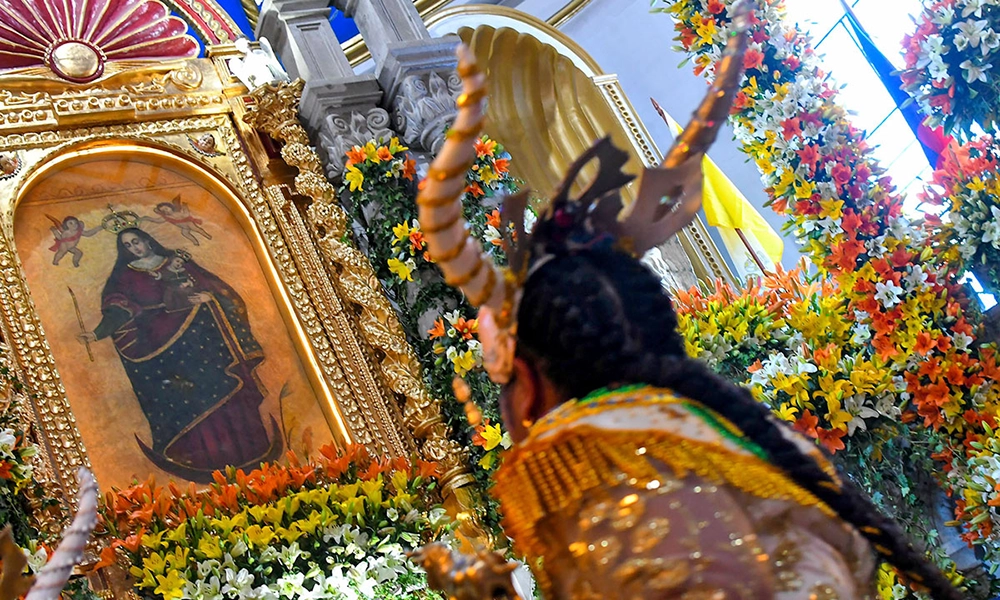
Inside is the venerated image of the Virgin, richly ornamented, surrounded by candles, offerings, dance costumes, and symbols that reflect fulfilled promises and expressions of gratitude.
🎭 The Sanctuary and the Carnival of Oruro
The Sanctuary of the Socavón is the final and sacred destination of the Carnival of Oruro, declared an Intangible Cultural Heritage of Humanity.
✨ The Danced Pilgrimage
During Carnival:
- More than 20,000 dancers travel for miles, dancing in honor of the Virgin.
- Dances such as the Diablada, Morenada, Caporales, Tinku, Tobas, and Llamerada express faith, history, and cultural resilience.
- The dancers culminate their journey by entering the sanctuary, many of them on their knees, fulfilling promises made to the Virgin.
Here, the dance ceases to be mere spectacle and becomes an act of devotion. Every step, every mask, and every costume holds spiritual significance.
🏛 Architecture and Spaces of the Sanctuary
⛪ Exterior
The exterior of the temple stands out for its solid structure, designed to withstand the high-altitude climate and accommodate large crowds during festivities.
✨ Interior
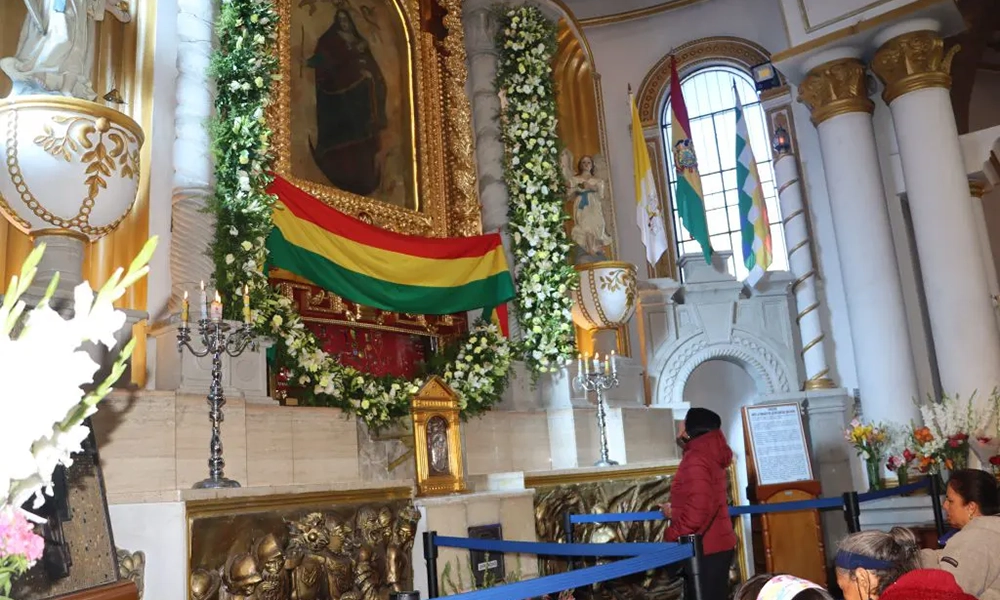
The interior of the sanctuary invites contemplation:
- Main altar dedicated to the Virgin of Socavón
- Religious images linked to mining history
- Spaces designated for silent prayer
The atmosphere is intense, especially during festive occasions, when the temple is filled with music, tears, songs, and expressions of gratitude.
🌤 Climate and Best Time to Visit
Oruro has a cool and dry climate for most of the year:
- Cool days with intense sunshine
- Cold nights, even in summer
Best time to visit:
- Oruro Carnival (January – February): to experience the full cultural and spiritual experience.
- Rest of the year: ideal for a quiet, reflective, and contemplative visit.
🙏 What to do during your visit
- Learn about the history of the sanctuary and its connection to mining.
- Observe the faithful who come to fulfill their vows.
- Participate respectfully in moments of prayer.
- Understand the syncretism between the Catholic faith and the
- Andean worldview.
- Photograph the surroundings respectfully (following the temple’s guidelines).
❓ Frequently Asked Questions
Is the Sanctuary of the Socavón only for believers?
No. It is a religious, cultural, and historical space open to everyone.
Can it be visited outside of Carnival?
Yes. In fact, the silence and spirituality of the place are best appreciated outside of Carnival.
Why is the Virgin so important to the dancers?
Because each dance is a promise, an offering of faith and personal gratitude.
What is the sanctuary’s connection to mining?
It originated directly from the mining world and maintains that connection as a central part of its identity.
✨ The Socavón: where faith becomes collective identity
The Sanctuary of Our Lady of the Socavón is not just a temple: it is the living memory of Oruro, a place where faith is expressed through the body, music, and history. Here, the Virgin not only protects but also unites generations, connects worlds, and transforms devotion into culture.
Visiting the Socavón is to understand that, in the Bolivian highlands, spirituality is not observed from the outside: it is felt, respected and lived.