

La Cancha
Bolivia’s Largest Commercial, Social, and Cultural Universe
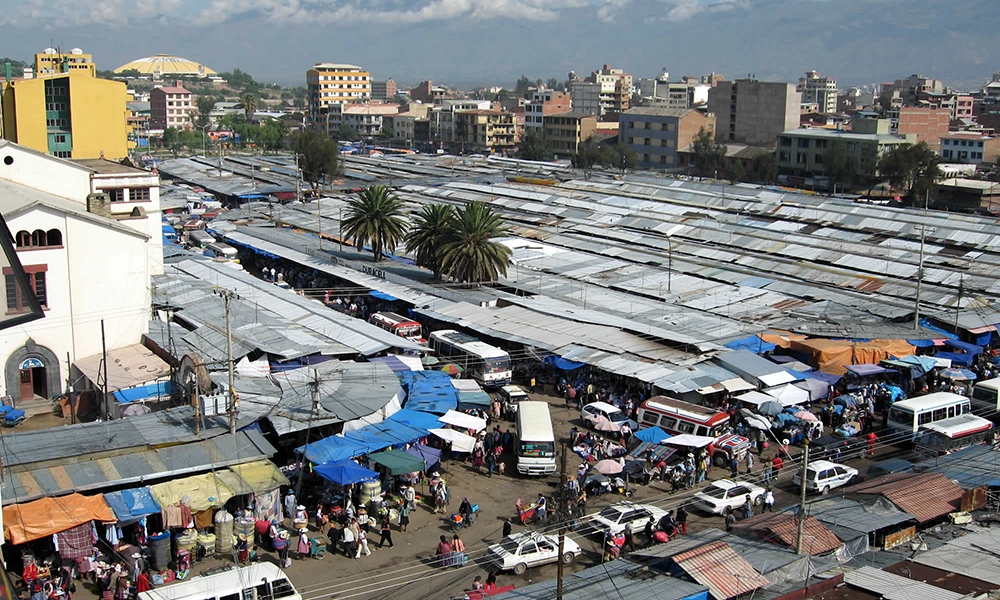
To speak of La Cancha is to speak of the true pulse of Cochabamba. It is not merely a market, but a popular economic system, a vibrant social space, and a profound cultural expression that reflects Bolivian identity in its most everyday and authentic form. Spanning dozens of city blocks, with thousands of stalls and a constant flow of people, La Cancha is considered the largest open-air market in Bolivia and one of the most extensive in South America.
Located in the city of Cochabamba, La Cancha supplies homes, merchants, restaurants, rural communities, and small towns throughout the country. Here, you can buy for the day, for the week, and also wholesale. It is a space where the formal and informal economies coexist, complement each other, and support thousands of families.
📜 Historical Origin: From Open Space to Commercial Giant
The name “La Cancha” comes from the Quechua word kancha, which means courtyard, enclosure, or open space. During the colonial era, this area was used as communal land where temporary fairs, agricultural exchanges, and social activities took place.
Over time, especially in the late 19th and throughout the 20th centuries, Cochabamba’s urban growth spurred the permanent occupation of the space. Farmers from the upper valley, lower valley, and the tropics began bringing their products regularly. At the same time, urban merchants found La Cancha an accessible place to sell on a large scale.
Unlike other planned markets, La Cancha grew organically, driven by necessity, custom, and popular initiative. This spontaneous growth is one of its main characteristics and explains both its size and complexity.
🧭 La Cancha as a “city within a city”
Exploring La Cancha is comparable to exploring a parallel city, with its own rules, schedules, hierarchies, and social dynamics. Although it may seem chaotic to the first-time visitor, it is actually clearly organized by category.
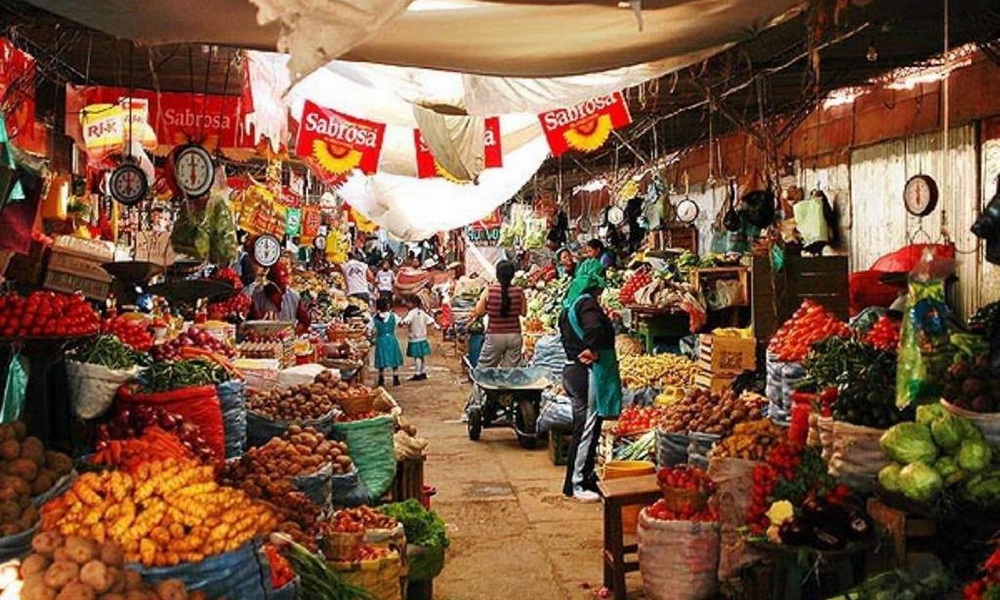
🥔 Food and Agricultural Products Zone
This is the original core of the market and one of its busiest sections. Here you’ll find:
- Fresh fruits and vegetables
- Potatoes, oca, chuño, tunta, and other tubers
- Grains, cereals, and spices
- Meats, fish, and dairy products
Many products come directly from the producer to the consumer, reducing intermediaries and keeping prices affordable.
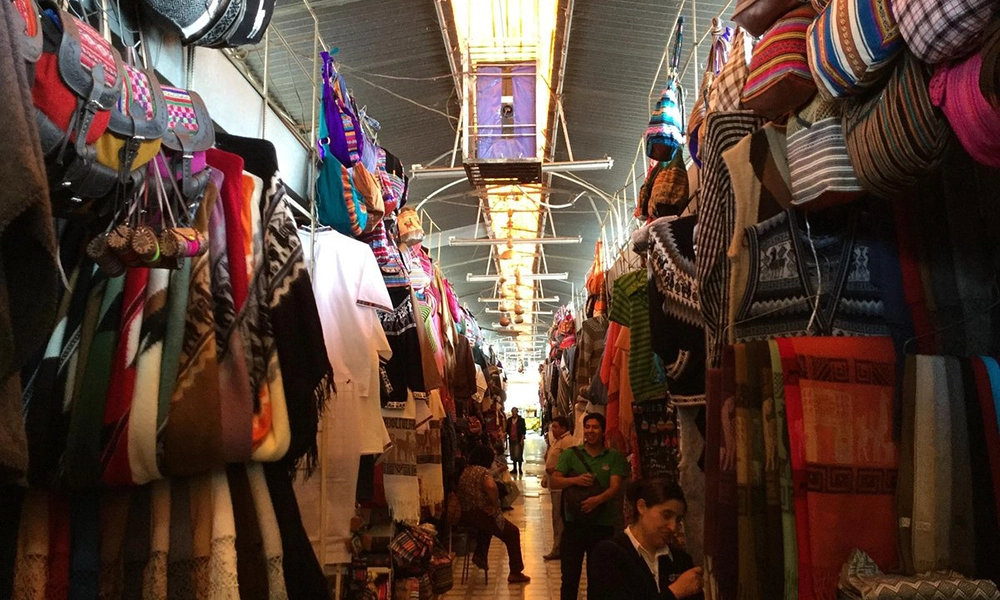
👕 Textile and Clothing Zone
Includes:
- New and used clothing
- Footwear
- Traditional skirts and clothing
- Fabrics, wool, and sewing supplies
This sector is key to the family economy, especially for women vendors.
🔧 Tools and Technology Zone
Here you can find:
- Home appliances
- Cell phones and accessories
- Mechanical, agricultural, and construction tools
- Electrical and automotive parts
This sector demonstrates the market’s ability to adapt to new demands.
🌿 Traditional Medicine and Ritual Area
One of the most symbolic spaces, where you can find:
- Medicinal herbs
- Healing plants
- Amulets and ritual items
- Items used in Andean practices
This area keeps ancestral knowledge alive, passed down from generation to generation.
🌎 Economic Importance: The Engine of Cochabamba’s People
La Cancha is a direct and indirect source of employment for thousands of people. This includes not only those with stalls, but also transporters, porters, rural producers, cooks, suppliers, and small distributors.
The market vendors—the central figures of the market—do more than just sell products:
- They build relationships of trust
- They provide informal credit
- They support family economies
- They transmit values of work and solidarity
Furthermore, La Cancha plays a strategic role in connecting the countryside with the city, allowing rural producers to access urban markets without significant barriers.
🧑🤝🧑 Social and Cultural Dimension
La Cancha is also a space for social interaction. Here, Spanish, Quechua, and other languages are spoken; Indigenous, rural, and urban traditions coexist; and customs deeply rooted in Bolivian life are expressed.
It’s a place where:
- You learn to negotiate
- Trades are passed down
- Community networks are strengthened
- Local identity is kept alive
For many Cochabamba residents, going to La Cancha isn’t just about shopping: it’s part of their routine and their collective memory.
🍲 Popular Gastronomy: Feeding the Market
Food is an essential component of La Cancha. Among the most common dishes are:
- Salteñas (corn tortillas)
- Anticuchos (grilled meat skewers)
- Chicharrón (fried pork rinds)
- Traditional soups
- Natural juices and soft drinks
These stalls feed vendors and visitors daily and are part of the market’s economic ecosystem.
🧠 Practical Tips for Visitors
- ⏰ Visit in the morning
- 💵 Bring cash and small bills
- 🎒 Keep an eye on your belongings
- 🤝 Haggle respectfully
- 🧭 If it’s your first time, go with someone
❓ Frequently Asked Questions (FAQs)
- What exactly is La Cancha?
It’s the largest open-air market in Bolivia and a bustling commercial system that supplies Cochabamba and surrounding regions.
- When is it busiest?
Wednesdays and Saturdays, when merchants and shoppers arrive from other provinces.
- How long does it take to explore?
From an hour to a full day.
- Is it a tourist destination?
Yes, although it remains primarily a space for local commerce.
- Is it safe?
With basic precautions, yes.
La Cancha is more than just a market: it’s a living reflection of the popular economy, culture, and Bolivian identity. Its streets are a place where past and present intersect, tradition and modernity, effort and community. To know La Cancha is to understand how Cochabamba functions from its deepest roots.