
The Highest Natural Guardian of the Cochabamba Valley
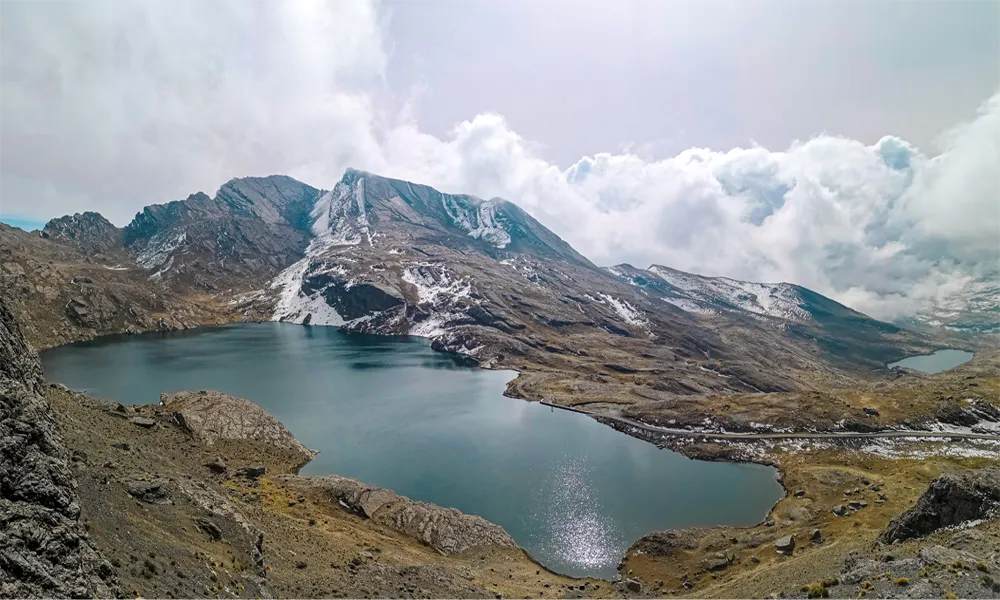
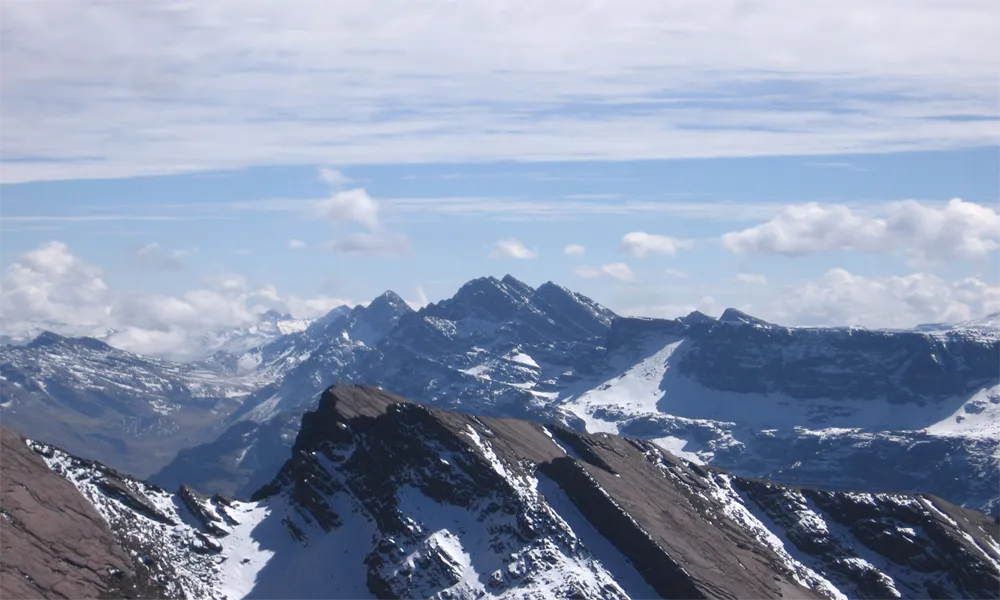
Tunari Peak is the highest summit in the department of Cochabamba and one of the most imposing natural symbols of central Bolivia. At approximately 5,035 meters above sea level, it dominates the Andean landscape and has become a visual, cultural, and spiritual landmark for the inhabitants of the valley.
From the city, Tunari stands like a natural wall separating the urban world from the silence of the high mountains, offering a unique contrast between extreme nature and everyday life.
📜 History and Significance of Tunari Peak
Since pre-Hispanic times, Tunari Peak has been a sacred mountain for the Andean cultures that inhabited the region. Like many high peaks, it was considered an apus, that is, a protective spirit of nature and the land.
During the colonial and republican eras, Tunari continued to be a geographical and symbolic landmark. Today, it remains important both for local identity and for mountaineering and nature enthusiasts.
🌄 Geography and Andean Landscape
Tunari Peak is part of the Tunari Mountain Range, a mountain system that borders the city of Cochabamba to the north. Its landscape is characterized by:
- Rocky, snow-capped peaks in the cold season
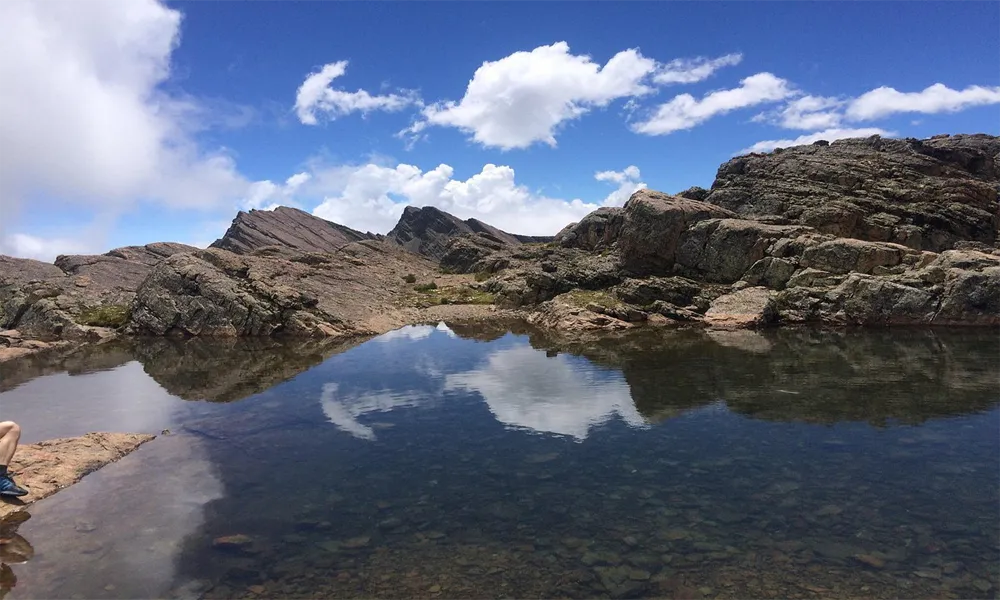
- High-altitude lakes in its surroundings
- High-altitude grasslands and wetlands
- Wide panoramic views of the Cochabamba Valley
From the summit, on clear days, it is possible to see much of the central valley and, occasionally, other mountain ranges of the Altiplano.
🥾 Trekking and Mountaineering on Tunari Peak
The ascent of Tunari Peak is one of the most demanding and rewarding experiences for high-altitude trekking enthusiasts. This is not your typical tourist hike; it’s an activity that requires good physical condition, acclimatization, and planning.
The route traverses diverse ecological zones, from semi-arid areas to high-altitude environments, offering a complete immersion in Andean nature.
🌱 Biodiversity and Natural Environment
The Tunari Mountain Range harbors surprising biodiversity despite the extreme conditions. In the area, you can find:
- High Andean flora adapted to the cold and wind
- Birds native to the Bolivian highlands
- Wildlife that inhabits areas far removed from human traffic
This natural environment plays a key role in climate regulation and in protecting water sources for the city of Cochabamba.
🌦️ Climate and Best Times to Visit
The climate at Pico Tunari is cold and changeable. Temperatures can vary drastically between day and night, and winds are often strong in the higher elevations.
The dry season generally offers better visibility and access, while during the rainy season, the terrain can become more challenging and slippery.
ℹ️ Recommendations for your visit
- Acclimate beforehand in the city
- Bring thermal clothing, a windbreaker, and sun protection
- Carry enough water and energy-rich food
- Avoid climbing without experience or a guide
- Respect the natural environment and do not leave any trash
❓ Frequently Asked Questions
- Is Pico Tunari suitable for beginners?
No. It is a physically demanding mountain and is recommended only for people with experience in high-altitude trekking.
- Can you see snow on Pico Tunari?
Yes, mainly during the colder months of the year, although it is not permanent.
- Why is it so important for Cochabamba?
In addition to its natural and scenic value, Tunari is a symbolic source of identity and a key environmental regulator for the valley.
🕊️ Tunari as a symbol of Cochabamba
Tunari Peak is not only the highest mountain in the department, but also a living symbol of strength, protection, and connection to Andean nature. Its watchful silhouette recalls the close relationship between the city and the mountain, between humankind and the environment that surrounds it.