

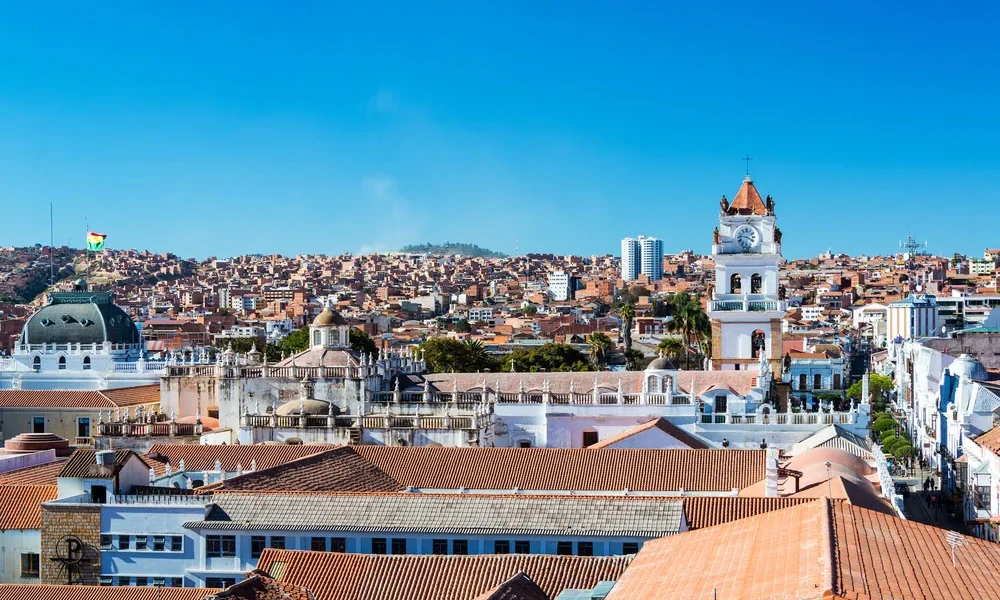
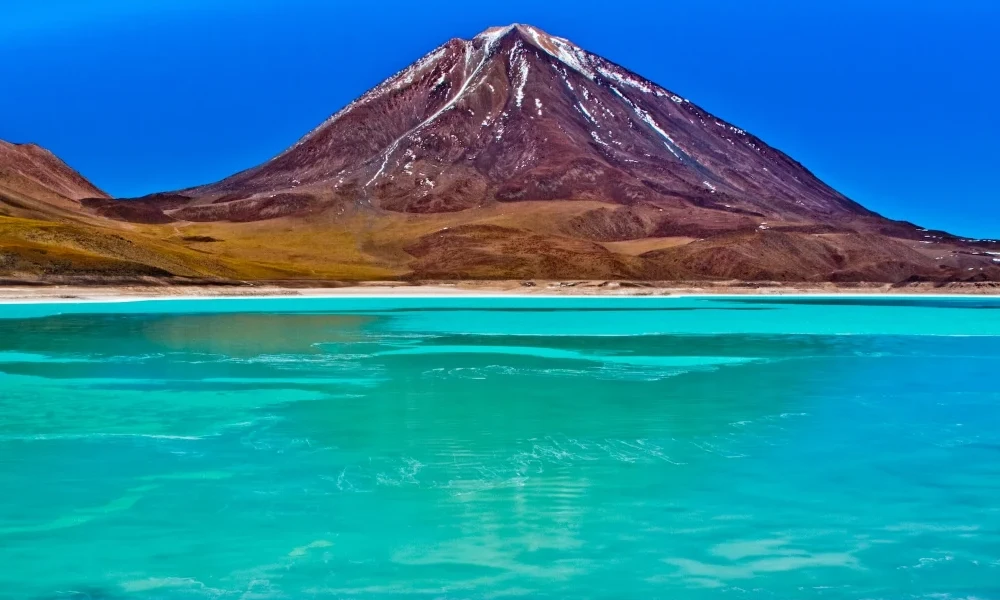
The Salar de Uyuni Tour from Sucre is the perfect journey for those seeking a unique blend of history, culture, adventure, and breathtaking landscapes. Beginning in the colonial city of Sucre, this tour invites travelers to immerse themselves in the heart of Bolivia, slowly transitioning from colonial charm to the vastness of the Bolivian Altiplano.
From Sucre: A Journey Through Time and Space
Sucre, the historic World Heritage city, is known for its cobblestone streets and Baroque architecture that transport travelers to bygone eras. But upon leaving Sucre, the landscape changes dramatically. As the journey continues, you’ll traverse Andean valleys, salt flats, and remote villages, highlighting the contrast between colonial history and the wild nature of the Bolivian Altiplano.
The Altiplano Challenge: From the Train Cemetery to the Salar de Uyuni
One of the most exciting moments of the tour is passing through the Train Cemetery, where old trains, abandoned in the salt desert, evoke a sense of historical nostalgia. Here, travelers can walk among the rusted locomotives, which tell stories of times gone by, when this railway system connected Uyuni to the rest of the country.
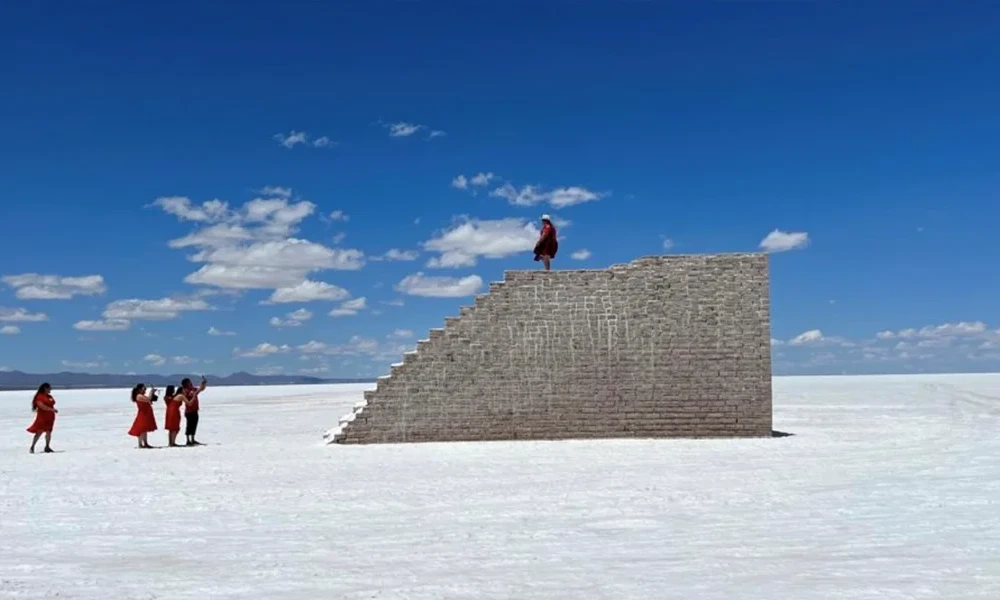
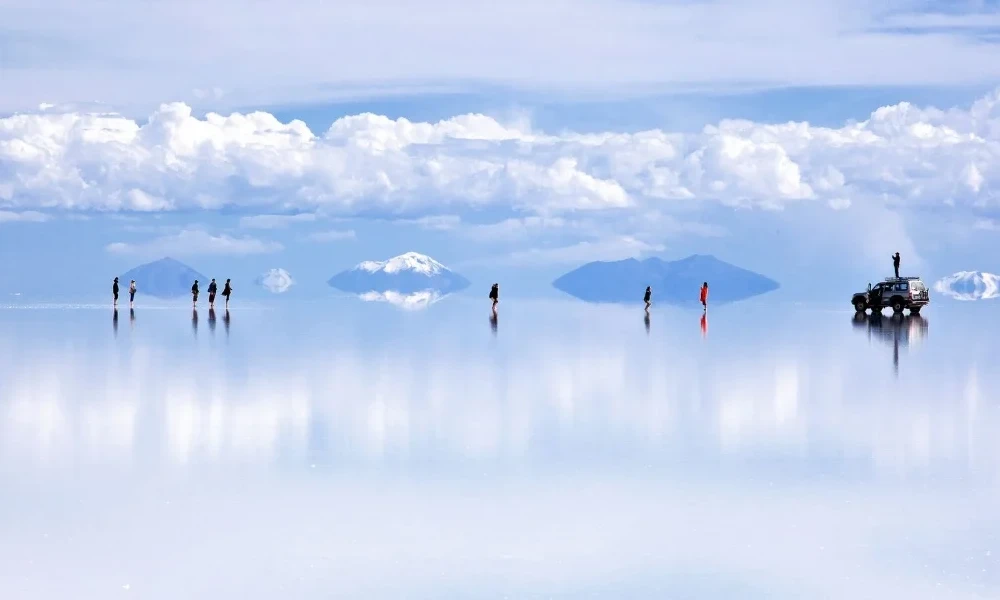
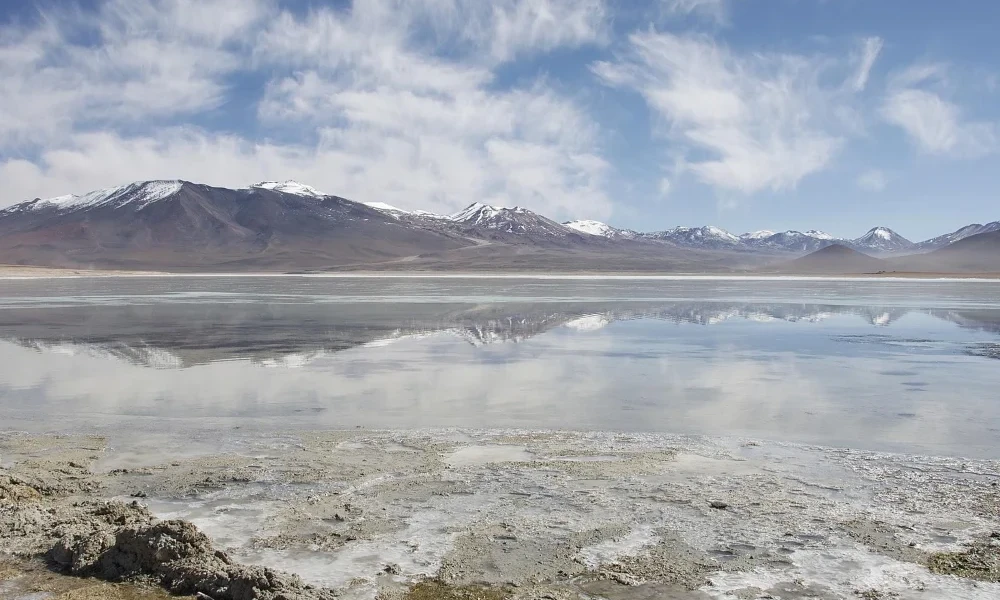
As the journey takes you deeper into the vast, white Salar de Uyuni, the sight of this gigantic salt desert is a mesmerizing spectacle. The vastness of the Salar is so impressive that the horizon blurs, and the sky seems to merge with the earth. The feeling of being in an endless place, where everything becomes infinite, is a unique experience that can only be found in the Salar de Uyuni.
Incahuasi Island: A Surprising Oasis in the Heart of the Desert
A highlight of the tour is a visit to Incahuasi Island, also known as Cactus Island. Here, the salt flats are interrupted by a surreal island covered in giant cacti, some reaching up to 12 meters in height. This volcanic island in the middle of the Salar offers a breathtaking panorama, where the colossal cacti emerge as guardians of the desert landscape.
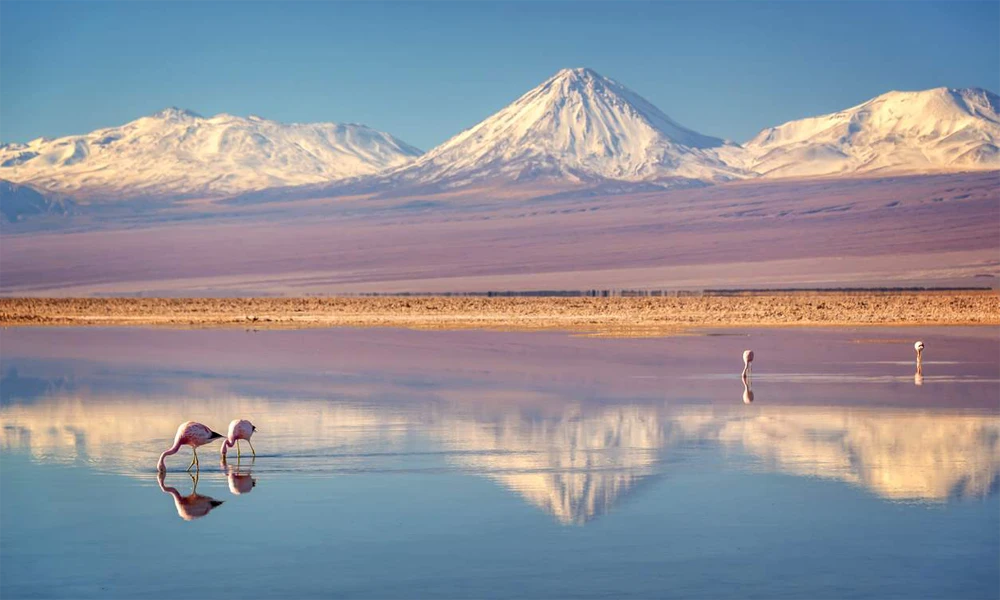
Incahuasi Island is not only a fascinating place for photography; it is also a small nature reserve, home to diverse species of Andean fauna, such as flamingos, and plants adapted to the harsh environment.
The Contrast Between Culture and Nature
This tour is not only a journey through stunning landscapes but also an opportunity to connect with Bolivian culture. From the forgotten stories of the Train Cemetery to the endless postcards offered by the Salar, each stage of the tour has a unique story to tell. The experience is enriched by the connection between the natural landscape and the history of the Andean peoples who inhabit the region.
The Salar de Uyuni is much more than a natural wonder; it is also a place of profound emotions, where the soul of Bolivia feels alive. This tour is an emotional journey that leaves an indelible mark on all who experience it.
ITINERARY
🗓 Detailed Itinerary: Uyuni Salt Flats Tour from Sucre
🗓️ Day 1: Sucre – Night Bus to Uyuni
- 🕒 8:00 PM: Our tour begins with pickup from your hotel in Sucre for a comfortable transfer to the bus terminal.
- We will board a shared tour bus to Uyuni, an approximately 8-hour overnight journey equipped with reclining seats for your relaxation.
🗓️ Day 2: Uyuni – Uyuni Salt Flats – Incahuasi Island – Uyuni
- 🕓 5:00 AM – 6:00 AM: Arrival in Uyuni. An assistant will meet you at the terminal to transfer you to a local cafe, where you can enjoy a traditional Andean breakfast (not included).
- 🕥 10:30 AM: Start of the shared-service tour to the Uyuni Salt Flats. Accompanied by an experienced guide, we begin our tour with:
✅ Train Graveyard: A surreal landscape of rusty locomotives that tell stories of Bolivia’s mining boom.
✅ Colchani: A small community known as the gateway to the salt flats. Here you can see salt craft workshops, weaving workshops, and a small rustic plant for processing edible salt.
✅ Entrance to the Uyuni Salt Flats: We begin the journey across the endless white sea, with stops at:
- The salt mines.
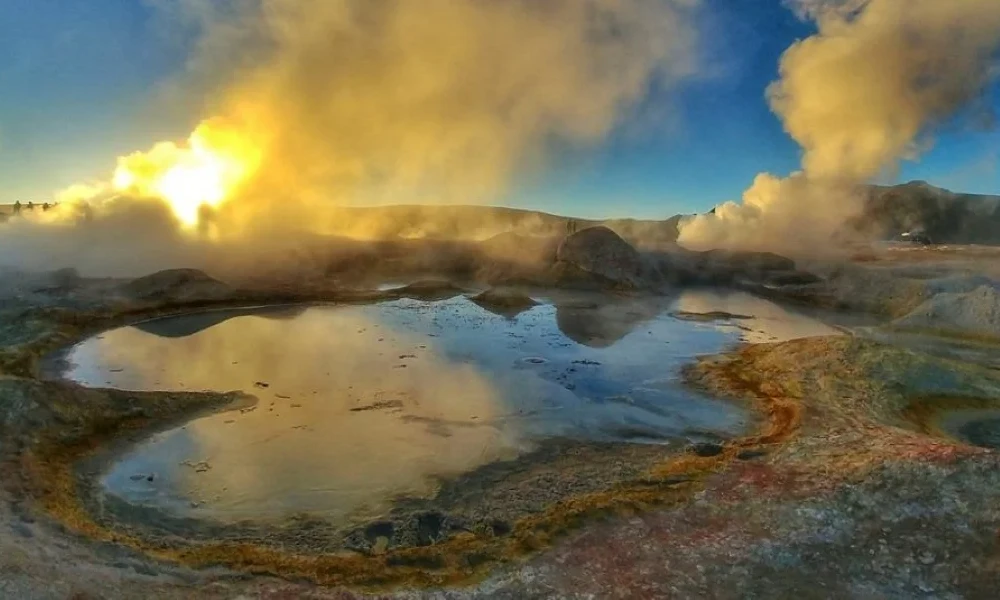
- The famous eyes of the salt flat, where water springs from the subsoil.
- The Playa Blanca Salt Hotel, now a photogenic museum.
✅ Incahuasi Island: A jewel of the Bolivian highlands. We’ll walk among gigantic ancient cacti and marine fossils, and enjoy a 360° panoramic view from the natural lookout point.
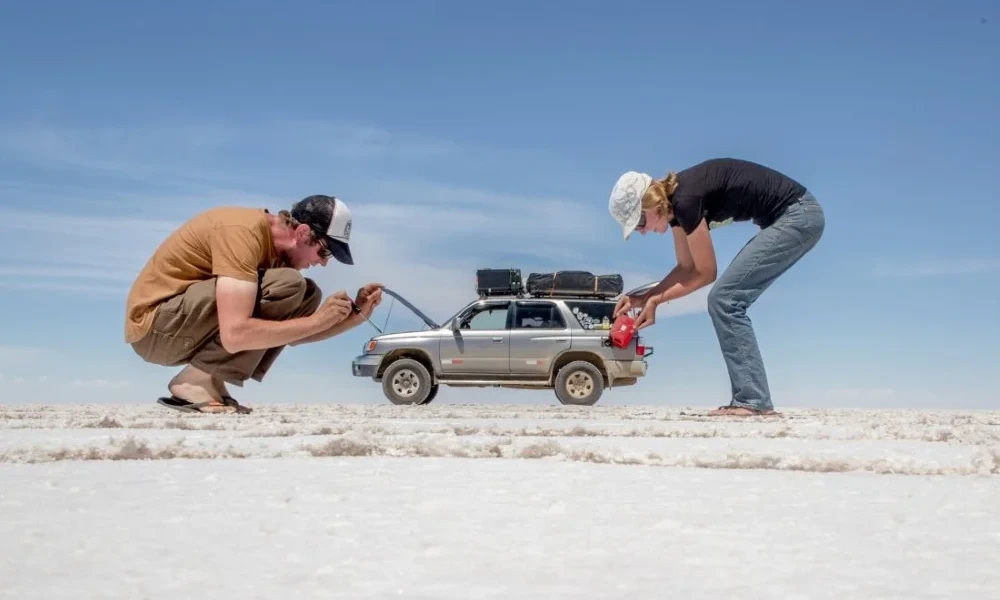
- 📸 During the tour, you’ll have free time to take creative photos with a perspective effect, unique in this surreal landscape.
- 🕕 5:30–6:00 PM: Return to the town of Uyuni and end of the tour.
INCLUDES
✅ Includes
Day 1: Sucre to Uyuni
Pick-up from your hotel in Sucre
- The tour begins early with pick-up from your hotel in Sucre. The driver will ensure all travelers are ready to depart and that the transfer to the Sucre bus terminal is as comfortable as possible.
Sucre – Uyuni Tourist Bus Ticket
- A shared tourist bus ticket will be provided for the journey between Sucre and Uyuni. This service is designed to offer comfort and convenience to passengers during the 10–12 hour road trip.
Tourist Bus Features:
- Comfortable seats and ample space.
- Air conditioning.
- Onboard snacks.
- Service in Spanish and, depending on the agency, additional assistance in English.
Assistance at the Uyuni Bus Terminal
Upon arrival at the Uyuni bus terminal, a tour representative will be waiting to assist you and escort you to the 4×4 vehicle to begin your adventure in the Salar de Uyuni.
Day 2: Uyuni Salt Flats Tour
4×4 Transportation throughout the Salt Flats Tour
- 4×4 Vehicles: During the Salt Flats tour, you will travel in 4×4 vehicles specially designed to traverse the rugged terrain of the salt flats. They are comfortable and safe for exploring the vast expanse of salt.
Visit to the main attractions:
- Incahuasi Island: Famous for its giant cacti and panoramic views.
- Train Cemetery: A fascinating landscape filled with old, abandoned trains.
- Photography Spots: You will have the opportunity to take spectacular photos of the salt flats, where you can play with perspectives and the enormous reflections.
Driver-Guide in Spanish
- The driver-guide is an expert on the area and will speak Spanish. They will provide you with detailed information about the points of interest on the tour, local customs, and facts about the history and geography of the Uyuni Salt Flats.
Lunch during the Salt Flats tour
- Lunch will be served in a designated area within the Salt Flats, surrounded by a unique landscape. Typical Bolivian dishes will be included, allowing you to enjoy local cuisine while surrounded by one of the most breathtaking scenery in the world.
First Aid Kit
The tour will be equipped with a first aid kit for any emergencies. The guide will be prepared to provide basic care if needed. It is also recommended that you bring your own personal medications.
Day 3: End of the tour and return to Uyuni
After a full day of exploring the Salt Flats, the tour will conclude in Uyuni, where travelers can take transportation back to their hotel or the bus terminal to continue their journey to their next destination.
NOT INCLUDED
❌ Not Included
Breakfast in Uyuni
- Breakfast in Uyuni is not included in the tour price. Some hotels or accommodations may offer it as an additional service, so we recommend checking with your tour operator to see if this service needs to be added for an extra cost.
Dinner at the end of the day
- Dinner at the end of the day is not included in the tour package. Some accommodations may offer dinner as part of their service, but if you wish to dine outside the accommodation, this will be at your own expense.
Entrance to Incahuasi Island
- Entrance to Incahuasi Island (the famous Cactus Island) is not included in the tour price. The entrance fee to the island is generally small, but it is important for travelers to consider this as an additional expense.
Tips and personal expenses
- Tips for the guide and driver are not included in the tour price.
- Tips are voluntary and can be given according to your satisfaction with the service received. Additionally, any personal expenses such as souvenirs, drinks, snacks, or purchases are not covered by the tour.
Other activities not mentioned in the program
Additional activities or personalized services not specified in the tour itinerary, such as extra excursions or any other special services, are not included in the package. If you wish to participate in any additional activities, please consult with the travel agency before departure to check availability and additional costs.
RECOMMENDATIONS
Recommendations
1. Warm Clothing
Due to the extreme temperature fluctuations in the Salar de Uyuni, especially at night and during bus journeys (for example, the trip from Sucre to Uyuni), it is essential to bring warm clothing.
Warm jackets, thermal sweaters, and scarves will help you stay comfortable, especially in the higher areas.
2. Hat, Sunglasses, and Sunscreen
The sun in the Salar de Uyuni can be extremely strong due to the altitude and the reflection of the sun off the salt, so a hat or cap is essential to protect yourself from the sun.
Sunglasses with UV protection are necessary to prevent eye damage from solar radiation.
Don’t forget high-SPF sunscreen, as the radiation is much stronger at this altitude, especially during the middle of the day.
3. Camera with a Charged Battery
The Salar de Uyuni offers spectacular landscapes that you’ll want to capture. Make sure you bring a camera or smartphone with sufficient battery capacity. It is advisable to bring an extra battery, as low temperatures can cause batteries to drain faster.
4. Water and personal snacks
During the trek, it is essential to stay hydrated, especially since the altitude can cause dehydration more quickly.
Personal drinks and snacks such as energy bars, nuts, or extra water are very useful throughout the day, as some areas may be far from food or water sources.
5. Comfortable and waterproof shoes
In the Salar de Uyuni, the terrain can be uneven, and if you visit during the rainy season, the ground may be wet or slippery.
Comfortable walking shoes are essential, and if possible, choose waterproof shoes to avoid getting them wet during excursions. Hiking boots or shoes are highly recommended.
6. Personal documents and Bolivian currency
Be sure to bring your personal documents, such as your passport, national identity card (if you are Bolivian), or any other form of identification. It’s also important to carry cash in Bolivian bolivianos. Although some areas have ATMs, card access isn’t always available, so it’s best to have enough cash for entrance fees (like to Incahuasi Island), tips, and personal expenses.
FAQs
❓ Frequently Asked Questions about the Salar de Uyuni Tour from Sucre
1. How long is the Uyuni Salt Flats tour?
The full 3-day/2-night tour is the most common format. It starts in San Pedro de Atacama or Sucre and ends in Uyuni. The first day includes transportation and arrival in Uyuni, the second day is dedicated to exploring the Uyuni Salt Flats and Incahuasi Island, and the third day includes the return trip and visits to other nearby attractions.
2. Is the Uyuni Salt Flats tour suitable for all types of travelers?
The tour is designed for all types of travelers, although it is recommended that people with altitude sickness (due to the high elevations of the Salt Flats and surrounding areas) consult their doctor before participating. Additionally, it is important that travelers are physically able to walk on uneven terrain and short distances on the Salt Flats.
3. Is prior trekking or cycling experience necessary for the tour?
No, no prior trekking or cycling experience is necessary. The tour is suitable for beginners, and the hiking is easy, although the trails can be uneven. Guides will be available to assist travelers during the hikes and activities.
4. Does the tour include accommodation?
Yes, the tour includes basic accommodation in salt flats or simple hotels. The rooms are comfortable but basic, generally with shared bathrooms. If you prefer a more luxurious experience, please check with your tour operator for upgraded accommodation options at an additional cost.
5. How much does the Salar de Uyuni tour cost?
The tour price can vary depending on the agency, accommodation, and additional activities. On average, the price for the 3-day/2-night tour is USD 180–250 per person. Some operators offer luxury options at an additional cost.
6. What kind of food is included in the tour?
Lunch and dinner are included on the Salar de Uyuni during the tour, generally featuring typical Bolivian cuisine. Breakfast is sometimes included, depending on your tour operator. The food is quite simple but adequate for the long days of exploration.
7. Should I be concerned about the altitude during the tour?
The Salar de Uyuni is located at an altitude of 3,650 meters above sea level, which can cause altitude sickness in some people. It is recommended to stay well hydrated, avoid alcohol, and take frequent breaks. If possible, it is preferable to acclimatize in La Paz or San Pedro de Atacama before the tour.
8. Does the tour include travel insurance?
Travel insurance is not included on most basic tours. It is recommended to purchase travel insurance that covers medical emergencies, cancellations, and potential accidents during the tour, especially considering the extreme weather and high altitude.
9. Is the Salar de Uyuni tour safe?
Yes, the tour is safe as long as it is booked with a reputable agency that has trained guides and vehicles in good condition. Reputable agencies also provide first-aid kits and support vehicles in case of emergency.
10. What should I bring on the tour?
It is essential to bring:
- Warm clothing (the temperature can drop significantly at night).
- Sunscreen, sunglasses, and a hat (the sun on the Salar can be very intense).
- Comfortable, waterproof shoes (the salt flats can be slippery).
- Water and personal snacks.
- A camera with fully charged batteries to capture the breathtaking views.
11. Can I do the tour on my own without a guide?
It is not recommended to do the tour without a guide, as the Salar de Uyuni is a vast area and can be dangerous without the experience of a local guide. Additionally, the terrain is uneven, and the weather can change rapidly. The tour includes an expert guide who will help you enjoy the site safely and learn from it.
12. When is the best time to visit the Salar de Uyuni?
The best time to visit is during the dry season, which runs from May to October, as the terrain is more accessible for exploring the Salar and enjoying clear views. During the rainy season (November to March), the Salar can be covered in water, creating a spectacular mirror effect, but the roads can be more difficult to navigate.
13. Is the water safe to drink at the Salar de Uyuni?
The water at the Salar de Uyuni is not safe to drink. Be sure to bring your own bottled water and stay hydrated during the tour. Many operators provide bottled water during the tour, but it’s best to bring an extra supply.
14. How big is the Salar de Uyuni?
The Salar de Uyuni covers an area of 10,582 km², making it the largest salt flat in the world. The expanse of this white landscape is breathtaking, creating a sense of infinity.